Welcome to At the Races! Each week we bring you news and analysis from the CQ Roll Call campaign team. Know someone who’d like to get this newsletter? They can subscribe here.
The federal government is mostly funded through the end of September, but lawmakers now have just over a week before a short-term funding extension for the Department of Homeland Security expires.
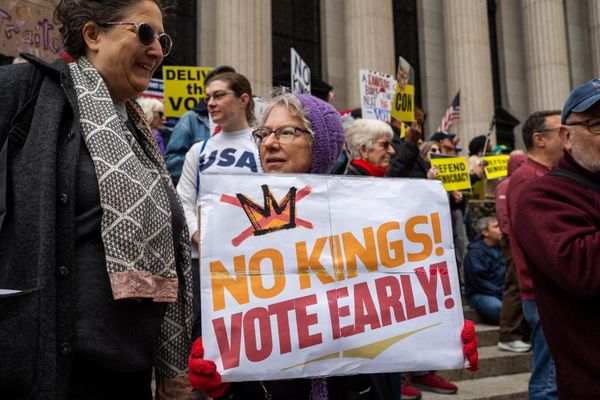
Democrats outlined their demands for full-year appropriations on Wednesday, as Republicans have already begun discussing another short-term stopgap. The Trump administration’s immigration enforcement policies remain the top debate on Capitol Hill and a focal point around the country. Several musical artists called out the Immigration and Customs Enforcement agency at last week’s Grammy Awards, and one of them, Puerto Rican superstar Bad Bunny, is set to play the halftime show at this weekend’s Super Bowl. (Point of author privilege: Go Pats!)
Immigration has played an outsize role in Thursday’s Democratic primary in the special election to fill New Jersey Gov. Mikie Sherrill’s former House seat. United Democracy Project, the super PAC of the American Israel Public Affairs Committee, has spent $2.3 million opposing former Rep. Tom Malinowski’s comeback bid, criticizing him for a bipartisan 2019 vote that provided, among other things, funding for ICE. Malinowski has said he wants to “defund ICE’s brutality,” while other Democrats in the race have also called to limit funding or abolish the agency.
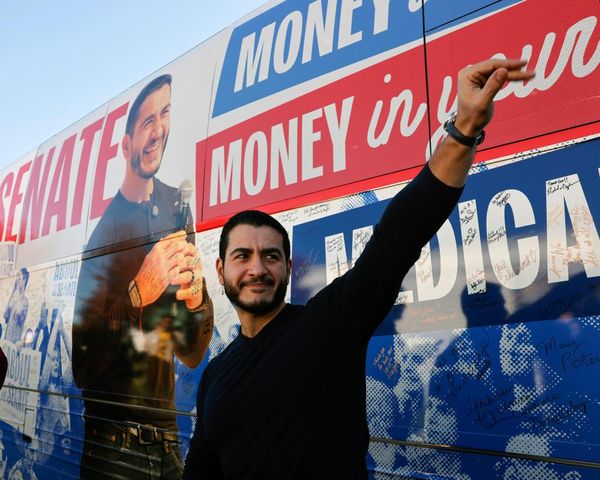
Opposition to ICE is sure to keep coming up in Democratic primaries in the weeks to come, already having emerged as an issue in the Senate contest in Illinois.
Duty and Honor, a group affiliated with the Democrat-aligned Senate Majority PAC, launched a $2 million ad campaign this week criticizing Maine Republican Susan Collins, who chairs the Senate Appropriations Committee, over increased ICE funding.
Immigration has historically been a strong issue for Republicans, especially President Donald Trump. And while GOP voters still largely support his agenda, there are signs of broader shifts in the electorate. According to an NPR/PBS News/Marist poll released Thursday, 65 percent of Americans said ICE had “gone too far” in enforcing immigration laws, an 11-point increase since last summer. Democrats and independents have mostly fueled that jump.
Starting gate
Fourth-quarter fundraising: We finally got a look at how much money House and Senate candidates had banked to start the year after year-end reports were due with the Federal Election Commission at the end of January. Democrats outraised Republicans in a handful of key Senate contests, while several House incumbents, either running in battleground races or facing tough primaries, trailed their challengers in fundraising.
Loudermilk out: Rep. Barry Loudermilk announced Wednesday that he won’t seek a seventh term, saying he never viewed serving in Congress as a career. The 62-year-old joins three other Republicans from Georgia who’ve either already left or won’t be returning to the House next year: Reps. Earl L. “Buddy” Carter and Mike Collins, who are both running for Senate, and former Rep. Marjorie Taylor Greene, who resigned her seat last month.
Back for Round 2: Former Capitol Police Officer Harry Dunn is running to succeed retiring Rep. Steny H. Hoyer in Maryland’s 5th District, his second House bid after an unsuccessful run for a different district in 2024. Dunn, who proved to be a strong fundraiser last cycle, joins a crowded Democratic primary that includes Hoyer’s chosen successor, state Del. Adrian Boafo.
Redistricting roundup: The Maryland House approved a new map that would give Democrats an advantage in all eight of the state’s congressional seats, but whether the state Senate will take up the measure isn’t clear. Meanwhile, California will use its new voter-approved House map in this year’s elections after the Supreme Court denied an effort to overturn the map, our colleague Michael Macagnone reports.
Menefee wins: Voters in a Houston-area congressional district that had been vacant for nearly a year finally have representation in Congress after Democrat Christian Menefee was sworn in Monday night, further eroding Republicans’ slim majority, at least temporarily. Menefee, the former Harris County attorney, won a special election Saturday to fill the seat of Democrat Sylvester Turner, who died in March 2025.
RIP: Roll Call Editor-in-Chief Jason Dick looks back on the career of former Rep. Lee H. Hamilton, who died this week at 94. The Indiana Democrat was a foreign policy maven who served as vice chair of the 9/11 commission.
ICYMI
Bluegrass bombshell: Republican Rep. Andy Barr, who is running for Kentucky’s open Senate seat, announced his support for Trump-endorsed retired Navy SEAL Ed Gallrein in his primary challenge to presidential nemesis Rep. Thomas Massie. “Ed will fight for the MAGA agenda and will NEVER side with AOC and the radical left against President Trump,” Barr said on social media.
Battleground launches: Former New York State Assemblyman Mike LiPetri has launched another bid for the 3rd District, challenging Democratic Rep. Tom Suozzi. LiPetri, who lost to Suozzi by 4 points in 2024, secured Trump’s endorsement Wednesday. Meanwhile, in Florida, retired Army Brig. Gen. Leela Gray is the latest Democrat to enter the race against Rep. Anna Paulina Luna, who is on Democrats’ target list. Gray has the backing of 2024 nominee Whitney Fox.
#LASEN: After Rep. Julia Letlow’s launch of a primary challenge to Republican Sen. Bill Cassidy, state Sen. Blake Miguez dropped his Senate bid and will run for Letlow’s soon-to-be vacant House seat instead. He quickly picked up Trump’s support. Another GOP Senate contender, St. Tammany Parish Councilwoman Kathy Seiden, exited the race and endorsed Letlow.
Primary colors: Two Bay State Democrats have new primary challengers. Ihssane Leckey, a former financial regulator, is taking on Rep. Jake Auchincloss in the 4th District. Leckey ran for the then-open seat in 2020, finishing fifth. In the 9th District, Rep. William Keating faces a challenge from local Indivisible activist Craig Swallow.
Dropping out: Several primaries for competitive House seats have gotten smaller over the past week. Air Force veteran Jennifer-Ruth Green announced she was dropping out of the Republican primary to take on Indiana Democrat Frank J. Mrvan. Former Nebraska state Sen. Brett Lindstrom is out of the Republican race to succeed retiring Rep. Don Bacon. In New York, former FBI analyst John Sullivan exited the crowded Democratic primary to challenge GOP Rep. Mike Lawler. And in New Jersey, progressive Vale Mendoza, one of several Democrats challenging Republican Thomas H. Kean Jr., ended her campaign.
More Trump endorsements: Former Sen. John E. Sununu has won the president’s support for his Senate comeback bid in New Hampshire, the latest example of Trump backing a onetime critic. The president is also backing local prosecutor Clay Fuller in the crowded special election for Greene’s seat in Georgia and California state Assemblyman James Gallagher, who’s running to succeed the late Rep. Doug LaMalfa. Other new Trump endorsees include New York state Sen. Peter Oberacker, who’s challenging Democratic freshman Josh Riley; regional Chamber of Commerce leader Chris McGowan, who’s seeking an open seat in Iowa; former Major League Baseball player Mark Teixeira, who’s running to succeed Texas Rep. Chip Roy; and attorney Jace Yarbrough, who’s vying for a newly redrawn Texas seat.
Dem endorsements: Retiring Minnesota Sen. Tina Smith endorsed Lt. Gov. Peggy Flanagan as her successor. Flanagan is locked in a contentious Democratic primary with Rep. Angie Craig. Massachusetts Sen. Elizabeth Warren is backing Illinois Lt. Gov. Juliana Stratton in the state’s open Senate race. Welcome PAC, which supports centrist Democrats, endorsed California state Assemblymember Jasmeet Bains and Scranton Mayor Paige Cognetti in their respective battleground House races. The campaign arm of the Congressional Hispanic Caucus, is backing Rep. Julie Johnson, who faces a primary challenge from her predecessor, Colin Allred. The Congressional Black Caucus PAC endorsed former North Carolina state Rep. Raymond Smith’s challenge to GOP Rep. Greg Murphy. And two groups that support Democratic candidates with military backgrounds, Vote Vets and New Politics, are supporting primary challengers making pitches for generational change: former Hartford Mayor Luke Bronin, who is taking on Connecticut Rep. John B. Larson, and Rep. Seth Moulton, who is seeking to oust Sen. Edward J. Markey in Massachusetts.
Making the list: Maggie’s List, which backs conservative women running for statewide and federal office, has endorsed former sports broadcaster Michele Tafoya for Senate in Minnesota; attorney Tiffany Burress for New Jersey’s 9th District; and three Texas Republicans for open seats: former Ted Cruz aide Jessica Hart Steinmann in the 8th District, lobbyist Jessica Karlsruher in the 10th and former TV news anchor Carmen Maria Montiel in the 38th.
Stop the map: Utah Republicans, including Reps. Burgess Owens and Celeste Maloy, have filed a lawsuit asking a federal court to block the state’s new congressional map, which created a safe Democratic seat anchored in Salt Lake City.
Guv roundup: Health care executive Rick Jackson has joined the Republican primary to succeed term-limited Georgia Gov. Brian Kemp. In Alaska, former state Rep. Jonathan Kreiss-Tomkin is the latest Democrat to join the crowded all-party primary for the open governor’s race. And in New Mexico, former Las Cruces Mayor Ken Miyagishima announced he was dropping out of the Democratic gubernatorial primary and would launch an independent bid.
#NYGOV: New York Gov. Kathy Hochul has picked former New York City Council Speaker Adrienne Adams as her running mate. The state’s current lieutenant governor, Antonio Delgado, who is challenging Hochul in the Democratic primary, announced democratic socialist India Walton as his running mate. Governors and lieutenant governors in New York are elected separately in primaries but run on the same ticket in the general election.
Nathan’s notes
Fundraising is critical to winning reelection, but sometimes incumbents have political problems that money can’t fix, Roll Call elections analyst Nathan L. Gonzales of Inside Elections writes.
During wave elections, in particular, outraising your opponents is no guarantee of victory, according to Nathan. Look no further than the 2006 and 2010 midterm contests.
What we’re reading
Wolves at the door: Take a progressive congressman and defender of endangered animals from California’s ultraliberal Marin County. Throw him into a redrawn district in one of the state’s reddest regions. Add in a bunch of ranchers who want the gray wolf removed from the endangered species list so they can be hunted to protect cattle. Sounds like a premise for a TV sitcom, but it’s unfolding in Northern California as the San Francisco Chronicle weighs the post-redistricting challenges faced by Democrat Jared Huffman.
#MISEN: Politico looked at the three-way Democratic Senate primary in Michigan as consternation grows over an open seat the party must hold to have any hope of flipping the chamber.
Battleground no more? It’s Oregon’s most competitive House district, so why have Republicans struggled to recruit a moderate, battle-tested contender to take on Democratic freshman Janelle Bynum? The Oregonian sifts through the factors shaping the race, including the district’s underlying tilt toward Democrats and Trump’s sliding popularity with unaffiliated voters.
Getting big in Texas: The New York Times takes a look at two big developments in the state’s high-profile Senate race: the multimillion-dollar effort to help get Sen. John Cornyn into at least a primary runoff and how an alleged disparaging comment by Senate hopeful James Talarico has roiled the Democratic primary. Meanwhile, The Texas Tribune digs into how Democrats were able to land a seismic upset over the weekend, flipping a state Senate seat that Trump carried by 17 points in 2024.
The count: 36
That’s how many House candidates in races that Inside Elections rates the most competitive began 2026 with more than $1 million on hand.
Twenty-two of them are Democrats and 14 are Republicans, spread out over 34 contests rated as either Toss-ups or as “tilting” toward one party. Of these, 21 are vulnerable incumbents (13 Republicans and eight Democrats) trying to retain their seats.
Ten of the 13 Republicans are facing Democratic challengers who also cleared the $1 million cash threshold. Just one of the eight Democrats, North Carolina’s Don Davis, is in a similar situation. More on that below.
— by Roll Call’s Ryan Kelly
Key race: North Carolina’s 1st District
Candidates: Democrat Don Davis, a U.S. Air Force Academy graduate and former state senator, was first elected to the House in 2022. Since then, Republicans in the legislature have twice redrawn the boundaries of his northeastern North Carolina district, making it less hospitable to Democrats.
Among the Republicans vying to unseat Davis this year are retired Army Col. Laurie Buckhout, state Sen. Bobby Hanig, Lenoir County Commissioner Eric Rouse, attorney Ashley Nicole Russell and former Carteret County Sheriff Asa Buck. Another GOP contender, Rocky Mount Mayor Sandy Roberson, dropped his bid in December. The primary is March 3.
Why it matters: Davis is the most vulnerable House Democrat and one of 13 Democrats who represent a district won by Trump. The terrain grew several shades redder in the most recent round of redistricting, shifting from a seat that Trump carried by 3 points to one that would have backed him by 12 points. Inside Elections rates the race Tilt Republican. It is the state’s most competitive seat and one of just four, of 14 total, held by Democrats.
Cash dash: Buckhout, who lost to Davis by less than 2 points in 2024, loaned her campaign $2 million shortly after entering the race in December. Another big self-funder is Rouse, who loaned his effort $500,000 in the fourth quarter. None of the other Republican challengers had more than $250,000 in the bank on Dec. 31. Davis raised $516,000 over the last three months of 2025 and began the year with $1.9 million on hand.
Backers: Buckhout has the backing of Maggie’s List and Winning for Women, two groups that support conservative women running for Congress. Davis is part of the Democratic Congressional Campaign Committee’s Frontline program, which provides extra resources to House Democrats in competitive districts.
What they’re saying: Davis has a more moderate voting record that reflects the reddish tinge of the district. In a sharply polarized Congress, he’s among a few lawmakers who occasionally cross party lines on partisan votes. In late January, he joined six other Democrats and almost every Republican to support a bill funding the Department of Homeland Security that contained an additional $10 billion for ICE. After the shooting of Alex Pretti by federal immigration agents in Minneapolis, Davis denounced the violence and urged an independent investigation. And this week, he called for Homeland Security Secretary Kristi Noem to resign. Buckhout, who had Trump’s endorsement last cycle, pledged to “stop the radical left” and stand with the president. In her 2024 run, she emphasized border security.
Terrain: North Carolina’s 1st District is situated in a rural corner of the state, with a significant Black population. Under the new lines, the district swings further south, encompassing white communities along the Atlantic coast, including several towns in the Outer Banks.
Wild card: The most recent round of redistricting, done at Trump’s urging, has reshaped the race in several key ways. Despite her narrow loss in 2024, Buckhout initially ruled out another run for the seat, citing health issues she suffered during her military service in Iraq, and endorsed Roberson. But after the new map was approved and Roberson dropped out, Buckhout announced she was seeking a rematch.
The new congressional boundaries shifted Davis’ home in Snow Hill to the neighboring 3rd District, held by Republican Greg Murphy. Davis had pondered switching to the 3rd but opted to seek reelection in the 1st instead.
Coming up
We have less than a month to go before the official start of the 2026 primary season, with Texas, North Carolina and Arkansas holding primaries on March 3.
But early voting begins next Thursday in North Carolina. The Tar Heel State is playing host to a marquee Senate race this year, and Democrats have a handful of competitive primaries that have attracted some attention, including in the 4th District, where two-term incumbent Valerie P. Foushee is facing a rematch with Durham County Commissioner Nida Allam.
Photo finish

The post At the Races: ICE breaker appeared first on Roll Call.