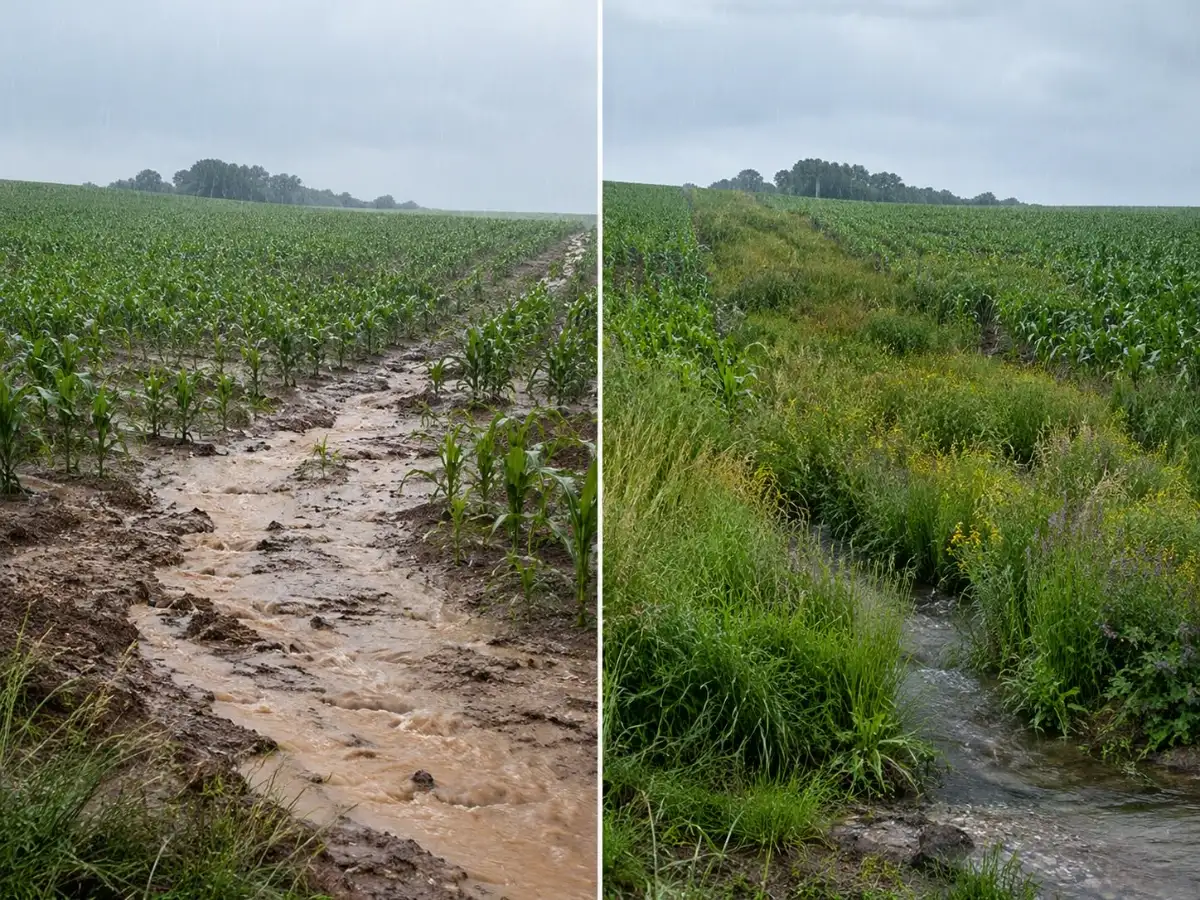
American agriculture has an annual runoff problem costing billions of dollars, and the solution that scientists keep coming up with isn't a new pesticide, a genetically modified seed, or an app. It's wildflowers. One of the more surprising numbers in conservation science is that over 10 years of field trials at Iowa's Neal Smith National Wildlife Refuge revealed that pollution draining from a cornfield can be reduced by nearly nine-tenths with less than a 10% conversion to native prairie.
The “Science-based Trials of Rowcrops Integrated with Prairie Strips (STRIPS)” project at Iowa State University reports a 95% reduction in sediment loss, 90% reduction in phosphorus loss, and approximately 84% reduction in total nitrogen loss when 10% of a row-cropped field is planted with prairie strips instead of corn and soybean crops. Not a rounding error; it's the difference between a muddy or brown river after each storm and the one that keeps its water mostly clear. If you were raised to believe that the Midwest consisted of nothing but endless fields of corn, here's the twist: the massive pools of corn are doing a number on big sections of the Mississippi River watershed and, ultimately, the Gulf of Mexico. And the solution may not involve tearing up America's farmland. It could simply be a grass strip.