
Get all your news in one place.
100’s of premium titles.
One app.
Start reading
Marie Claire
Marie Claire
Lifestyle
Lily Russo-Bah

At Givenchy, Sarah Burton Is Doing Something Radical—Designing Clothes That Fit

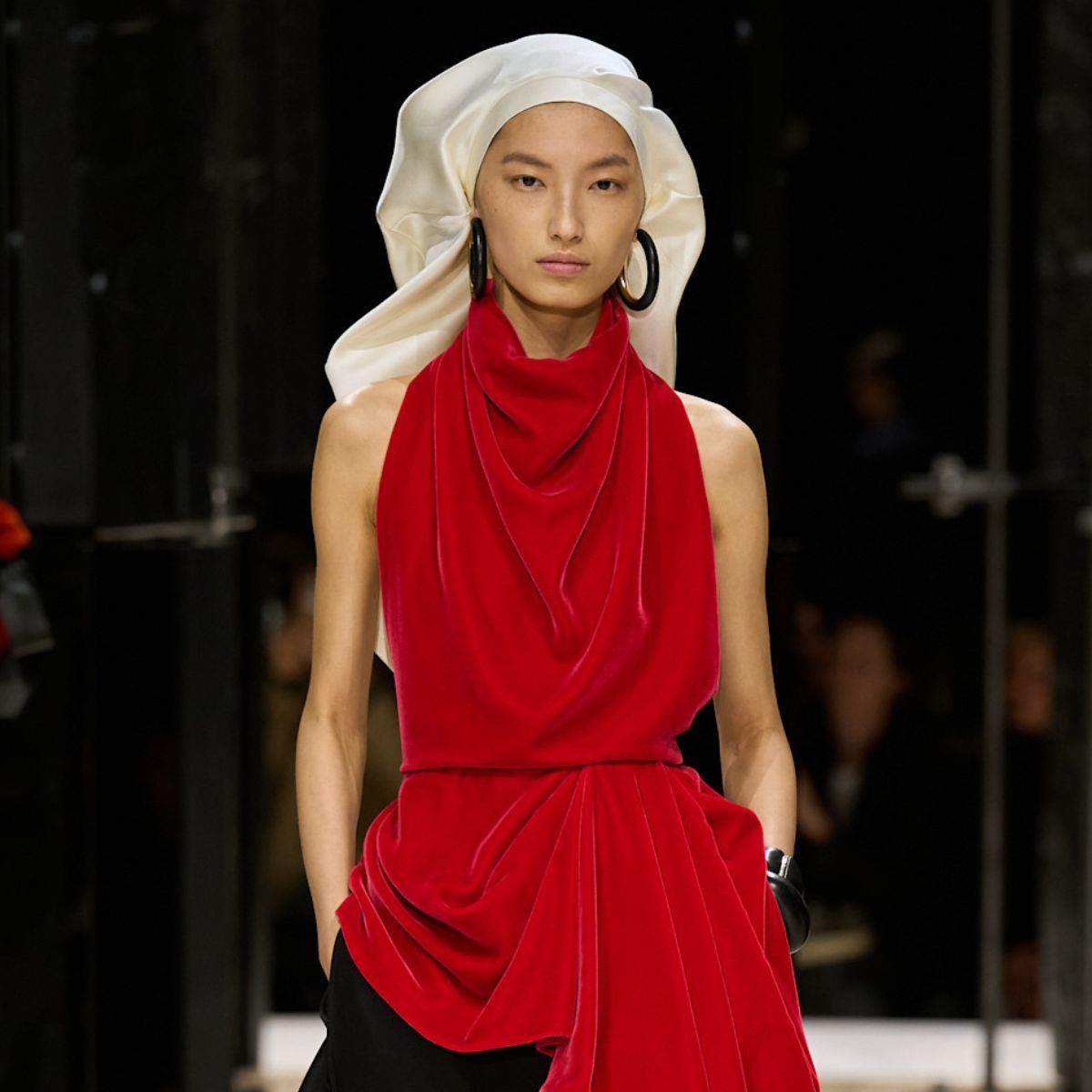
Givenchy Autumn/Winter 2026.

Fashion month is undoubtedly the most exhilarating time in the calendar for me. Twice a year the world’s greatest design talent unveils new collections across four cities — New York, London, Milan and Paris — culminating in the French capital with a stellar audience of celebrities, editors and buyers to boot. From Jack McCollough and Lazaro Hernandez’s new chapter at Loewe to the theatrical spectacle of Schiaparelli, there is never a shortage of creativity or craftsmanship.

But whether I’m in London or Paris, sitting front row or attending a re-see appointment to examine the pieces up close after the show, I always ask myself: how do they fit? Do they flatter the model wearing them? And more importantly, will they translate onto a real woman’s body?

Of course, not every brand presents collections with wearability in mind. Some houses are driven by spectacle or conceptual storytelling. But at a time when designers are fighting for space and identity in an increasingly crowded market, the ability to merge creativity with real-world wearability feels more relevant than ever.

Few designers understand this balance better than Sarah Burton.

(Image credit: Launchmetrics)

Since joining Givenchy as creative director in September 2024, following a remarkable 26-year career at Alexander McQueen, Burton has begun carving out a new chapter for the historic maison — one that blends couture-level craftsmanship with an instinctive understanding of the women who will ultimately wear the clothes.

Her appointment felt like a full-circle moment. Burton spent over two decades at Alexander McQueen, including thirteen years as creative director following the death of the brand’s founder, Alexander McQueen. During that time she mastered the delicate balance between fantasy and function, turning the house into one of fashion’s most emotionally resonant brands while maintaining its commercial success.

At Givenchy, Burton brings that same sensibility — but with an added clarity of purpose. Her collections are not about designing for an abstract, imaginary woman. They are about designing for women as they actually exist.

And that distinction matters.

(Image credit: Launchmetrics)

As a former creative director and buyer, and now a fashion director, clothing is something I have lived and breathed for as long as I can remember. My mother’s first job was at Browns on South Molton Street in London in the seventies, where serving Paul McCartney and Linda McCartney while running around the shop floor in 10cm Charles Jourdan heels was simply another day.

Decades later, it was impossible for my mother’s love of fashion — and her deep appreciation for design and craftsmanship — not to be passed down to me. The most important lesson she ever taught me was that clothes are never just objects we wear. They are a language.

Through clothing we communicate who we are, how we feel and how we wish to move through the world. The right piece can give us confidence, presence and even a sense of control. Anyone who disputes this is merely denying one of life’s unwritten rules. But for clothes to empower us, they have to fit.

While that might sound like an obvious statement, a surprising amount of my career has been spent critiquing brands — whether high street or luxury — for failing to understand that, first and foremost, clothes must work with a woman’s body rather than against it.

Too often fashion asks women to adapt themselves to the clothes. As women we spend far too much time faffing with tops that need taping, dresses that require constant adjusting, or silhouettes that only function when standing perfectly still.

In truth, the greatest luxury, is simplicity: buying something, putting it on, and walking out the door. This is precisely where Burton’s work feels so refreshing.

(Image credit: Launchmetrics)

Across her early collections for Givenchy, tailoring has emerged as the foundation. Jackets are cut to follow the natural line of the shoulders, trousers skim the body rather than restrict it, and dresses are engineered with an understanding of movement. Nothing feels overworked, yet everything feels considered.

That doesn’t mean Burton has abandoned drama. Far from it. There are sculptural coats, razor-sharp tailoring and moments of couture-level embellishment. But unlike many runway collections, the spectacle never overwhelms the wearer. Instead, it serves her.

(Image credit: Launchmetrics )

This instinct has long defined Burton’s work. At Alexander McQueen she proved that emotion and technical mastery could coexist. At Givenchy she is demonstrating something equally powerful: that fashion can be both beautiful and practical. In an industry that often prioritises image over experience, that might just be the most radical idea of all.

Because ultimately, the women who buy these clothes are not standing under runway lights or posing for street-style photographers. They are living their lives — going to meetings, running between commitments, navigating daily life, careers and families. They need clothes that move with them.

And Sarah Burton, perhaps more than most designers working today, seems to understand exactly that.

Shop my favourite Givenchy capsule wardrobe pieces:

Sign up to read this article
Read news from 100’s of titles, curated specifically for you.
Already a member? Sign in here
Related Stories
Top stories on inkl right now
One subscription that gives you access to news from hundreds of sites
Already a member? Sign in here
Our Picks
Fourteen days free
Download the app
One app. One membership.
100+ trusted global sources.