
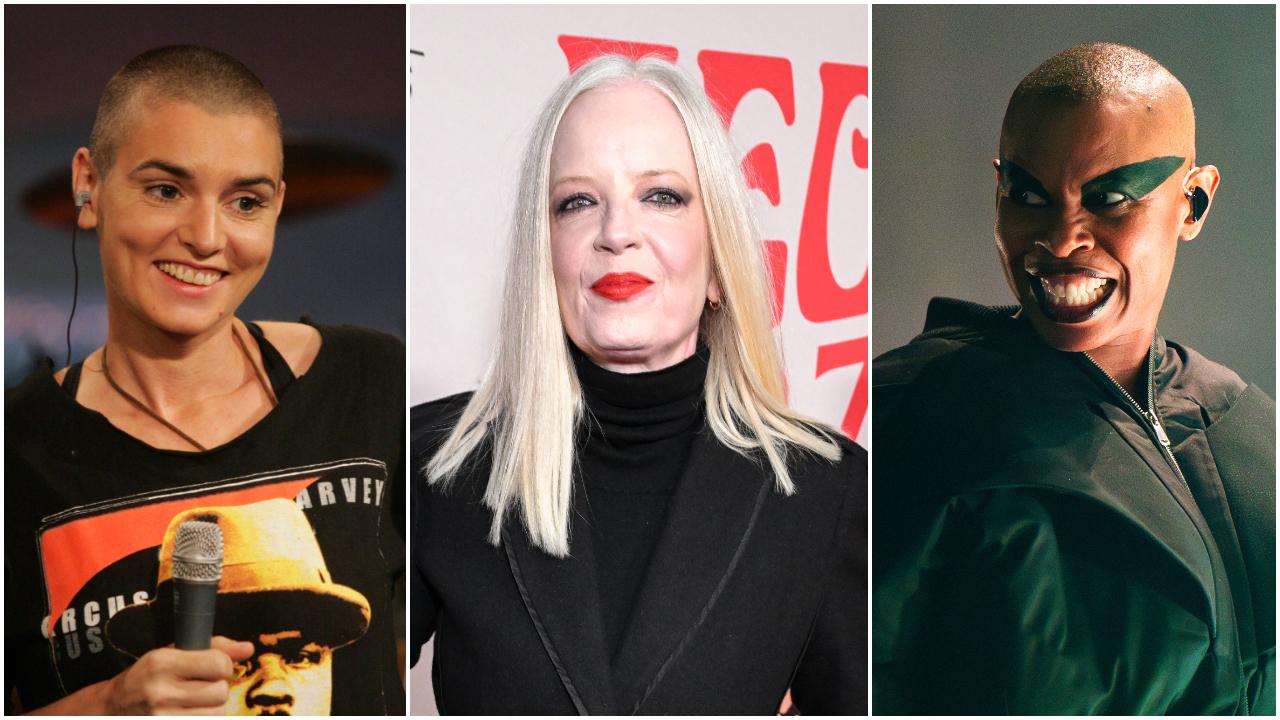
As superstars such as Lady Gaga, Olivia Rodrigo, and Billie Eilish readily admit, '90s artists such as Garbage's Shirley Manson, No Doubt's Gwen Stefani, Sinead O'Connor, Alanis Morissette and Skin undoubtedly helped pave the way for strong female voices in the music industry. But as Shirley Manson recalls in a new interview with The Guardian, a misogynist music industry wasn't already ready to accept this new generation of women.
“I didn’t notice a lot of the micro-misogyny and the micro-sexism at first,” Manson admits. “I was blinded by the dazzle of my career. I wasn’t paying attention. Back then, I read my own press, like a fool, and I was reading these horrible descriptions of me, really degrading or sexual in nature, or just nasty shit. It wasn’t just the male writers, although primarily the 90s music journalists were male. It really stung, and I found that hard.”
Asked for her thoughts on where this anger towards emerging female artists stems from, Manson says, “I think it goes back to the 90s offering a different kind of woman, for the first time, arguably ever in culture. Liberated, mouthy, opinionated, political, also often beautiful and powerful.”
“At first, I think they thought it was a marvellous distraction, a joyous kink," she continues. “And then, all of a sudden, they – I’m going out on a limb to say 'they', here, are the patriarchy – were like: ‘Wait a minute, these women are getting a lot of attention and taking up a lot of column space, and we’re going to crush it.’ Subconsciously, not deliberately, I don’t think. But there was a sense of: ‘You can go back to the hole that you crawled out of. Let’s get back to real music, serious music, proper creativity, important statements and important sounds coming from the men.’”














