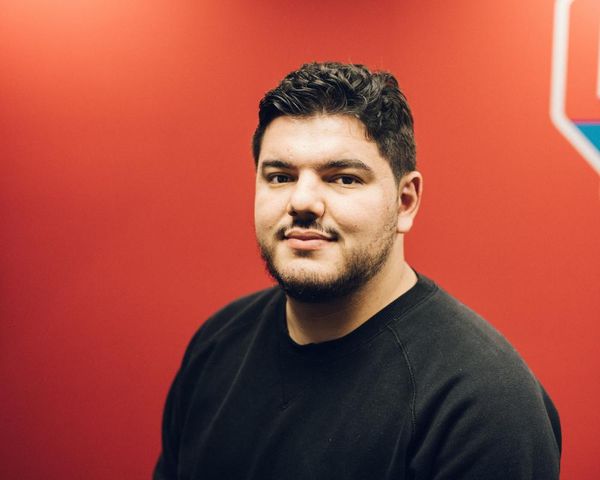
By the time I arrived as a student at the Australian National University, Jessy Wu was well established as the kind of person people had opinions about.
Every campus has its big names, the students who garner attention or court controversy or stick their heads up and have something to say. They are the ones who are discussed by people who haven't even met them.
Wu was active in student politics and a frequent contributor to Woroni, the ANU's student newspaper. On the same paper, I stumbled into the job of news editor, often neglected my actual subjects and covered student politics, fast realising journalism was not a game for making friends with everyone.

Those undergraduate years were fuelled by uncompromising idealism, promise and potential. With possibilities unfurling in front of us all, university was a heady time.
It is to this time that Wu has returned, after working in consulting and venture capital, in her debut novel Good Intentions.
The book is a campus romance that goes from the dingy offices of the student paper (forever grubby, uncleaned places) to the heights of the corporate world (grubby in their own way).
"I think that when I started writing this novel in my late 20s, I felt quite nostalgic for that time in my life and the person I was then, which I felt had been slightly eroded by my corporate career. So, yeah, nostalgia for that time was one of the reasons that I started writing this book," Wu tells me, years after we had last crossed paths.
In Good Intentions, protagonists Nadia Kuan and Jake Sullivan land the kind of brilliant stories on their campus paper we mere mortal former student journalists only ever dreamed of. The kind of follow-the-money scoops that make a reporter's career.
This work brings them together, a relationship formed over long hours in the basement offices of the campus paper in Sydney, but ultimately graduation looms.
MORE NEWS:
Can these lovers maintain their Woodward-and-Bernstein working life together or must they be star-crossed when faced with the choice of what comes next in the real world of careers and capitalism? How will their own different upbringings shape the decision they both face?
Wu tells me she was truly at a crossroads at the end of university. She had job offers and even sought out the counsel of philosopher Peter Singer at the sidelines of a public lecture.
"I'm not really putting my decision to become a consultant at Peter Singer's feet, even though that would be, you know, I could outsource responsibility," Wu says.
"But that was the path I ended up taking with this kind of internal narrative that I wasn't going to do it for a long time and that I was going to get these skills and learn about how the world worked.
"And then I would ... figure out how to make the world a better place. ... My oversight that I tried to bring out through Nadia is that you become a product of the environment that you're in, right? You internalise the KPIs that you're given."
Wu says she thinks you forget some of these youthful ideals as you strive to be good at your work. She started writing the novel in her last six months working in venture capital.
"I think I was thinking about all of these things and not loving life and feeling like I was, like, a handmaiden of late-stage capitalism and feeling so unmotivated to channel my life force into something that I had come to see as slightly loathsome. And I started kind of, like, writing as a form of escapism," she says.
Nadia, who follows a chance to go to New York and chooses a corporate financial career over journalism right after graduation, has to face up to a similar reality in the novel.
"She'd spent so many years learning to see the patterns in the data and she'd somehow missed the biggest pattern of all, that power protects itself by making you complacent in its lies. And that was like the externalisation of a thing that I realised," Wu says.
But Jake, who jumps at a journalism cadetship and quickly establishes himself as a top investigative reporter and the pointiest thorn in the side of corporate Australia, does not come through unscathed either, even though his career choice doesn't immediately demand the same values compromise.
"I don't think that Jake's theory of change is perfect ... Being a journalist, holding power to account, there are things he misses; there are things that he's too stubborn and bullheaded to really understand," Wu says.
Both Nadia and Jake will go on to pay high prices in different ways.
"Nadia pays in kind of like this really big way at the end when she sacrifices what she's built. And Jake, I think, sacrifices throughout his happiness and his material comfort. And there's a real loneliness to his conviction, too.
"So I think it's like sometimes, you know, maybe people who've never worked in corporate environments will kind of point the finger and say, 'Greedy capitalists!', you know, greedy, like, villain types in a shadowy room sitting on their pile of money, counting coins.
"I'm like, 'those caricatures don't exist'. They're not the reason why corporations do bad things."
Nadia and Jake's love story is tender and warm, with a streak of tragic melancholy. Wu says the dual perspectives of the novel was intended to answer the question of what is the cost of refusing to yield and what is the price of bending too much.
"But I think the fact that there is love and understanding between them means that those questions aren't understood as polar, but almost two sides of the same coin, and that there can be this understanding between people who decide to approach things differently and there can be mutual respect and love between them," she says.
At university, Wu says, you see things more in black and white. It's a view that has a kind of naivety to it. Life beyond is more complicated.
"I now believe moral clarity isn't choosing which side. It's understanding the costs of whichever side you choose," she says.