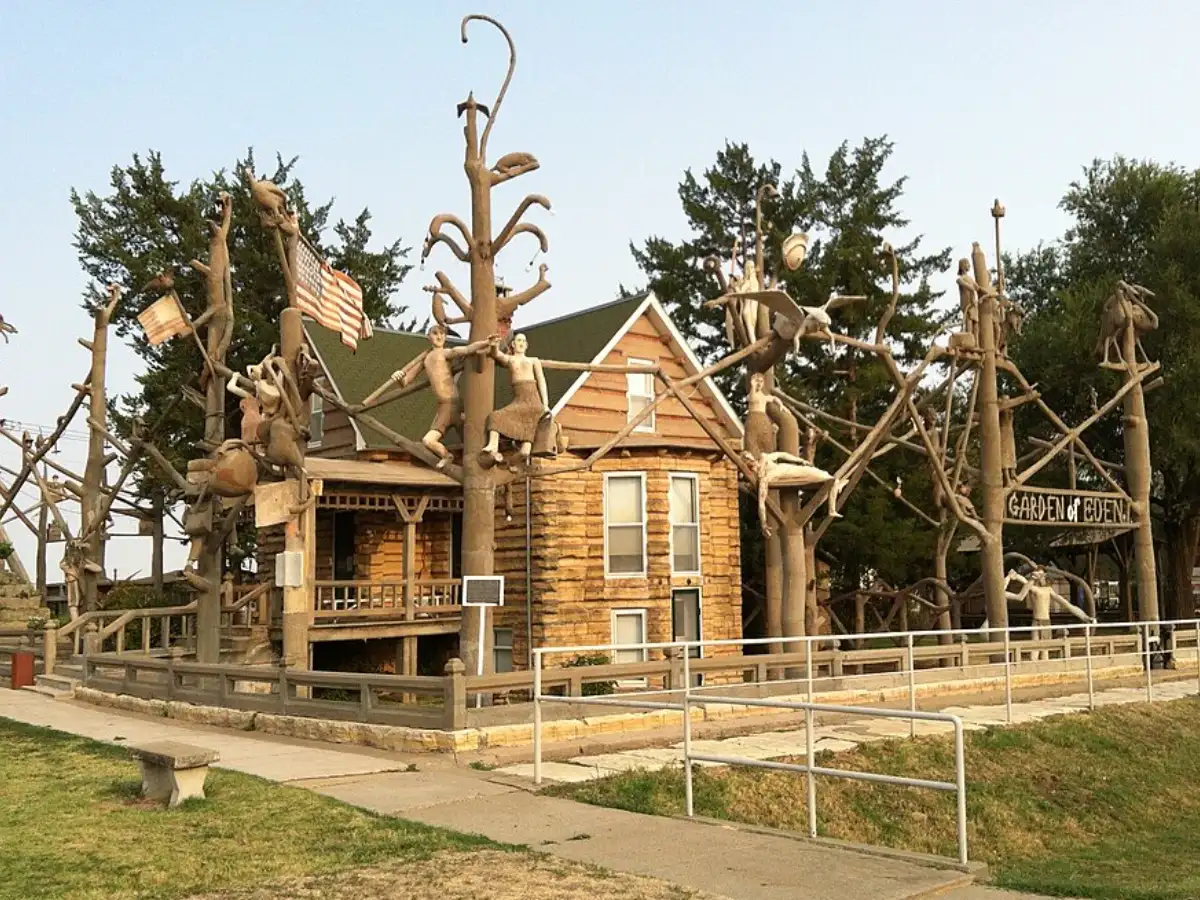
In Lucas, Kansas, a house became something far more ambitious than a place to live. When Samuel Perry Dinsmoor retired from farming, he began building a limestone home surrounded by concrete sculptures depicting biblical stories, political arguments and his view of modern society. The project, known as the Garden of Eden, turned his property into a roadside attraction that continues to draw visitors more than a century later.
According to the Kansas Historical Society, Dinsmoor was a Civil War veteran, schoolteacher, farmer and sculptor who moved to Kansas in 1888. He was 64 when he began constructing his unusual home and garden in the early twentieth century. Rather than treating retirement as a time to withdraw from public life, he used the years that followed to create an outdoor environment that expressed his religious beliefs and political convictions. The result was not simply a collection of decorative figures. Dinsmoor built an elaborate visual commentary on faith, labour, wealth and American society, using cement and limestone to turn his personal beliefs into a public spectacle. The property eventually became one of Kansas's best-known examples of grassroots art.