
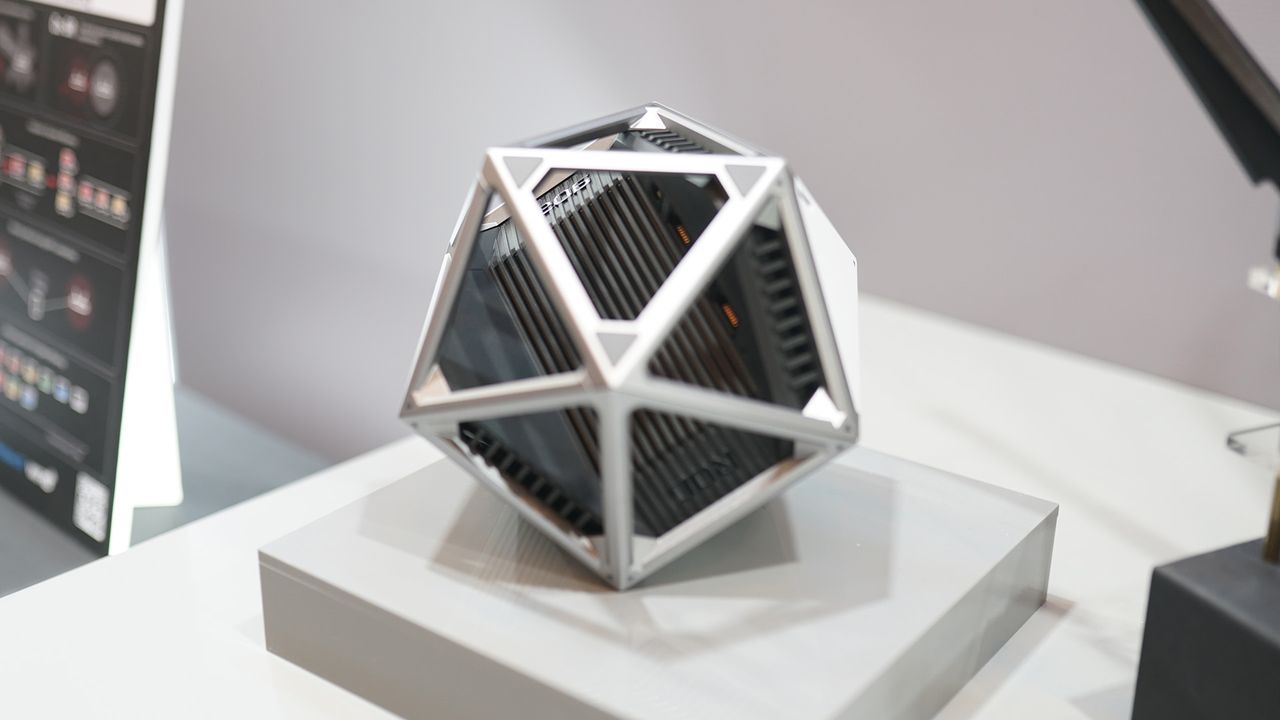
At CES, Asus has announced the ROG NeoCore, its first Wi-Fi 8 router concept along with results from what it claims is the world’s first real-world Wi-Fi 8 throughput test. The concept device looks like a D20 di from Dungeons and Dragons, with an industrial design along with some ROG branding.
Aimed at enthusiasts and gamers seeking high-end networking performance, the final specifications are still under wraps. The company, however, has confirmed that it will be built on its AiMesh platform allowing multiple Asus routers to connect and work together as a mesh network. It will also come with the Asus Ai Network Engine, which aims to optimize throughput and latency by monitoring traffic and allocating bandwidth dynamically.

“WiFi 8 is not just about chasing peak speed—it’s about making every connection smarter and more reliable. It enables seamless collaboration between smart homes, AI assistants, and cloud services, delivering stable performance anytime, anywhere,” said Tenlong Deng, Corporate VP and General Manager of Wireless and Networking at Asus.


As for the results, there isn’t any change in the overall data speeds, however, Wi-Fi 8 will primarily boost throughput with up to 2x higher mid-range throughput, 2x wider IoT coverage, and up to 6x lower P99 latency via smarter multi-AP/multi-client operation. The company has not shared details about the testing environment or system configuration behind these results, though it is claimed that the performance comparisons were conducted against comparable Wi-Fi 7 setups.
Asus is positioning Wi-Fi 8 to solve four core connectivity challenges - signal degradation over distance, weak two-way communication for low-power devices, densely populated network scenarios, and bandwidth inefficiency. To address signal degradation, Wi-Fi 8 should offer more consistent speeds as you move further from the router, helping maintain stable connections whether the router is indoors or outdoors. It also improves two-way communication for low-power devices like smart lights and controllers, ensuring they are always connected.
In crowded environments such as apartment buildings, nearby routers can interfere with each other. Wi-Fi 8 is expected to use smarter spectrum coordination to reduce interference and maintain stable performance. Finally, Wi-Fi 8 improves how bandwidth is managed, using more efficient spectrum use and smarter scheduling to reduce congestion, lower latency, and improve overall speeds.
Even though the Wi-Fi 8 standard is not expected to be finalized until late in 2028, Asus plans to release its first line-up of Wi-Fi 8 home routers and mesh systems later this year.
Follow Tom's Hardware on Google News, or add us as a preferred source, to get our latest news, analysis, & reviews in your feeds.