
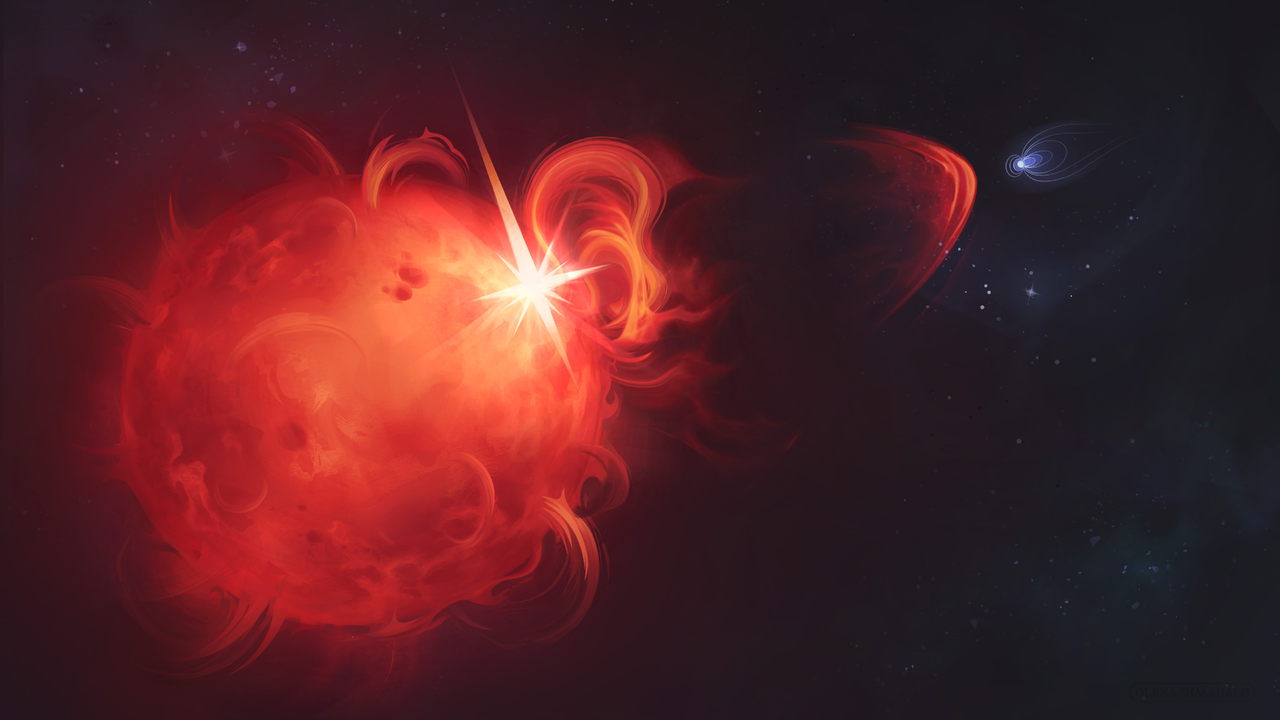
Thanks to the European Space Agency (ESA) spacecraft XMM-Newton, astronomers have seen a powerful explosion of plasma erupting from a distant star for the first time. We have seen (and felt) plenty of these coronal mass ejections (CMEs) from the sun, but even though we have long thought other stars expel such powerful outflows of superheated gas and magnetic field, astronomers had never before spotted them in any convincing way.
This first extra-solar CME, which erupted from a red dwarf star, wasn't any run-of-the-mill stellar blast either. This CME was dense enough and carried enough energy to strip away the atmosphere of any closely orbiting planet, with the ejected material traveling at 5.4 million miles per hour (2,400 kilometers per second). That speed, around 3,500 times as fast as a Lockheed Martin F-16 jet fighter, is something that is only observed in around 1 in 2,000 CMEs from our sun.