
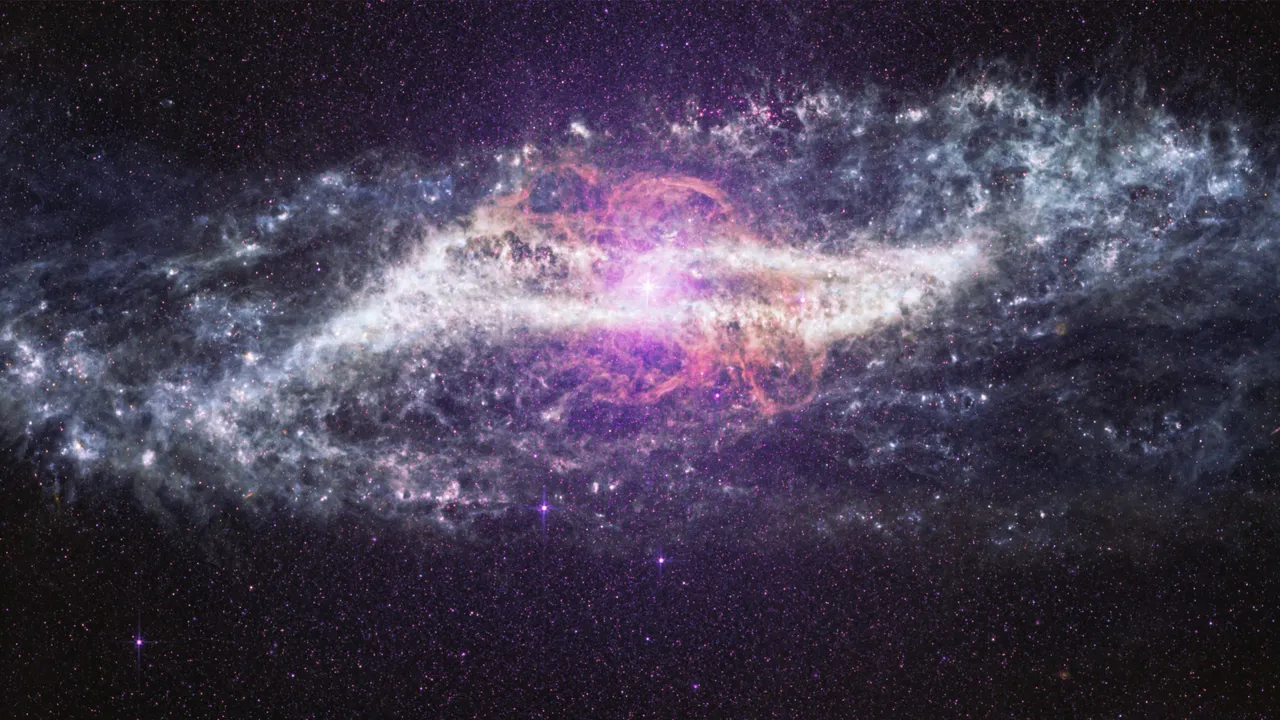
Images captured by the James Webb Space Telescope (JWST) have revealed new secrets about a nearby galaxy, leaving European Space Agency (ESA) astronomers with all sorts of questions about its mesmerizing structure and glistening star formations.
Centaurus A (also known as NGC 5128) is located 11 million light-years away from Earth and has been well documented by scientists since its discovery in 1826. However, vibrant cosmic dust shrouding the galaxy’s central region made it difficult to observe, and even the Hubble Space Telescope couldn’t provide detailed enough images.