Less than one week after space-based broadband provider AST SpaceMobile (NASDAQ: ASTS) saw its shares sell off after its BlueBird 7 satellite failed to deploy into the correct orbit after launching on Blue Origin’s New Glenn rocket, the stock is back in the headlines.
However, this time, the communication services upstart was the recipient of bullish news. On April 22, the U.S. Federal Communications Commission (FCC) granted AST SpaceMobile commercial authority to deliver direct-to-device (D2D) cellular broadband connectivity from space nationwide in the United States

It has been a whirlwind year for shareholders who have endured the stock’s extreme volatility and subsequent beta of 2.81. But with commercial approval from the FCC, buy-and-hold investors may be in for a smoother ride. Here’s what they need to know.
FCC Approval Is a 1 Small Step for AST SpaceMobile, 1 Giant Leap for Space-Based Cellular
The FCC’s decision serves as a major stepping stone for AST SpaceMobile.
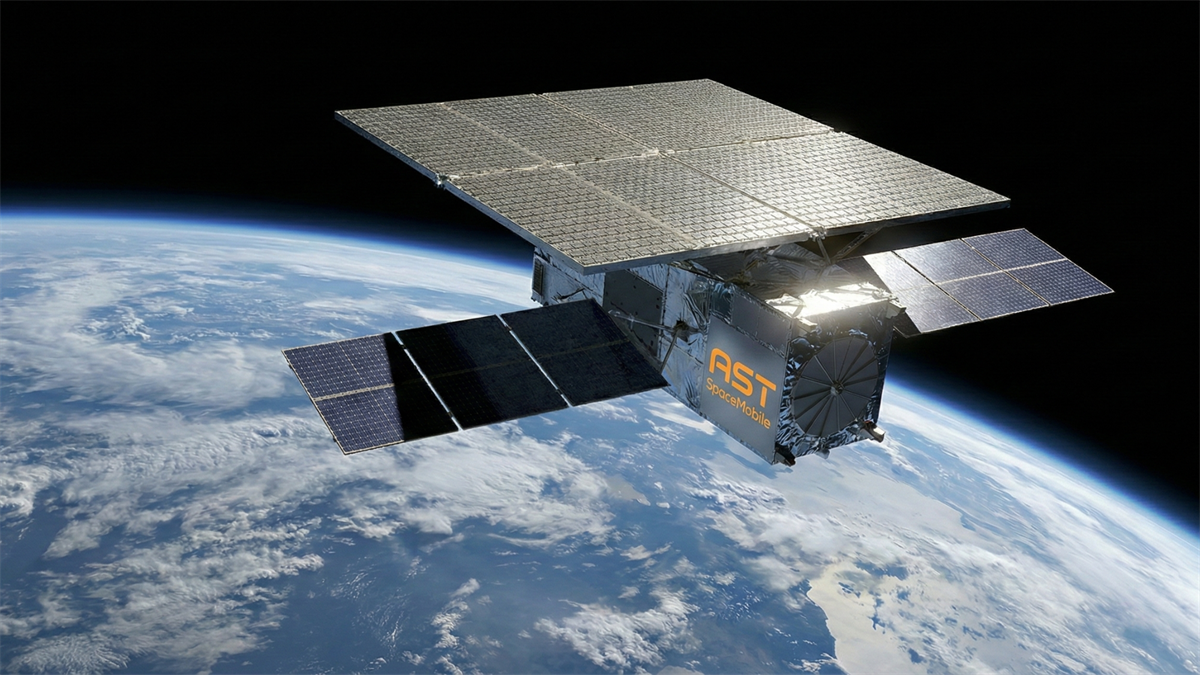
As the first and currently only company building a space-based cellular broadband network that will be accessible by everyday smartphones, FCC approval brings the firm one step closer to providing commercial and government service via a system of satellite-based antennas in non-geostationary low Earth orbit (LEO).
Authorization from the FCC allows AST SpaceMobile to launch and operate a constellation of up to 248 LEO satellites. The company’s 2026 target is to deploy between 45-60 satellites, but after its most recent launch failed to place another BlueBird satellite into orbit, its near-term goal could be at risk. Nonetheless, long term, the goal is to have as many 356 in LEO by the end of this decade.
But it won’t take 356 satellites to begin providing its already high-demand services. By integrating directly with its partners’ mobile network infrastructure, AST SpaceMobile will be able to provide “critical communications for first responders, government agencies, enterprises and consumers, and enable users to access space-based cellular broadband using standard, unmodified smartphones,” according to a company press release. FCC approval was a critical step in that process.
AST SpaceMobile Is Emerging as the Early Leader in the D2D Space-Based Cellular Provider Race
While Elon Musk’s SpaceX—and its looming initial public offering (IPO)—may have received the lion’s share of space-based telecommunications publicity this year, AST SpaceMobile is emerging as the leader of publicly traded companies operating in that industry.
The two companies are competing in the D2D satellite cellular service, but they have significantly different technology, strategies, and target clients. At a market cap of less than $30 billion, AST SpaceMobile is a nimble provider that does not own or operate its own launch capabilities.
Its services will be provided by massive phased-array antennas situated on its BlueBird satellites, which can span up to 700 square feet. SpaceX, by comparison, is currently valued at $1.8 trillion, maintains its own launch infrastructure, and its services are dependent upon thousands of smaller—and cheaper—satellites.
More importantly, SpaceX primarily provides internet service via its Starlink satellite constellation, with direct-to-cell services for rural areas under development as a supplemental offering. AST SpaceMobile, on the other hand, already finds itself firmly established in the D2D cellular service space thanks in large part to its numerous telecom partners.
From AT&T to Verizon, AST SpaceMobile’s Partners Are Paving the Way for Its Success
Prior to securing FCC approval, the space-based cellular broadband company has already established strategic partnerships with companies including Verizon Communications (NYSE: VZ), AT&T (NYSE: T), Vodafone Group (NASDAQ: VOD), Japanese tech conglomerate Rakuten (OTCMKTS: RKUNY), real estate investment trust American Tower (NYSE: AMT), and BCE (NYSE: BCE), one of Canada’s largest telecommunications and media companies.
Additionally, the firm’s role as a federal government contractor is blossoming. In February, AST SpaceMobile announced that it had secured a $30 million prime contract from the U.S. Space Development Agency (SDA) for the HALO Europa Program, marking the first-ever prime contract for its defense subsidiary and solidifying its role as a key government contractor.
That federal agreement marked the first-ever prime contract for AST SpaceMobile USA, the company’s wholly owned defense subsidiary, and the company’s second federal government contract announcement since the start of the year.
Beyond its telecom and government partnerships, the company has secured significant backing from a member of the Magnificent Seven. Since January 2024, Alphabet’s (NASDAQ: GOOGL) Google has been a major investor in ASTS and a strategic partner of the company. Google has collaborated with AST SpaceMobile on product development, testing, and implementation for Android devices.
At around 25%, AST SpaceMobile is also the largest holding in Alphabet’s investment portfolio. The company owns nearly 9 million shares of ASTS, which equates to 3.8% of the entire company, with its stake having reached over $1 billion after the stock surged over the past two years.
Big Backing Comes With Big Expectations
Those partnerships, as well as an influx of institutional ownership that has resulted in more than $3 billion in inflows over the past 12 months compared to just $509.5 million in outflows, suggest that the smart money has sky-high expectations for AST SpaceMobile.
Short-term, there is likely to be more volatility ahead. Based on 11 analysts currently covering the stock, ASTS receives a Reduce rating despite an average one-year consensus price target that carries an almost 7% potential upside.
But while the company continues to operate at a loss, expectations are for AST SpaceMobile to achieve profitability sometime in 2027 or 2028. Investors who are considering initiating a position may be able to capture significant upside in doing so before commercial services become widely available and the stock’s volatility subsides.
Where Should You Invest $1,000 Right Now?
Before you make your next trade, you'll want to hear this.
MarketBeat keeps track of Wall Street's top-rated and best performing research analysts and the stocks they recommend to their clients on a daily basis.
Our team has identified the five stocks that top analysts are quietly whispering to their clients to buy now before the broader market catches on... and none of the big name stocks were on the list.
They believe these five stocks are the five best companies for investors to buy now...
The article "AST SpaceMobile Gets FCC Green Light for Direct-to-Device Service After Launch Setback" first appeared on MarketBeat.