
Get all your news in one place.
100’s of premium titles.
One app.
Start reading
LiveScience
LiveScience
Kristina Killgrove

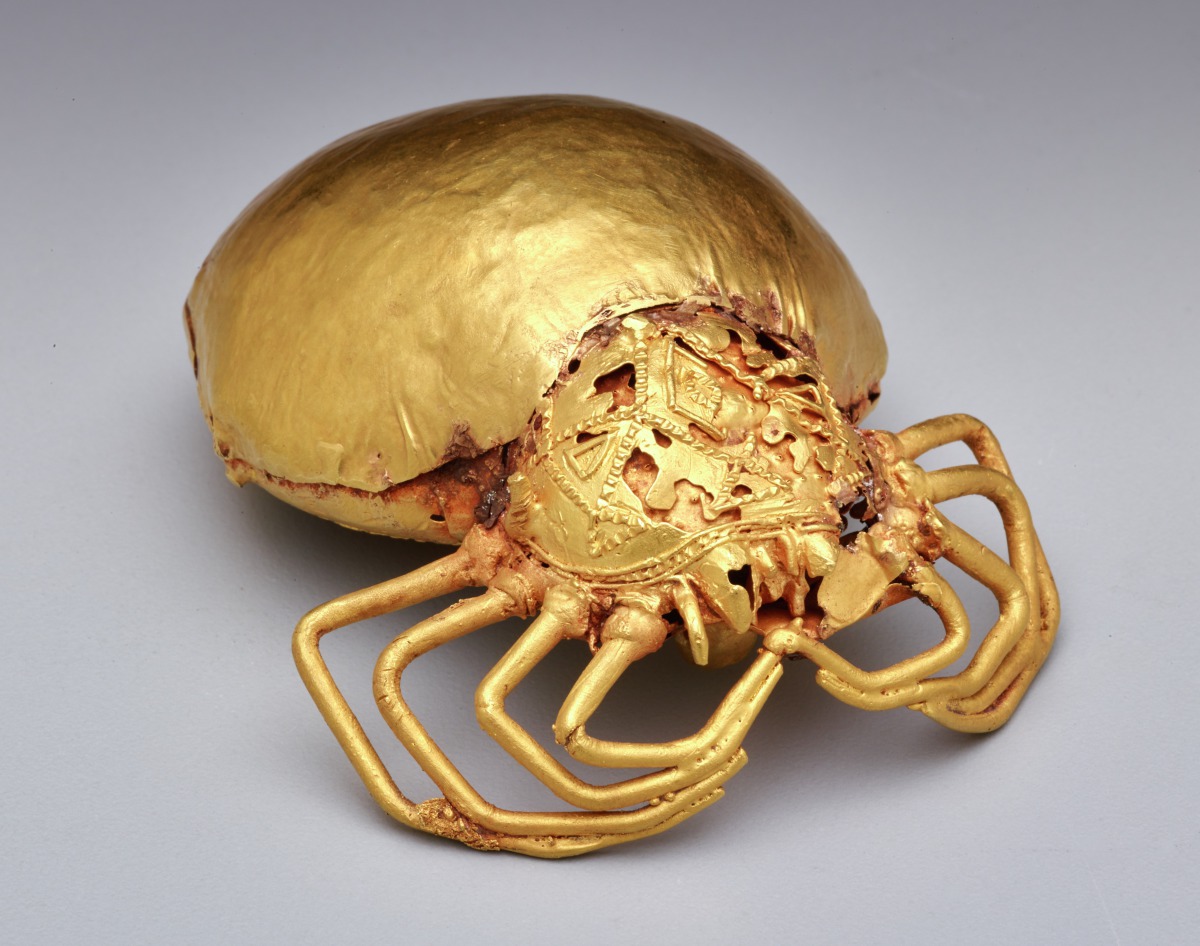
Asante spider: A rare African sword ornament from Ghana's Gold Coast that later helped a man in Texas barter for his life

The gold sword ornament from the Asante Empire has a unique spider shape. (Image credit: Image courtesy of the Dallas Museum of Art; McDermott African Art Acquisition Fund)
QUICK FACTS

Name: Asante spider

What it is: A gold sword ornament

Where it is from: Kumasi, Ghana

When it was made: Late 19th century

The Asante Empire (also known as the Ashanti Empire) ruled the Gold Coast of West Africa in what is now Ghana for two centuries (1701 to 1901). One of the most powerful symbols of the Asante rulers was the ceremonial sword, which was decorated with a cast gold ornament often shaped like an animal. This one-of-a-kind spider ornament belonged to one of the last Asante kings, Kwaku Dua II.The Asante spider ornament was made from a gold-copper-silver alloy, according to the Dallas Museum of Art, which purchased the item from a Texas family in 2014. The spider measures 4 by 2.9 inches (10.2 by 7.3 centimeters) and may have once been affixed to an Asante ceremonial sword. It was likely taken out of Ghana in the late 19th century, along with hundreds of other royal gold objects, during one of the Anglo-Ashanti wars as Britain expanded its control over the Gold Coast.In 1884, Sir Samuel Rowe, the British governor of the Gold Coast, was visited by Bosommuru, the chief spokesman of the Asante royal court in Kumasi, the imperial capital. During the state visit, Bosommuru gave Rowe the gold spider as a mark of friendship from Kwaku Dua II. According to Roslyn Walker, a curator at the Dallas Museum of Art who researched the history of the spider, Bosommuru said the spider was a symbol of wisdom and only the king was allowed to wear the spider emblem on his sword.

But Rowe decided to return the gold spider to the king, as it was illegal for British officials to accept gifts ‪—‬ so he sent it back to Kumasi with a British envoy, Robert Low Brandon-Kirby. It is unclear how Brandon-Kirby ended up owning the gold spider, but he brought it with him to the U.S., where he partnered with a Scot named James Cree to buy land in the Southwest — and incensed the locals, who found Brandon-Kirby to be incredibly pompous and rude.

Walker noted that, according to a family story told by Charles Cree, "B.K. made himself unpopular among the local population. Word reached him that a lynching party was on the way to kill him, so he quickly sold out at a bargain price to my grandfather [James], and allowed himself to be smuggled out of the country in a pickle barrel." The gold spider was handed down over generations of Cree family members before being purchased by the Dallas Museum of Art. The well-traveled royal Asante spider ornament is one of a kind, according to Walker, and "no other cast gold spiders have surfaced in [Asante] collections to date." For more stunning archaeological discoveries, check out our Astonishing Artifacts archives.

Sign up to read this article
Read news from 100’s of titles, curated specifically for you.
Already a member? Sign in here
Related Stories
Top stories on inkl right now
One subscription that gives you access to news from hundreds of sites
Already a member? Sign in here
Our Picks
Fourteen days free
Download the app
One app. One membership.
100+ trusted global sources.