Get all your news in one place.
100’s of premium titles.
One app.
Start reading

As Trump-era cuts hollow out preservation, Black philanthropists step in to save history

Private nonprofits and Black philanthropists are stepping in to save endangered Black history touchstones as the Trump administration orders agencies to scrub or rewrite "equity-related" public history.

Why it matters: Private Black funding is becoming the last line of defense for many sites central to the country's democratic and civil rights memory, as the federal government retreats from preservation.


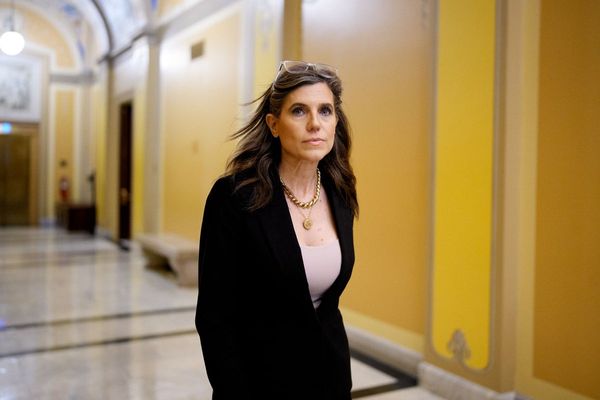
  • "It's my hope that we don't stay in this weird and tragic period," Deborah D. Douglas, author of "U.S. Civil Rights Trail: A Traveler's Guide to the People, Places, and Events that Made the Movement," tells Axios.
  • "So I'm glad that private individuals are in on the action while we figure out how to react and strategize to the overall degradation of the idea of Black people's contributions to this country."

What's happening: Nonprofits and Black activists have rescued several endangered landmarks on their own in recent months.

  • Celebrity backing: The Rhimes Foundation, founded by "Grey's Anatomy" producer Shonda Rhimes, underwrote the $1.5 million purchase of the Mississippi barn where 14-year-old Emmett Till was tortured and killed in 1955.
  • Nonprofit funding: The African American Cultural Heritage Action Fund last month announced $5 million in grants to preserve five iconic historically Black churches across the U.S., from Los Angeles to Chicago and Selma, Alabama.
  • Community ownership: A collective of artists bought Nina Simone's childhood home in Tryon, North Carolina, after the Action Fund completed restoration work. Kansas City professionals and activists is working to save the aging home of Satchel Paige, a Negro League legend and baseball Hall of Famer.
Photos: First African Baptist Church, H T Kwashie, Berglund, provided courtesy of the African American Cultural Heritage Action Fund.

Follow the money: The Action Fund grants for churches are part of the Preserving Black Churches initiative, a $60 million effort funded by Lilly Endowment Inc. that pairs capital investment with long-term stewardship planning.

  • Among the churches awarded grants is the First African Baptist Church (Beaufort, South Carolina), built by freedmen in 1865 and tied to Reconstruction-era Congressman Robert Smalls.
  • Second Baptist Church in Los Angeles, a hub for NAACP organizing and speeches by Martin Luther King Jr. and Malcolm X, also will receive a $1 million grant.

The intrigue: Some Black Americans are purchasing former plantation sites and removing them from the market as wedding venues to transform them into places of reflection and education.

  • Twin sisters Jo and Joy Banner, co-founders of "The Descendants Project," purchased in 2025 the historic Woodland Plantation in LaPlace, Louisiana — a site deeply tied to the 1811 German Coast slave revolt.
  • Journalist Michael Harriot, author of "Black AF History: The Un-Whitewashed Story of America," tells Axios he also recently bought a plantation in Georgia and is working with Black artists to reimagine the site.
  • "Once I owned it, the true story could finally be told — not to erase anyone else, but to include the people who were written out," he tells Axios.

The big picture: Since returning to office, President Trump has signed executive actions targeting what the White House calls "radical" DEI and "anti-American ideology" across the federal government.

  • That's led to the rollback of diversity-focused programming across federal agencies, including the National Park Service, while boosting unfounded claims of discrimination against white Americans. A National Park Service spokesperson did not immediately respond to Axios.

The National Park Service recently dismantled a slavery exhibit at the President's House Site in Philadelphia — prompting a lawsuit from the city alleging the removal violated prior agreements and process.

  • Those actions have all but ended any hope that the National Park Service will take over new sites connected to Black history for preservation.

The bottom line: Black history isn't disappearing because it lacks value. It's disappearing because federal authority is receding.

  • What remains is being saved, piece by piece, by Black communities determined to preserve their own past — even when the government won't.

Go deeper:

Sign up to read this article
Read news from 100’s of titles, curated specifically for you.
Already a member? Sign in here
Related Stories
Top stories on inkl right now
One subscription that gives you access to news from hundreds of sites
Already a member? Sign in here
Our Picks
Fourteen days free
Download the app
One app. One membership.
100+ trusted global sources.