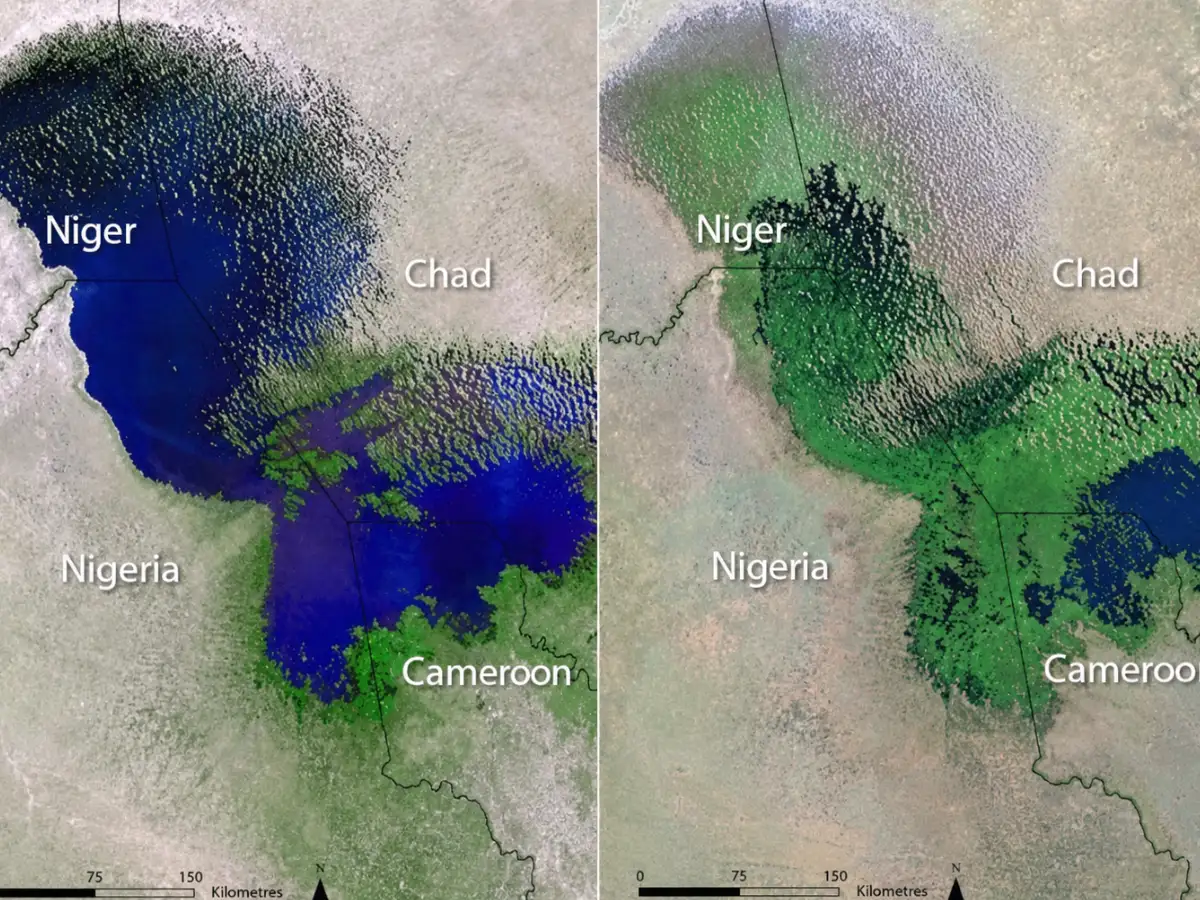
Most of the water in Lake Chad has disappeared. The lake now covers less than a tenth of its 1960s area, yet more than 30 million people in Chad, Nigeria, Cameroon and Niger still rely on it for water and food, according to NASA’s Earth Observatory report. That crisis has led engineers to revive an old, ambitious plan: Transaqua, a 2,400 km canal to bring water from the Congo River basin all the way to Lake Chad.
A 2,400 km canal is roughly the same distance as driving from New York City to Denver. Now imagine engineers digging a canal that long, just to take water from one river system to a completely different one. That’s really what Transaqua is proposing.

What exactly is Transaqua?
The idea was first sketched out in the late 1970s by the Italian engineering firm Bonifica. According to a 2020 study published in Water Alternatives, the original plan was to dam several tributaries of the Congo River, including the Mbomou, Uele, and Kotto rivers, and divert that water north via a 2,400 km navigable canal into the Chari River that feeds Lake Chad. The canal would also generate hydroelectric power for new settlements along the way. The same study mentions the price tag was estimated at around 50 billion dollars, even back in the 1980s.
The project sat still for decades. Political instability in the region, funding problems, and Bonifica’s own financial difficulties in Italy in the 1990s kept it on the back burner. But in February 2018, the Lake Chad Basin Commission, made up of the countries that share the lake, formally endorsed Transaqua as its preferred plan at a conference in Abuja, Nigeria. Italy then agreed to help finance a feasibility study.