Louis Vuitton, Prada and perhaps even Goyard were once the tote bags you couldn't walk down a high street without seeing—authentic or otherwise. But the luxury labels have a new rival to contend with, and the competition is fierce. Enter the rise of the everyday store tote. Though not, it should be said, your Asda bags for life.
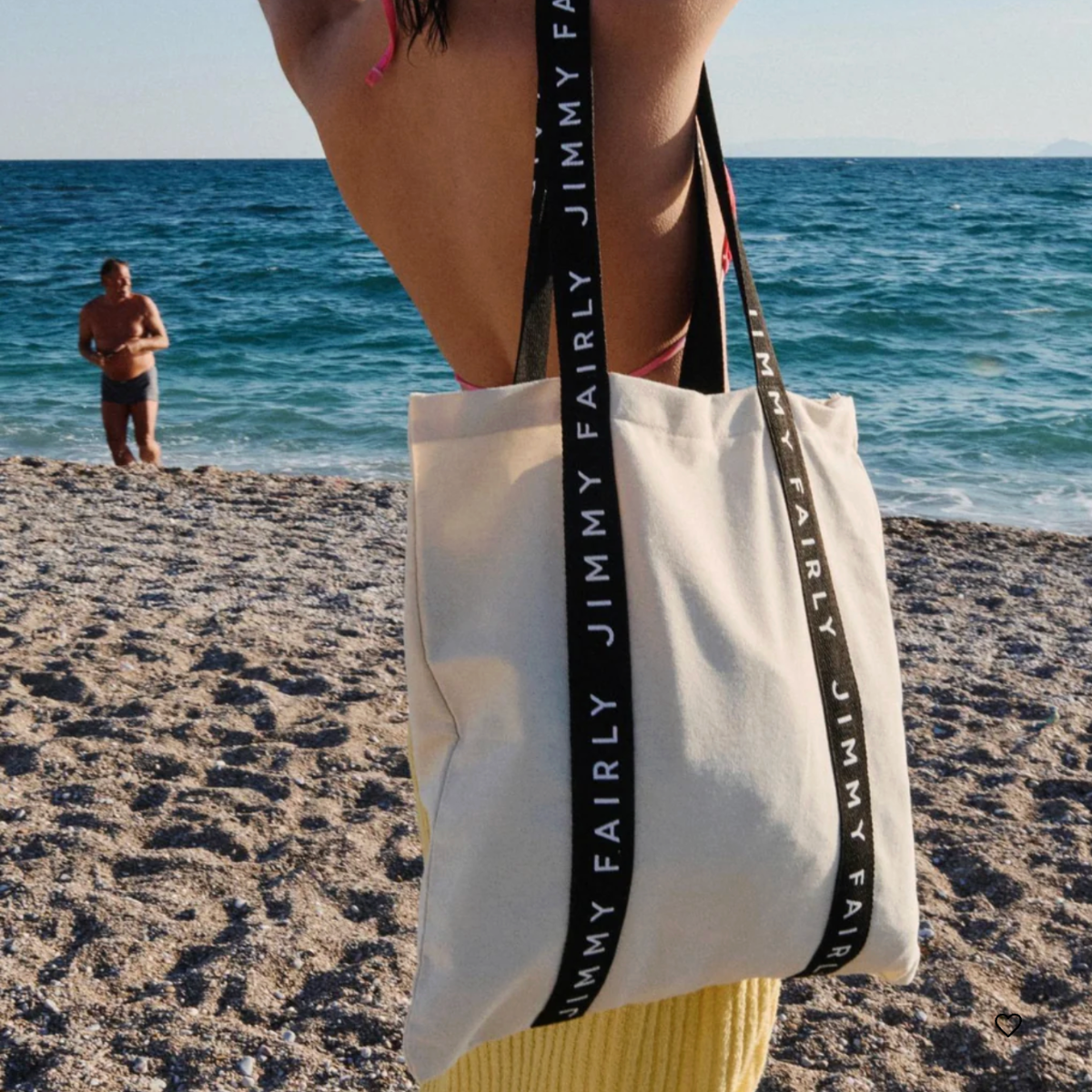
Take the Trader Joe's bag, which just ranked as the eighth hottest product of the first quarter of 2026 on the Lyst Index. The American supermarket's $2.99 shopper reselling for four times the price on eBay over here. Or the Daunt Books tote, spotted on Emily Ratajkowski and Elizabeth Olsen. Or the Jimmy Fairly shopper, gracing the shoulders of many a chic woman who, coincidentally, also loves a statement sunglass.

All enormously popular, and all presumably proof of loyalty not only to a brand but to the aesthetic associated with it. The store tote's cultural currency is not new, but it has never felt quite so potent.
With no Trader Joe's in the UK, the simple shopper does a lot of communicative heavy lifting: it tells anyone who passes you that you travel, that you're likely a foodie, that you're too cool to care about major labels and that you probably also love a good farmer's market. Unless, of course, you're one of the people buying them at extortionate Amazon prices—in which case, the illusion is doing the work for you.
Daunt Books bag holders are, naturally, keen readers—or at least like to be perceived as such. It has become the if-you-know-you-know signifier among the intellectually inclined, much as JW Anderson's Dior book totes emblazoned with covers of Dracula and Ulysses lean into the trending literary aesthetic.
For fashion fans, it's the Jimmy Fairly shopper that's appearing across countless social media feeds. An easy go-to that sits alongside the Anya Hindmarch Universal Tote, the £13 designer bag released in collaboration with high street and supermarket retailers since 2021. Boots being the current stockist.
But is the love for the specialist store tote purely aesthetic? Or is it a real-life reflection of how, and where, we're choosing to spend our money?

As McKinsey's State of Fashion 2026 report notes, consumers are continuing to rethink their spending, seeking value and redirecting their budgets towards other priorities, including wellbeing and longevity. With less disposable income and a growing interest in food, exercise and general wellness, the global fashion industry is again predicted to see low single-digit growth.
The luxury sector, however, is expected to see slight improvement. And as the Lyst Index confirms, the latest Chanel Maxi Flap was the only other bag besides the Trader Joe's tote to feature in the top ten most popular products of the year so far. Proof that ultra-luxury investment pieces aren't going anywhere. And neither, it seems, are their $2.99 counterparts.