Get all your news in one place.
100's of premium titles.
One app.
Start reading
The Independent UK
The Independent UK
Comment
Editorial

As a fragile ceasefire buckles, Trump must finally show he can say no to Netanyahu

Even with the emerging prospect of talks between Israel and Lebanon, this week’s US-Iran ceasefire is, as vice-president JD Vance described it, a “fragile truce”.

Missiles are still flying around the region, and the vital Strait of Hormuz – now the most famous and important shipping lane in the world – remains effectively closed to most traffic.
However, Israel’s aggression against Hezbollah forces in Lebanon, the loss of innocent lives, and the destruction of civilian infrastructure in the weakened Lebanese state are making the difficult task of securing peace in the Gulf virtually impossible.

The world is watching in dismay as Israel issues evacuation warnings in Beirut – amid fears of some kind of Gaza-level destruction.

Reports suggest that negotiations between Israel and Lebanon are to begin next week at the Department of State in Washington, just as delegations from the US and Iran arrive in Pakistan for their own talks.

But there will be little chance of finding consensus while Benjamin Netanyahu’s government takes its nihilistic military roadshow to Beirut, and even beyond.

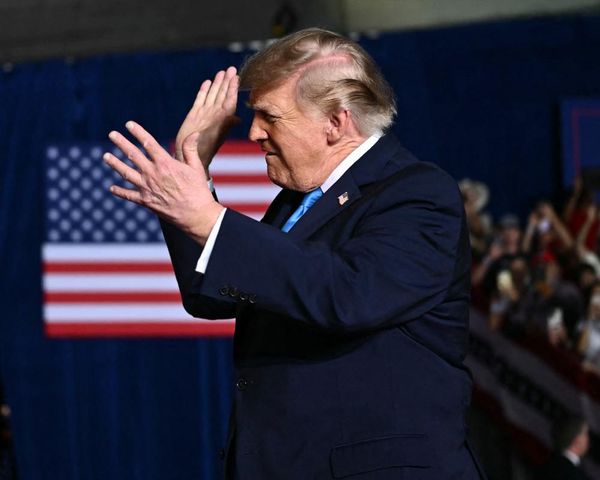
Only the US can force Israel to join the ceasefire, but Donald Trump appears as unwilling as ever to exert much pressure on his friend Bibi. Yet he will have to do so, if only to rescue the prospect of peace with Iran, and security for the Gulf states – crucial US allies – as well as to give his own Republican Party any chance of retaining control of Congress in the November elections.

It is not difficult to understand why Mr Netanyahu is being his usual stubborn self. He is deliberately and needlessly prolonging this conflict for the same reasons he manoeuvred the Americans into it in the first place. It is in Israel’s interests to weaken Iran and its terrorist proxies and partners, in every possible way and at every possible opportunity – and where such opportunities do not exist, to create them. From Israel’s point of view, that approach is entirely rational.

An Iran with nuclear weapons would be a menace to its neighbours in the Gulf, and therefore a potent threat to the interests of the United States. But to Israel, it would be existential. Mr Netanyahu is right to point to Iran’s constant antisemitic demonisation of the Jewish people, and the malign intent of groups such as Hamas, Hezbollah, and the Houthis in Yemen towards the state of Israel and its inhabitants.

The desire of many in Tehran, and those connected to the Islamic Republic, is to wipe Israel off the map. Hence the Netanyahu government’s determination to prevent the ultimate jeopardy of a nuclear weapon on board a long-range missile. “Iron Dome” or not, that is unacceptable to Israel, and it’s obvious why.

Yet the war in the Gulf continues to destabilise the region. By continuing to attack Lebanon, Mr Netanyahu believes he is also weakening Iran and Hezbollah. Nevertheless, his preference for direct military action is preventing a wider peace.

Indeed, any deal secured would surely include an agreement that should be very much in Israel’s favour, by getting Iran to renounce any stockpiles of enriched uranium. This is, in fact, what the Omani government brokered between the US and Iran just before Mr Netanyahu persuaded Mr Trump that war and rapid regime change in Tehran was a faster, more definitive path to the aims they shared.

Whatever merits that argument had are now irrelevant. Regime change has not spontaneously occurred (as some of Mr Trump’s advisers privately warned him it would not), and the Islamic Republic is stronger and potentially richer than before the war, even if its conventional forces have been decimated.

There is not, and never has been, a military solution to the tensions in the Middle East, including the Palestine-Israel question. So that means a ceasefire, and an end to Israel’s campaign in Lebanon – and, indeed, to the illegal settlement of the West Bank.

Left to his own devices, President Trump would probably want to deploy vast US resources on vanquishing Iran and, to borrow his favourite threat, bombing it back to the “Stone Ages”. Fortunately, he is not yet an absolute monarch, and he is not being left to follow his own appalling instincts untrammelled.

He gambled and lost in Iran, and now he needs to extricate himself before further economic and electoral damage is done to America, and the possibility of a successful impeachment becomes too real for comfort. He himself has admitted as much in public. Mr Netanyahu is a determined man, but, much as Mr Trump sympathises with him and wants to let him have his free hand in Lebanon, political survival after the midterms must come first. For once, he will have to say “No” to Bibi. Lebanon has suffered enough.

Sign up to read this article
Read news from 100's of titles, curated specifically for you.
Already a member? Sign in here
Related Stories
Top stories on inkl right now
One subscription that gives you access to news from hundreds of sites
Already a member? Sign in here
Our Picks
Fourteen days free
Download the app
One app. One membership.
100+ trusted global sources.