The aggressive enforcement tactics of ICE (the United States Immigration and Customs Enforcement) have been thrown into the spotlight after the fatal shootings of two US citizens and the deaths of six people in detention facilities in the past month alone. There have also been harrowing scenes of families torn apart and children detained.
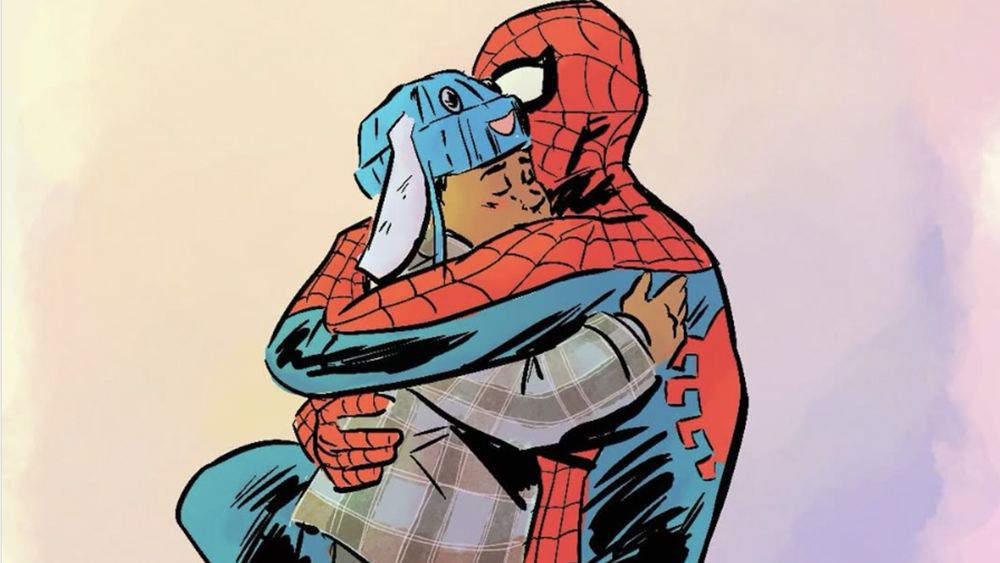
One recent case has spurred artists to comment on what's happening the way they know how. When ICE detained five-year-old Liam Conejo Ramos and his father Adrian in Minnesota on 20 January, Liam was wearing a Spider-Man backpack. This detail caught the attention of comics artists, who decided they needed to respond.
New York-based Comix Action called on the comics community to create art for Liam under the #Comics4Liam hashtag, and artists didn't disappoint. Dozens of people created images, many showing Liam in a blue bunny hat that he was wearing when he was detained by Ice. He's often depicted alongside Spider-Man and other superheroes.
“He was wearing a Spider-Man backpack while this ICE agent had a hand on his backpack, and that just stabbed me in the heart,” comic artist Greg Pak told MPR News.
“I don't know Liam, I don't know what he was thinking, but if he's wearing that Spider-Man backpack, I feel like we told him stories about heroes and about heroes protecting people. In that moment, those stories were a lie, and that makes me sick to my stomach, because he was not protected.”
You can see some of the art contributed in the posts below.
A judge has since ordered the release of Liam and his father, but Comix Action stresses that many other children remain in detention. You can find more information about its campaign at comics4liam.com.
There's also am initiative called ICE OUT! Cartoonists Against Ice , which was founded by Minnesota-based comic artists K. Woodman-Maynard, Jason Walz and Trung Le Nguyen.
From comics to iconic protest posters, visual art has a long history of raising awareness of social and human rights issues and communicating dissent. The response of artists to ICE actions in Minnesota shows it still holds that power due to its accessibility, immediate emotional impact and the ability of visual imagery to condense complex concepts.
Writing on her Substack, K. Woodman-Maynard describes how she wasn't sure initially if she had something to say but realised that through her comics she had the power to reach people
"I thought of Art Spiegelman’s Maus and what an impact it had in depicting something incredibly painful—the Holocaust—but still people read it and the comics format has a lot to do with that,” she writes.
“There’s a long history of comics as a form of resistance. They’re powerful communicators of experience, emotions, and humanity. Comics impact people in a different way than photos, videos, or writing can.”