
Get all your news in one place.
100’s of premium titles.
One app.
Start reading
Cycling News
Cycling News
Sport
Dani Ostanek

Around the world in 10 races – Offbeat races to watch in 2026

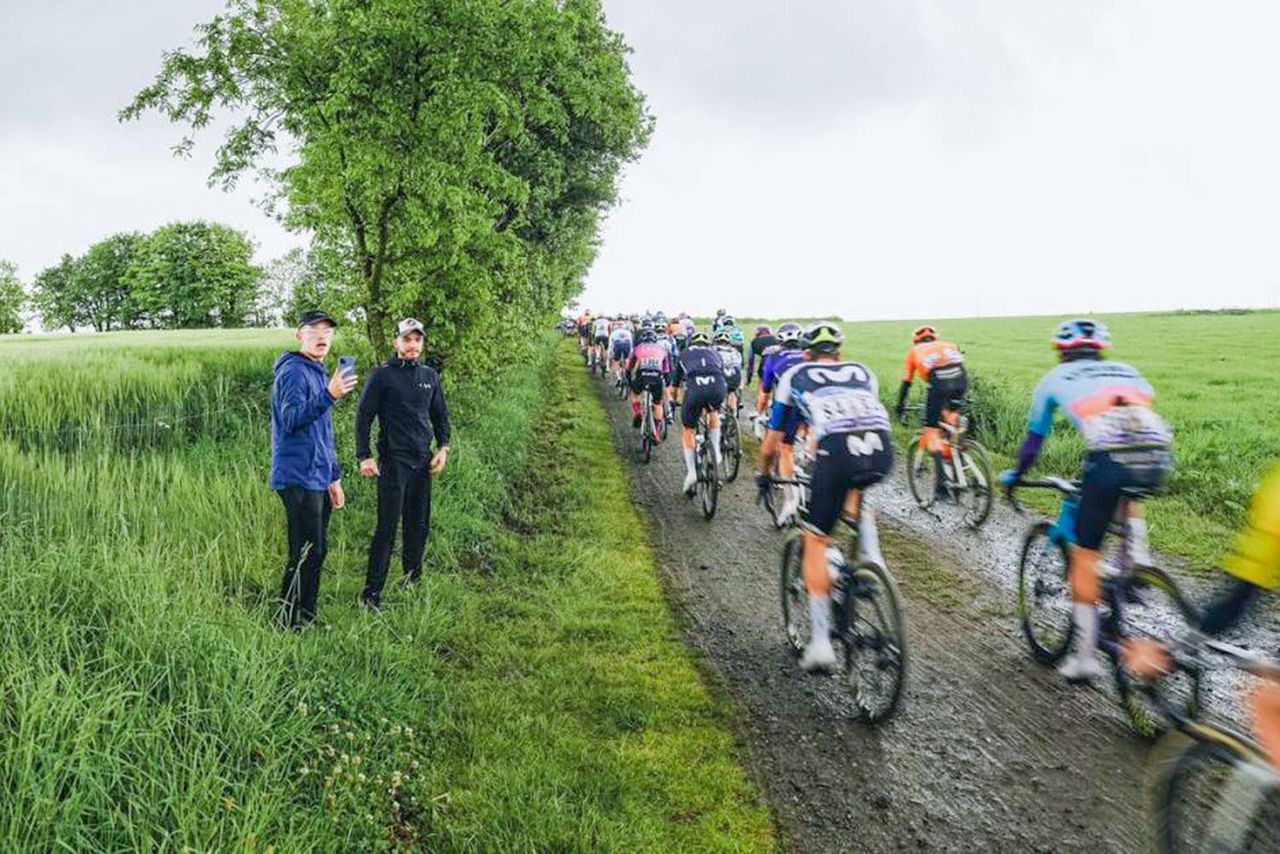
Riders pass by fans on a dirt 'ribin' sector at the 2025 Tro-Bro Léon.

As the season-long calendars packed with the biggest races in the world, it's no surprise that the men's WorldTour and Women's WorldTour capture the majority of attention through the year – from riders, teams, and fans alike.

But, of course, cycling is about much more than the top divisions of races in the men's and women's calendars, even if those races bring in the most attention and money.

A 'second division' of races, named the ProSeries, features races in Europe, Asia, and the Americas, while beyond that lie Continental tours in those continents plus Africa and Oceania.

We've taken a look beyond the top tier of the most famous races to delve into a selection of races all around the world and off the beaten track, as it were.

This is a selection of races that are far from being the most obscure on the calendar, but all interesting ones to keep an eye on for a variety of reasons.

Tour du Rwanda (February 22-March 1)

Fans watch the peloton race by at the 2024 Tour du Rwanda (Image credit: Getty Images)

For our first race on the list, we visit Africa and head back to the nation which hosted the most recent edition of the Road World Championships, the first to be held on the continent.

Next year will bring the 17th running of the Tour du Rwanda, a race which counts Eritrean boundary breaker Daniel Teklehaimanot, rising star Joseph Blackmore, and reigning champion Fabien Doubey on its honour roll.

It's a race known for its hills – 14,600 metres of elevation at the 2025 edition was equal to Paris-Nice – and its fervent fans, with spectators packing the roadsides to an extent not seen in many European races.

Recent years have brought more top-level involvement in the race, with teams including XDS-Astana, Israel-Premier Tech, Q36.5, Bardiani CSF, TotalEnergies and various WorldTour development squads.

Will 2026 bring more attention to the eight-day stage race? It's hard to tell, but with the Rwandan Cycling Federation (RCF) hoping to host a WorldTour race in 2027 and the Worlds having brought more attention to the nation, the RCF may be hoping to lure more teams over next March.

Last year's edition saw TotalEnergies teammates Joris Delbove and Fabien Doubey trade the race lead, with the latter eventually triumphing after the final stage was cancelled due to extreme weather conditions.

Elsewhere, young talents Aldo Taillieu, Brady Gilmore, and Duarte Marivoet scored wins. There was also African success as Eritreans Henok Mulubrhan and Nahom Zeray won stages, and home racer Shemu Nsengiyuma took home the mountain classification.

Ename Samyn Classic / Le Samyn Des Dames (March 2-3)

Le Samyn isn't as famous as Paris-Roubaix or the Tour of Flanders, but it's still a good watch (Image credit: Getty Images)

Spring Classics season brings a wealth of famous and high-profile races to watch over the cobbled and hills of Belgium and northern France, including the Monuments of Paris-Roubaix and the Tour of Flanders, and other major WorldTour events such as Gent-Wevelgem and the E3 Saxo Classic.

But away from the biggest races of the spring, there are plenty more which receive less attention. The harsh roads of northern Europe seem to host a race every few days in March and April, with the cobbles of Le Samyn is one such event, a 1.1 semi-Classic nestled in the calendar in early March, a month or so away from the biggest challenges of the spring season.

There are big names on the honour roll at Le Samyn, including Lotte Kopecky, Mathieu van der Poel, Lorena Wiebes, and Tim Merlier, but it's not a highlight of the spring Classics season. Nonetheless, it's an interesting race to watch out for with a mix of cobbled sectors and hills, even if the bergs aren't as famed or steep as those on Flandrian roads.

And that's another thing – Le Samyn stands as a relatively rare foray into Wallonia, held as it is in Dour near the French border and close to Mons. In all aspects, it's not the most glamourous race of the spring, but that's all the more reason to pay it a bit more attention.

O Gran Camiño (April 14-18)

Into the gloom – riders race along during stage 4 of the 2024 race (Image credit: O Gran Camiño/Kike Abelleira)

When one thinks of cycling in Spain, the images that spring to mind are of the long treks over the arid heartlands of the country, the sharp peaks of Asturias, Sierra Nevada, and the Basque Country, and the early-season warm-ups around the coasts.

The relatively remote north-west of the country is perhaps a less obvious landing spot, though the new-ish race, O Gran Camiño, is shining a light on the region of Galicia, north of Portugal. The five-day stage race showcases a part of Spain that doesn't hold the cycling limelight as other regions might.

Indeed, the Vuelta a España isn't a regular visitor to Galicia. Santiago de Compostela hosted the race finish in 2021, but the race hasn't visited its main population centres of Vigo, A Coruña, and Lugo since 2016. Elsewhere, the Tour of Galicia, held since 1933 and once won by Andy Hampsten and Frank Vandenbroucke, continues as an amateur race, while local team Xacobeo-Galicia ran from 2007 to 2010.

O Gran Camiño is the shining light of the region at the moment, its testing hilly course having already attracted big names during its first four years of running, including champions Alejandro Valverde, Jonas Vingegaard, and Derek Gee-West.

Its late February/early March date has meant it hasn't enjoyed the highest profile, but a move to April – between Itzulia and the Ardennes Classics, could boost its start list and its attention further.

Tro-Bro Léon (May 10)

Skirting the Breton coast and tackling dirt roads, Tro-Bro Léon is a unique race with a unique history (Image credit: Tro-Bro Léon/ASO)

Gravel cycling has boomed in recent years, surpassing other off-road disciplines in terms of popularity, hype and headlines. Road racers have crossed over to get a taste of the dirt, while major races have clamoured to liven up their routes with gravel roads.

Some races have featured dirt and gravel well before it was trendy, including the Breton one-dayer Tro-Bro Léon with its ribin roads. The race has run since the mid-1980s and features almost 30 sectors of its own genre of dirt road – farm tracks, which more often than not come with a line of grass down the middle.

Held on the northwest tip of Brittany, in the most remote corner of France, Tro-Bro Léon was for the longest time run by one man, Jean-Paul Mellouët, who picked the sectors, cobbled together the budget, and designed the poster himself.

Rather than being founded to sell newspapers or promote tourism, the race was created to support local Breton-language Diwan schools – a noble cause from a man who was brought up in an era when the national government actively discouraged speaking the language. Another quirk is the race's main prize, with the best home rider taking home a piglet, a ploy to promote local farms.

In recent seasons, the race, now under the auspices of ASO, moved from April to May to own its own calendar spot away from bigger Classics. More international teams have joined the action, including Movistar, XDS-Astana, and Bahrain Victorious. All eyes may be on the Giro d'Italia, but Tro-Bro Léon is a race well worth checking out.

Sibiu Cycling Tour (July 4-7)

The peloton passes the River Olt on the road to the summit finish of Bâlea Lac during the 2025 Sibiu Cycling Tour (Image credit: Sibiu Cycling Tour/hila.ro)

Back to Europe now, even if Romania still lies some way away from the cycling hotspots of Western Europe, and the Sibiu Tour, a four-day 2.1 stage race held in the centre of the country.

Held in early July since 2011, the race has evolved somewhat from primarily hosting Continental teams from Central and Eastern Europe to featuring as a launching pad for up-and-coming GC riders.

In 2017, Egan Bernal stormed to his first ever stage race victory while a 22-year-old Aleksandr Vlasov finished third the next summer. More recently, Cian Uijtdebroeks and Lennert Van Eetvelt have also stepped onto the final podium, while in 2024 the race formed part of Florian Lipowitz's rapid rise to success. In 2020, it also had an extra claim to fame as the first UCI-ranked race to be held during the COVID-19 pandemic.

There's variety packed into the short stage race, with a time trial and sprint stage featuring during the week. But the mountains make the headlines, with the long ascents to Pǎltiniş and Bâlea Lac (a huge 25km climb rare outside the Grand Tours) hosting the biggest battles of the race - and where the next GC star might just be making an impact for the first time in their careers.

Tour of Magnificent Qinghai (July 5-12)

The Tour of Magnificent Qinghai is based around Qinghai Lake (Image credit: Tour of Magnificent Qinghai)

China may host the WorldTour later in the season via the Tour of Guangxi, but away from cycling's top division season closer, the nation hosts plenty of racing throughout the season.

In 2026, there will be eight Chinese stage races on the UCI Asia Tour, including five in September, while the Tour of Qinghai and Tour of Hainan take up spots on the UCI ProSeries.

With 25 editions dating back to 2022, Qinghai is the oldest and most prestigious of these lower-level Chinese races, and it's the race which has attracted the largest crowd of western teams in recent years, too, with XDS-Astana, Caja Rural, Alpecin-Deceuninck, Bardiani-CSF, Polti-VisitMalta, Euskaltel-Euskadi, Burgos-BH and more paying a visit.

Chief among the reasons for the increased foreign attention has come about as a result of the battle over UCI points, especially with a view to retaining WorldTour status. The top 10 spots of a 2.Pro race offer up a total of 915 UCI points, while last year XDS-Astana walked away with a hefty 426 points.

Of course, there's more to the race than points chasing, with a mix of sprint and hilly stages spread across eight days of racing. However, it wouldn't be a surprise to see it and other ProSeries races out of the limelight (such as the Tour de Hongrie, Czech Tour, Tour de Langkawi) receive greater attention during the next three-year WorldTour cycle.

Vuelta Colombia (August 1-10)

High altitude and massive climbs are a major feature of the Vuelta a Colombia (Image credit: Vuelta a Colombia/Facebook)

Colombia has offered so much to cycling in the past four decades that it would be remiss of us to exclude the nation's biggest race from this list. The Vuelta a Colombia is the biggest race in the Americas and its most storied with 75 editions to date.

Measuring in at 10 stages and 1,600km, it's among the longer stage races in the world, while some of the mountains the peloton tackle overshadow anything seen in Europe. In recent years, the race has hit the Alto del Vino (30km, 2,850m), Alto de La Línea (23km, 3,100m), and the monstrous Alto de Letras (80km!, 3,700m), for example.

The modern roll call of winners includes names familiar to European fans such as Sergio Henao, Oscar Sevilla, and Rodrigo Contreras, while a look further back in history shows up names of those first Colombians to find success in Europe – Luís Herrera, Fabio Parra, and José Patrocinio Jiménez among them.

Nowadays, the cream of the crop of Colombian cycling – including Egan Bernal, Santiago Buitrago, Harold Tejada, and Einer Rubio – are spread across a number of top European teams, and they don't race the Vuelta. However, the nation's biggest race, one among many which has been called 'cycling's fourth Grand Tour' by fans, remains a sight to behold.

Volta a Portugal (August 5-16)

The wild and wonderful world of the Volta a Portugal (Image credit: Volta a Portugal/Podium Events/Matias Novo)

The early season Figueira Champions Classic and Volta ao Algarve may attract more international headlines, WorldTour teams, and Portugal's best racers, but there's little doubt over which is the main event on the Portuguese cycling calendar, and it isn't the two February meets.

No, that would be the Volta a Portugal, which will run for the 87th time this August. The race is a lower rank, run on the Europe Tour at 2.1 level, and attracts few teams that the mainstream European cycling fan would be aware of, but it's followed passionately in the country during a month where plenty take their summer holidays.

The 11-day Volta (yes, it's cycling's longest race outside of the Grand Tours) may be held in a major Western European nation, but can at times feel a world away from any events held in Spain or France.

It's primarily contested by a host of long-running Continental teams from the local scene, such as Efapel, Tavira, Loulé, Rádio Popular, and LA Alumínios, run in sweltering conditions, and runs without fail up two legendary mountains, Torre and Senhora da Graça.

Yes, much of the modern history of the Volta has been overshadowed by voided results and tales of doping that hark back to cycling's wild west of the 1990s and early 2000s (nowadays all local teams are part of the biological passport system). However, the Volta offers distinct and exciting racing, full of new names, teams and locations for viewers to explore - it's all streamed free by national broadcaster RTP, too!

Arctic Race of Norway (August 7-10)

Stunning scenery and 24 hours of daylight are par for the course at the Arctic Race of Norway (Image credit: Getty Images)

Scandinavia's top professional race offers something unique in the world of cycling, being the northernmost race in the world, lying inside the Arctic Circle.

The race is run among sights not seen in other major races, visiting fjords, spotting reindeer, and nestling among small towns in the furthest northern reaches of Norway. As races promoting tourism go, there are few better.

There's also a unique quirk/challenge for the racers, teams, and those heading north to cover the race as its extreme latitude means that the race is held during a time of year when the sun doesn't set. Blackout blinds and confused body clocks all around, then.

In racing terms, the four-day event falls in the lull after the Tour de France, meaning it doesn't often hit the headlines. As such, it offers a chance for up-and-coming names to compete, with the likes of Corbin Strong and Stephen Williams enjoying breakthroughs here in recent years.

Maryland Cycling Classic (September 5-7)

The women's peloton tackle the cobbles of Baltimore during the 2025 race (Image credit: Maryland Cycling Classic)

With a litany of races having fallen by the wayside and the rise of gravel, professional road racing in the USA is currently far from its highest watermark. However, a handful of races are keeping the flame alive, including the Tour of the Gila, Gran Premio New York City, and the Philadelphia Cycling Classic.

The relatively new Maryland Cycling Classic, now in its fourth year as a men's race and its second as a women's race, is the highest-ranked among the surviving events.

A hilly one-day Classic around Baltimore, it has seen Sep Vanmarcke, Mattias Skjelmose, and Agnieszka Skalniak-Sójka among its winners as a host of top European teams have made the journey to take part.

For 2026, the UCI lists both men's and women's races as three-day stage races, although race organisers indicated that the races will continue as one-day events. Previous editions have provided exciting racing and plenty of attacks on the hilly course and it's worth a watch.

Sign up to read this article
Read news from 100’s of titles, curated specifically for you.
Already a member? Sign in here
Related Stories
Top stories on inkl right now
One subscription that gives you access to news from hundreds of sites
Already a member? Sign in here
Our Picks
Fourteen days free
Download the app
One app. One membership.
100+ trusted global sources.