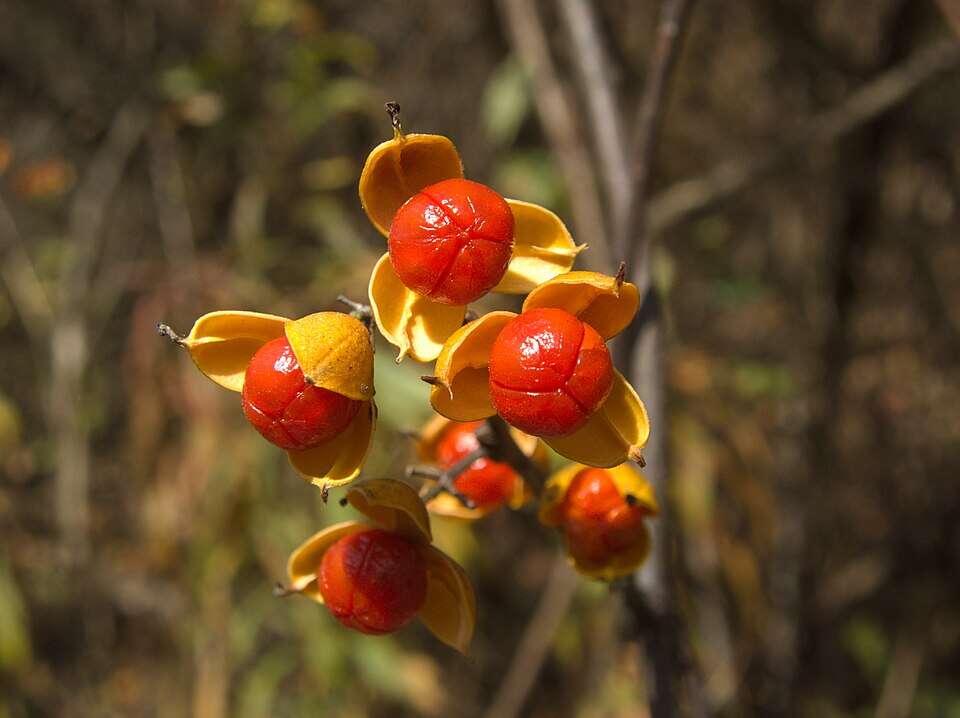
This plant, first grown as an ornamental, is now one of the most destructive invasive species in the eastern United States. Oriental bittersweet ( Celastrus orbiculatus ), a non-native plant species native to China, Japan, and Korea, was introduced because of its bright berries and vigorous growth. Horticulturists praised the vine for its appearance, and later it was also used for soil stabilisation and erosion control. However, it is now known for strangling trees and replacing natural vegetation because of its aggressive growth.
Get breaking news anytime, anywhere. Download the TOI app now!

A decorative vine that soon became popular
According to an Arnoldia article from the Arnold Arboretum of Harvard University, Oriental bittersweet was brought into cultivation from Asia around 1860, although the exact details of its introduction remain unclear. The vine is native to China, Japan, and Korea, where it naturally grows in woodland areas.
According to Harvard’s Arnoldia article, the vine was introduced into European gardens and later into the North American nursery trade in the late 19th century. The article traces the species’ path through horticulture, noting that the first European record appeared in Eduard von Regel’s 1860 Gartenflora article, which stated that the plant had only recently been imported into European gardens by Philipp von Siebold.
It also notes that the Arnold Arboretum received a plant from Samuel Parsons in 1879, while Kissena Nurseries listed the species for sale in 1886 or 1887. Its attractive berries and vigorous growth made it popular among gardeners. The vine produces yellow fruits that split open to reveal bright orange-red seeds, making it especially noticeable in winter.
From garden favorite to invasive threat
The same traits that made Oriental bittersweet popular also make it highly invasive. According to the USDA Forest Service, the vine climbs along tree trunks and forms dense layers of foliage that block sunlight from reaching native plant species. Over time, the woody vines can girdle trees, restrict growth, and add weight that increases the risk of tree breakage during storms and periods of heavy snow. According to the Centre for Agriculture and Bioscience International (CABI) Invasive Species Compendium, Oriental bittersweet is highly competitive with native plant species for light, water, and nutrients.
It spread far beyond gardens
The vine spread steadily over time. According to research by botanist David Patterson, cited in the Arnold Arboretum, the first naturalised population was documented in Maryland in 1912. By 1940, the vine had spread to 16 locations across six states.
Patterson’s research states that by 1974, Oriental bittersweet had spread to 33 states. The expansion was linked not only to nursery sales but also to recommendations for erosion control and roadside planting in some northeastern states.
Birds also helped spread the plant. According to the US National Park Service , Oriental bittersweet produces bright red-orange seeds that remain visible through winter, and these seeds are mainly dispersed by birds and other animals after they consume the fruits.
Why scientists remain concerned today
The spread of Oriental bittersweet continues across much of the eastern United States. The plant is now established across much of the eastern and central United States and is considered invasive in several states.
In addition to threatening native vegetation, the vine also poses a risk to American bittersweet ( Celastrus scandens ). Research conducted by scientists at the University of Illinois Chicago and the U.S. Geological Survey found that Oriental bittersweet can affect the reproduction of its native relative through cross-pollination and hybridisation. Pollen from Oriental bittersweet was found to be more effective at fertilising American bittersweet.
According to the National Park Service, removing Oriental bittersweet is difficult because small root fragments can resprout. Mechanical removal must be followed by continued management, while established infestations may require herbicide application.
Oriental bittersweet is an example of how introduced plants can cause long-term ecological problems. More than 160 years after its introduction, the vine remains a cautionary example for garden and landscape plantings.