Get all your news in one place.
100's of premium titles.
One app.
Start reading
The Economic Times
The Economic Times
Anand Datla

Aronimink bares its teeth: PGA Championship turns into a survival test, not a birdie fest

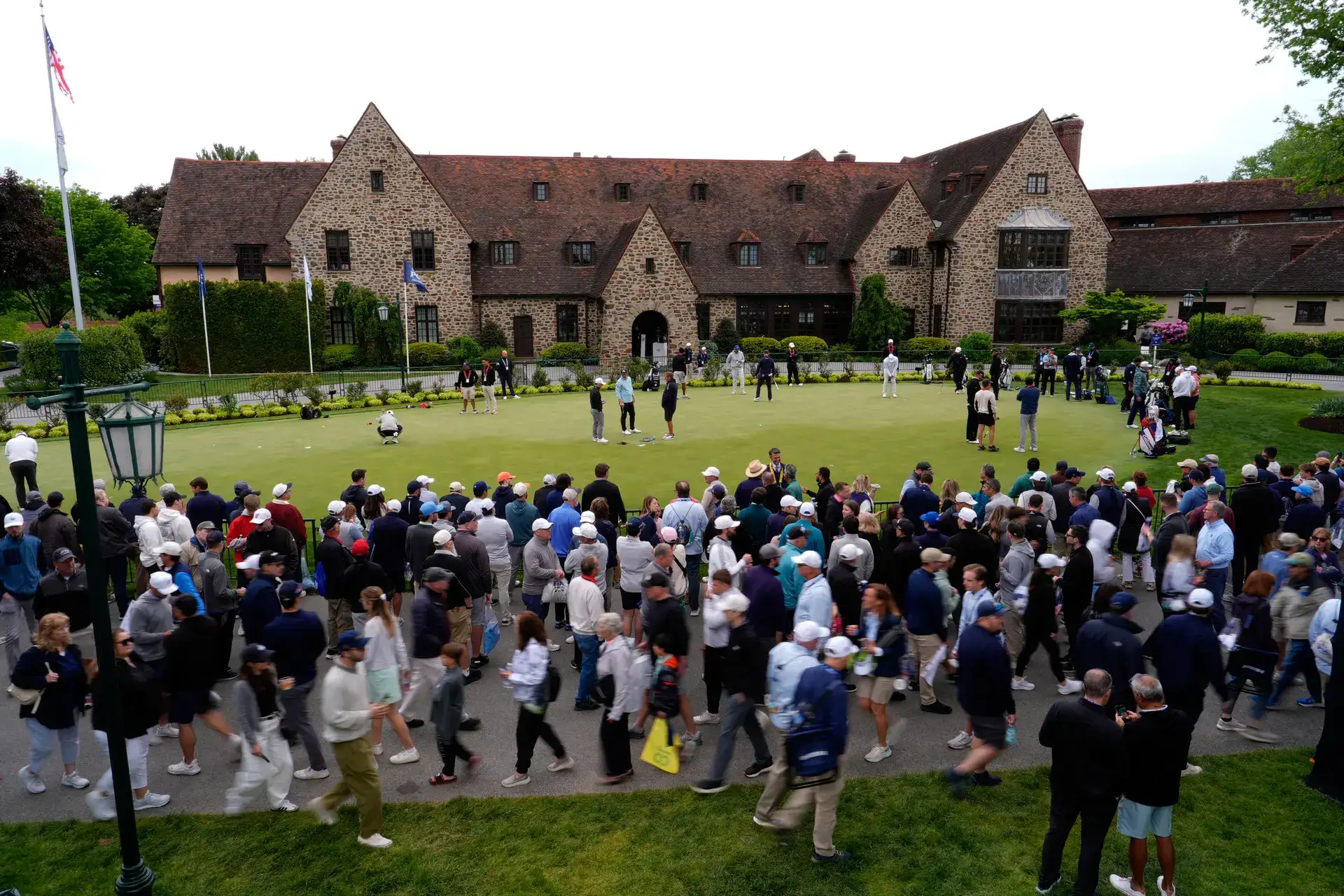
At the start of the week, Aronimink Golf Club wore a benign face. Freshly groomed and decked out to host its first PGA Championship in 64 years, it presented an inviting picture. As soon as the first competitive drives echoed across the property, Aronimink shed its civility like a well-cut jacket. The course bared its teeth, transforming what many expected to be a scorable par-70 into a brutal examination of mind, mastery, and margins.

By the end of Friday’s second round, only five strokes separated the top 43 players in a leaderboard so compressed it evoked the survivalist ethos of a US Open at Shinnecock Hills. The 108th PGA Championship had become less a birdie festival and more a test of restraint, accuracy, and nerve. Aronimink rewards angles and accuracy over raw power.
Fairways average around 30 yards in the landing zones, but their slopes make them play narrower. Misses tumble into thick, juicy rough, especially on the low sides, where irrigation and fertilizer create especially punitive lies. There is no forgiving intermediate cut; the transition is immediate and unforgiving. The true premium this week is in putting and making greens in regulation, together. Past PGA Tour winners like Keegan Bradley and Nick Watney gained strokes on the greens, where hot putters often trumped elite iron play.

Wedge opportunities from 100-150 yards proliferate thanks to the layout’s strategic length, but converting them on these complexes is another matter entirely. This week’s major setup has amplified those demands. Scottie Scheffler, sitting inside the top 10 at 2-under after solid but unspectacular rounds, voiced what many felt. “Most of the pins today were, I mean, kind of absurd,” he said.

“This is the hardest set of pin locations that I’ve seen since I’ve been on Tour, and that includes US Opens, that includes Oakmont.” He compared it to the 2018 Shinnecock setup. The pins, tucked on slopes, crowns, and edges where greens fell away perilously, forced players into conservative plays to safe zones. Birdie chances evaporated; pars became victories. Jon Rahm, who ground out an even-par 70 on Friday to linger within striking distance, highlighted another layer: the rough.

Thick blades of grass turned recovery shots into “punishing routines” of harsh extractions. Sloping fairways disguised their true narrowness, punishing even slight misses that looked playable from the tee. Leaders Alex Smalley and Maverick McNealy sat at 4-under midway through the championship, a modest score that nonetheless commanded the top spot.

Just eight strokes separated them from the cut line at +4, which claimed some unexpected casualties. Tommy Fleetwood and Viktor Hovland, both in decent pre-tournament form, found themselves on the wrong side. Akshay Bhatia joined them, as did Bryson DeChambeau for a second straight major miss. Sudarshan Yellamaraju tasted the bitter reality of major-week pressure, posting 10-over and exiting with lessons earned the hard way. Elevation changes on the back nine demand two-club differences on par-4 approaches compared to the front. Blind or semi-blind elements, strategic bunkering, and greens that demand both touch and trajectory control create a layout where power without precision is a liability. Players who found fairways still faced limited birdie windows due to the hole locations.

Those who strayed paid immediately. Critics, including some players, noted the setup compressed scoring variance. The tucked pins led to similar approach zones and a parade of pars and bogeys rather than fireworks. Commentators are lamenting the lack of separation. While punishing those in the rough and sand, the course isn’t rewarding elite ball-striking in the traditional sense. The green complexes and pins are dominating the narrative. Yet many praised it as a “proper” major test: fair if you executed, exposing if you didn’t.

As the weekend unfolds, the test remains clear. This is no bomber’s paradise. It demands a complete game: driving accuracy to set up preferred angles, iron control (especially wedges), elite short-game creativity, and putting precision on surfaces that can turn heroic efforts into frustration. In an era of distance-dominant equipment and agronomic perfection, Aronimink reminds us why classic architecture endures. It doesn’t need gimmicks to challenge the world’s best—it simply asks them to think, execute, and endure.

The packed leaderboard promises a compelling finish. Whether a veteran seizes the moment or a relative newcomer like Smalley or McNealy authors a breakthrough, one truth stands: Aronimink has delivered a major worthy of its heritage.”

Sign up to read this article
Read news from 100's of titles, curated specifically for you.
Already a member? Sign in here
Related Stories
Top stories on inkl right now
Our Picks
Fourteen days free
Download the app
One app. One membership.
100+ trusted global sources.