
During a high‑stakes conference call meant to focus on ending the war with Iran, US President Donald Trump abruptly shifted gears and issued an unexpected ultimatum to leaders of key Arab and Muslim nations. What began as a discussion over a ceasefire and regional security suddenly turned into a demand for sweeping diplomatic change.
However, the conversation rapidly moved toward diplomatic normalisation. According to US officials, Trump expects these nations to sign peace agreements with Israel once the Iran war concludes.

Why the Sudden Demand Left Leaders Speechless
The call on 23 May involved heads of state from Saudi Arabia, the United Arab Emirates, Qatar, Pakistan, Turkey, Egypt, Jordan and Bahrain. Participants expressed backing for the deal.
A US official stated the leaders promised an ongoing alliance. 'They all said we are with you on this deal,' the official noted. 'And if it doesn't work we will be with you too.'
Trump then introduced a strict requirement. He expects all nations outside the Abraham Accords to normalise relations with Israel after the war ends.
This pivot surprised Saudi Arabia, Qatar and Pakistan, whose governments lack diplomatic ties with Israel. A profound quiet reportedly fell over the line.
'There was silence on the line and Trump joked and asked if they are still there,' an official recalled. Envoys will follow up soon.
Ambitions for Expanding the Historic Abraham Accords
Trump shared his geopolitical vision on Truth Social on 24 May. He extended public gratitude to Middle Eastern countries for their cooperation.
The president praised their regional involvement. 'I would like to thank, thus far, all of the countries of the Middle East for their support and cooperation, which will be further enhanced and strengthened by their joining the Nations of the historic Abraham Accords,' Trump wrote.
He even floated the idea that Iran might eventually participate, a move that would require Tehran officially recognising Israel as a legitimate sovereign state.
The requirement remains a monumental hurdle. The Iranian regime views Israel as an enemy and is committed to its destruction.
Trump mentioned he would call Israeli Prime Minister Benjamin Netanyahu next. He hoped Israel's leader would join a similar call soon.
🇺🇸🇮🇱🇸🇦 Trump told Arab and Muslim leaders on Saturday's call that ending the Iran war should be followed by joining the Abraham Accords and normalizing with Israel. Several were caught off guard.
— Mario Nawfal (@MarioNawfal) May 24, 2026
- A Saudi-Israeli deal remains Trump's primary goal
MBS has stepped back from his… https://t.co/LMnHp09JvN pic.twitter.com/Tn7ZBmZtLw
Severe Repercussions Warned for Rejecting Peace Proposals
Senator Lindsey Graham echoed the president's strategy on X, framing the potential expansion of the agreements as a historic breakthrough.
The senator emphasised the magnitude of the deal. 'If in fact as a result of these negotiations to end the Iranian conflict, our Arab and Muslim allies in the region agreed to join the Abraham Accords, it would make this agreement one of the most consequential in the history of the Middle East,' Graham stated.
Graham also urged Saudi Arabia to adhere to the demands. 'If you refuse to go down this path as suggested by President Trump, it will have severe repercussions for our future relationships and make this peace proposal unacceptable,' Graham wrote. 'Further, it would be seen by history as a major miscalculation.'
NEW | Trump pressures Arab and Muslim states to normalize with Israel after Iran war
— Quds News Network (@QudsNen) May 24, 2026
President Donald Trump reportedly urged leaders of several Arab and Muslim countries to join the Abraham Accords and normalize relations with Israel once the war with Iran ends, according to… pic.twitter.com/v3C8eKJAEw
Why Saudi Arabia's Crown Prince Remains Hesitant
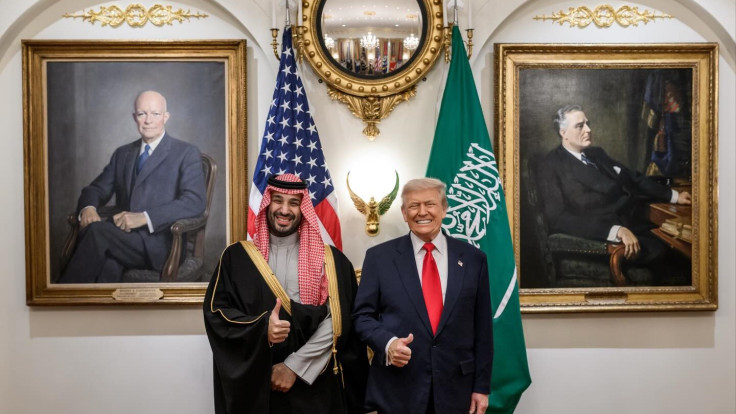
Securing a Saudi‑Israeli peace agreement remains Trump's primary objective. However, Crown Prince Mohammed bin Salman has cooled on normalisation efforts recently.
During a November meeting, Trump asked the Crown Prince to join the Accords. The Saudi leader pushed back, causing a tense exchange.
The ongoing war has prompted the Kingdom to adopt a sceptical stance toward Israel. Saudi officials demand an irreversible path for a Palestinian state.
The Israeli administration refuses this condition. Observers suggest Riyadh will avoid making foreign policy decisions ahead of the Israeli elections planned for September.
US officials believe Saudi leadership will wait for the new government. Until then, regional normalisation remains effectively paused.







