Get all your news in one place.
100's of premium titles.
One app.
Start reading
The Economic Times
The Economic Times
Muskan Singh

Are the world’s freshwater sources vanishing before our eyes? Satellite images reveal an appalling global water crisis

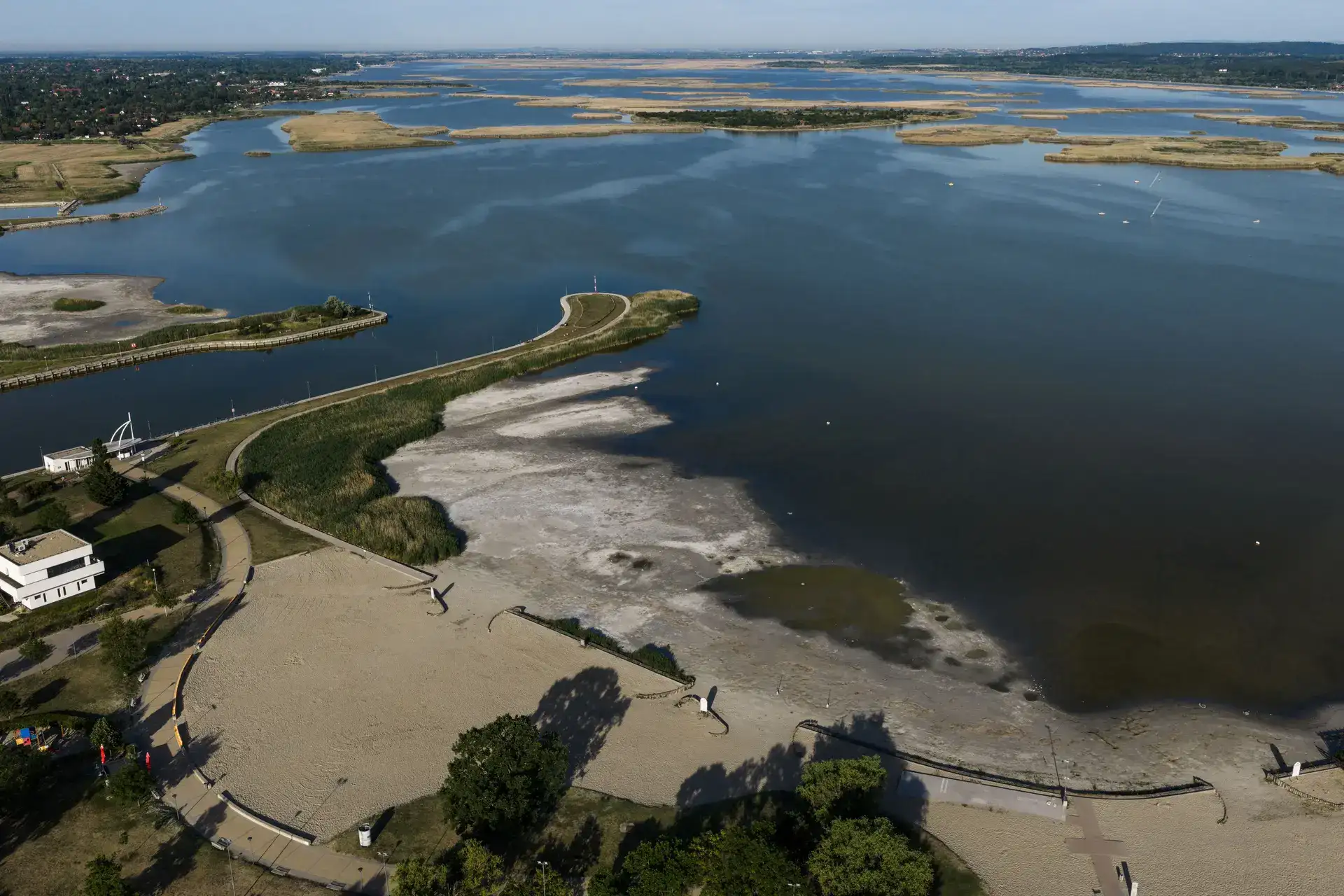
Across the planet, rivers, lakes, and reservoirs that once supported millions of people are shrinking at an alarming rate.

New satellite comparisons reveal how climate pressure, drought, and human activity are transforming some of Earth’s most important freshwater sources. From South America to Africa, disappearing water bodies are exposing a growing global challenge: the loss of freshwater, as per a report by Al Jazeera.
READ ALSO: Thought of the Day by the father of Political Philosophy Plato: 'Every heart sings a song, incomplete, until...'- Do we all become poets in love? Here's a timeless thought on love, connection, and the poet within us by the ancient Greek philosopher

Across continents, water bodies that once supported communities, agriculture, wildlife, and economies are shrinking under pressure from prolonged droughts, rising temperatures, and growing demands on natural resources.

The world is losing an estimated 324 trillion litres (85.6 trillion gallons) of freshwater every year, enough to meet the needs of 280 million people annually, according to a 2025 World Bank report.

This continuing decline is known as “continental drying,” a process linked to worsening drought conditions and unsustainable land and water practices. To highlight the issue, the UN observes June 17 as the World Day to Combat Desertification and Drought, encouraging efforts to restore damaged land and protect water resources, as per a report by Al Jazeera.

Al Jazeera examined satellite images of 10 locations around the world where lakes, rivers, and wetlands have dramatically changed.

READ ALSO: French Proverb of the Day: 'To love is not to look at each other...'- A thought-provoking lesson about true partnership

What Is Happening To The World’s Water Sources?

One of the clearest examples can be seen in the Parana River in South America. Stretching around 4,900km (3,030 miles), it is the continent’s second-longest river after the Amazon and a crucial trade route connecting Brazil, Paraguay, and Argentina.

Satellite comparisons between 1990 and 2026 show a major drop in water levels near the port of Rosario. Years of drought have exposed large sections of riverbed, created new islands, disrupted grain transportation, and affected hydroelectric production at the Itaipu Dam.

In Bolivia, Lake Poopó has become one of the most striking examples of a disappearing lake. Once the country’s second-largest lake, covering around 1,000 square kilometres (390 square miles), it has almost completely vanished.

Images from 1984 and 2020 show how drought, water diversion, and warming temperatures transformed the lake into a salt flat. The disappearance damaged fishing communities and affected the Indigenous Uru people who depended on the lake.

READ ALSO: Quote of the Day by one of the world's bestselling living philosophers Ryan Holiday: 'We should not trust the masses who say only the free can be...'- Here's a powerful quote on freedom, wisdom, and the true meaning of education by The Daily Stoic author

Which Major Lakes And Rivers Are Shrinking?

In Botswana, Lake Ngami has experienced dramatic changes over time. Located near the Okavango Delta, the lake depends on water flowing from the surrounding system.

Satellite images from 1984 and 2020 show how drought and changing inflows pushed the lake close to disappearing. Productive fishing areas and grazing lands turned into a dry, cracked landscape before some recovery occurred.

Chile’s Laguna de Aculeo tells a similar story. Once a popular recreational destination near Santiago, the lagoon has largely disappeared after years of drought and water stress. A comparison between 2007 and 2026 shows the scale of the transformation.

Iran’s Lake Urmia has also suffered a severe decline. Once the Middle East’s largest saltwater lake, it covered nearly 6,000 square kilometres (2,300 square miles) during the 1990s. It has since fallen to around 581 square kilometres (224 square miles), leaving huge areas as exposed salt flats.

The causes include repeated droughts, agricultural water use, river diversion, and groundwater extraction.

The al-Chibayish Marshes in Iraq have faced similar challenges. Part of the Mesopotamian Wetlands, a UNESCO World Heritage Site, the marshes were heavily affected by drainage and drought during the 1990s. However, some areas have shown recovery in recent years due to increased rainfall and restoration work.

READ ALSO: Quote of the Day by Lao Tzu: 'Life is a series of natural and spontaneous changes...' - A timeless lesson about accepting life’s journey

Why Is Freshwater Loss Becoming a Global Concern?

In Madagascar, the town of Ambovombe has experienced severe climate stress. Southern Madagascar has faced repeated droughts and rising temperatures, damaging farmland, reducing water availability, and affecting communities that depend on agriculture and livestock.

Lake Faguibine in Mali has also nearly disappeared. Historically filled by floodwaters from the Niger River, the lake has shrunk due to reduced flooding, drought, and sediment buildup. Much of its former basin has become dry and increasingly desertified.

In the United States, Lake Mead has experienced a major decline. The reservoir, created by the Hoover Dam on the Colorado River, supplies water to millions of people across the US Southwest and parts of Mexico.

Satellite images from 1984 and 2020 show how drought, warming temperatures, and heavy water demand lowered water levels and exposed previously submerged areas.

READ ALSO: Life lesson of the day by the greatest Sufi Poet Rumi: 'Don't be satisfied with stories, how things have gone...'- Stop living someone else’s story- here's Rumi’s powerful lesson about creating your own path

Perhaps one of the most famous examples is the South Aral Sea in Uzbekistan. Once one of the world’s largest lakes, it has shrunk by more than 90 percent due to decades of river diversion for irrigation.

The disappearance of the Aral Sea is considered one of the world’s worst human-caused environmental disasters, leaving behind a vast exposed lakebed.

These satellite images reveal a common pattern: freshwater systems around the world are under growing pressure. The shrinking of rivers, lakes, and wetlands shows how climate change and human activity are reshaping the planet’s water supply.

Protecting these resources has become essential as communities worldwide face increasing challenges from drought and water scarcity.

FAQ

Why is freshwater disappearing?

Due to drought and human pressure.

Which places are affected?

Lakes, rivers, and reservoirs worldwide.

Sign up to read this article
Read news from 100's of titles, curated specifically for you.
Already a member? Sign in here
Related Stories
Top stories on inkl right now
One subscription that gives you access to news from hundreds of sites
Already a member? Sign in here
Our Picks
Fourteen days free
Download the app
One app. One membership.
100+ trusted global sources.