
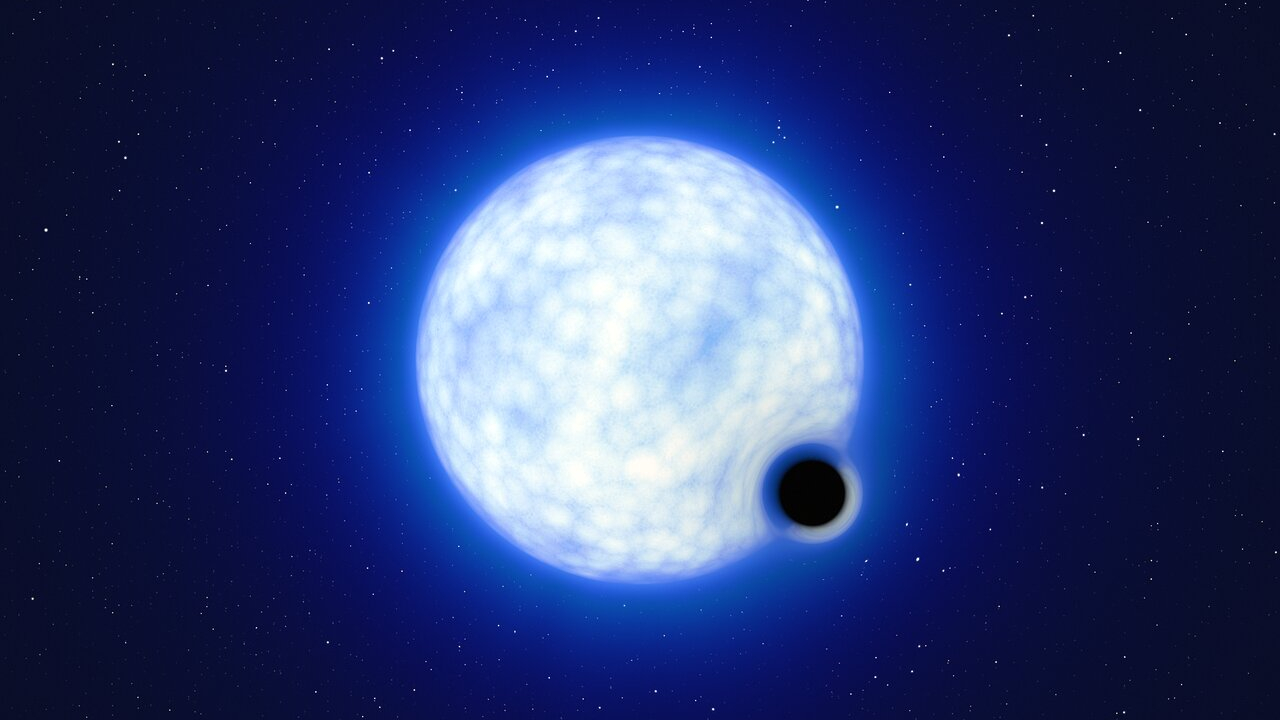
Scientists have discovered strong evidence that some massive stars end their existence with a whimper, not a bang, and sink into a black hole of their own making without the light and fury of a supernova.
To understand why this is important, we must begin with a crash course on stellar evolution. Stars generate energy through nuclear fusion processes in their cores by which they turn hydrogen into helium. When stars with at least eight times the mass of our sun run out of that hydrogen supply, they start fusion reactions involving other elements instead — helium, carbon, oxygen, and so on, until they end up with an inert core of iron that requires more energy be put into the fusion reaction than what it can produce. At this stage, the fusion reactions cease, and the production of energy that holds the star up evaporates. Suddenly, gravity has free reign and causes the core to collapse, while the outer layers of the star rebound off the contracting core and explode outwards — sparking a supernova that, for a few weeks, can sometimes shine brighter than an entire galaxy.