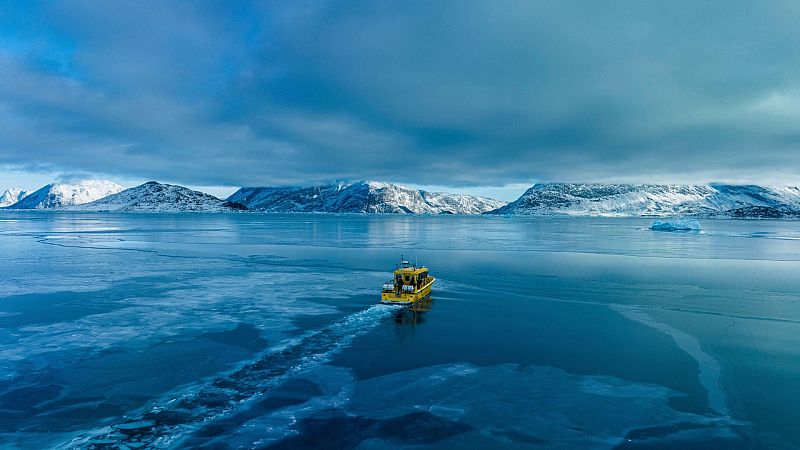
Arctic sea ice had its weakest winter buildup since record-keeping began 47 years ago. It is a symptom of climate change that will have repercussions globally, scientists said Thursday.
The Arctic reaches its maximum sea ice in March each year and then starts a six-month melt season. The National Snow and Ice Data Center said the peak measurement taken Saturday was 14.33 million square kilometres - about 80,000 square kilometres smaller than the lowest previous peak in 2017.