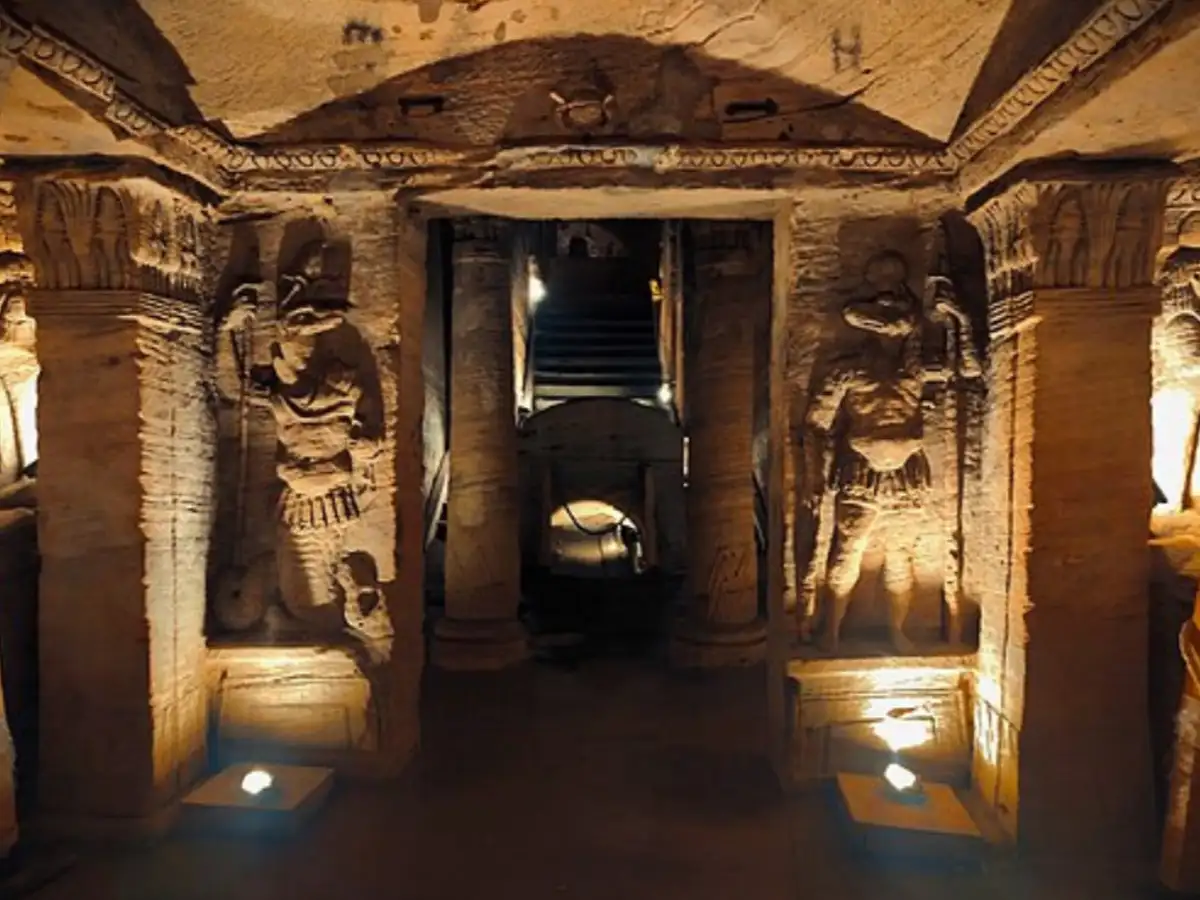
Beneath the modern city of Alexandria lies one of the most unusual burial complexes in the ancient Mediterranean. Known as the Catacombs of Kom el Shoqafa, the site is famous for its spiral descent, underground chambers, and striking combination of Egyptian, Greek, and Roman influences. What has made the catacombs especially important to archaeologists is not simply their architecture, but what they reveal about life and death in Roman Egypt. For many years, burial practices were often discussed through distinct cultural categories, with Egyptian traditions treated separately from Greek and Roman ones. Research published in journals such as Scientific Reports and Heritage Science has increasingly shown that Roman Egypt was far more complex, with older Egyptian funerary customs continuing alongside newer Roman and Hellenistic influences. Kom el Shoqafa has become one of the clearest examples of that overlap because its underground spaces preserve evidence of a society that was not replacing one tradition with another, but actively combining several at once.