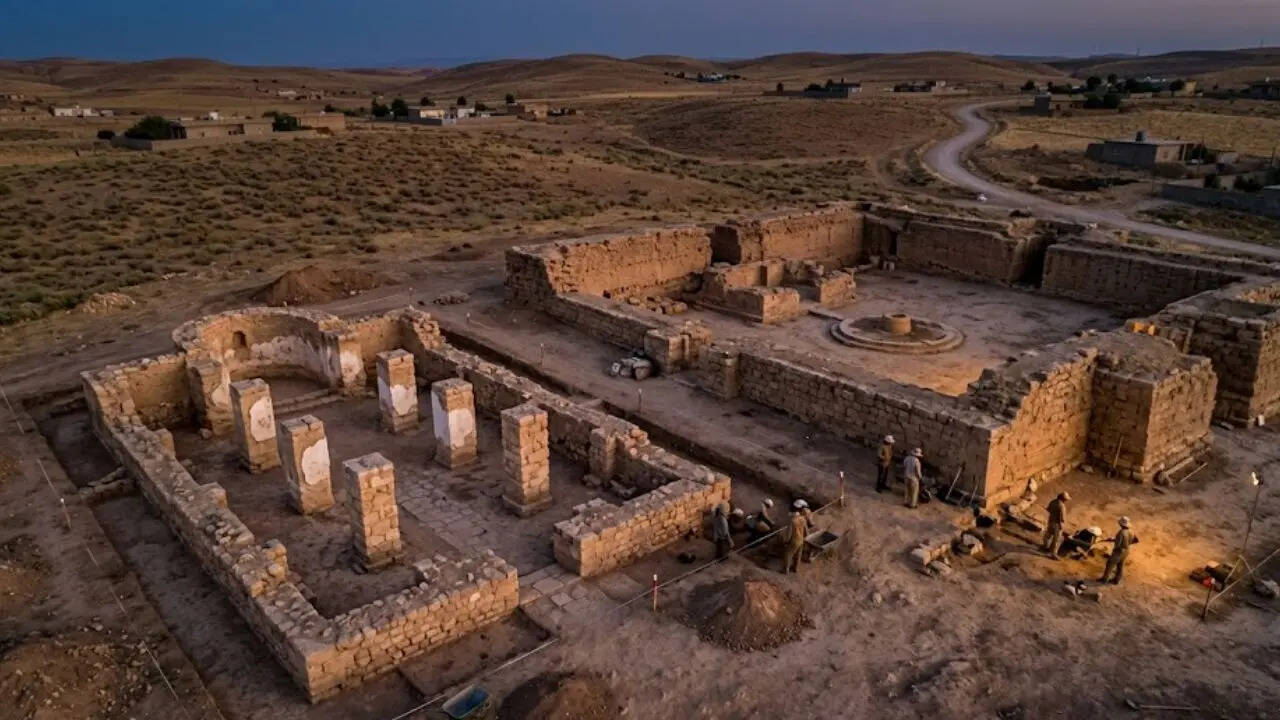
A church from the 5th or 6th century was uncovered by archaeologists beside a Sasanian fortification in the Gird-î Kazhaw area of Iraqi Kurdistan. This research study was conducted by researchers from Goethe University in Frankfurt and Erlangen-Nuremberg University; their findings provide strong evidence for the existence of religious pluralism during the 5th and 6th centuries AD, as noted in a study on Goethe University Frankfurt.
Based on the proximity of a site dedicated to Christian worship to a Zoroastrian structure, previous historians have suggested that Christians and Zoroastrians were at odds throughout this period. The excavation site revealed three nacelle pillars from one church and multiple pottery shards bearing a Maltese cross, which gives us a view of how different communities coexisted in rural Mesopotamia during the Sasanian period. This discovery challenges long-held historical assumptions, highlighting the enduring nature of interfaith harmony within these ancient, diverse rural communities.