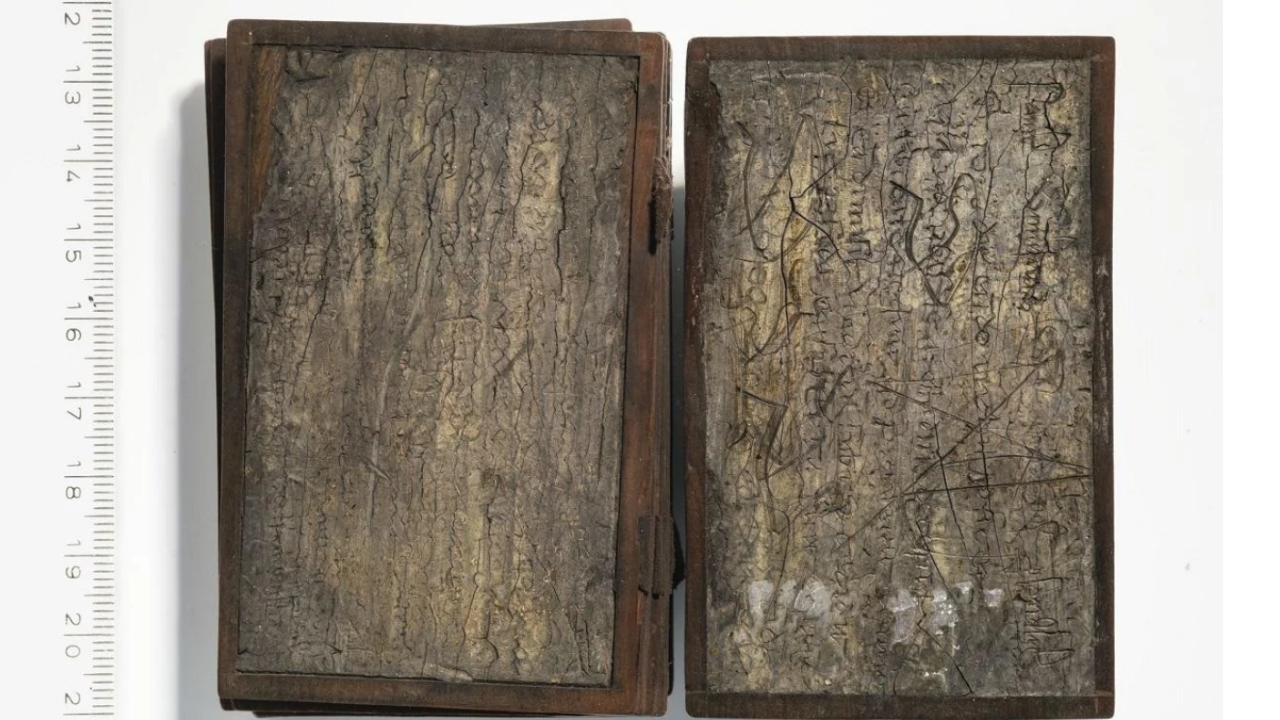
Archaeologists working beneath a construction site in Paderborn, Germany, have pulled one of the most unexpectedly well-preserved medieval objects in recent memory from an 800-year-old latrine: a pocket-sized wax-and-wood notebook, still legible, still wrapped in its embossed leather case, still smelling, by all accounts, rather unpleasant. The 10-page notebook, which features Latin cursive writing, was likely dropped by a medieval merchant nearly 800 years ago, possibly while he was wiping with silk toilet paper. The find was announced in May 2026 by the Regional Association of Westphalia-Lippe (LWL), the German body overseeing the excavation, and has since captured the attention of historians, archaeologists, and anyone who has ever fumbled their phone over a toilet bowl. The discovery came during preparations for a new municipal administrative building in central Paderborn and involved the excavation of five sealed medieval latrines that had remained airtight for centuries, turning what might have been an unremarkable construction dig into one of the most unusual medieval discoveries in the region in recent years.