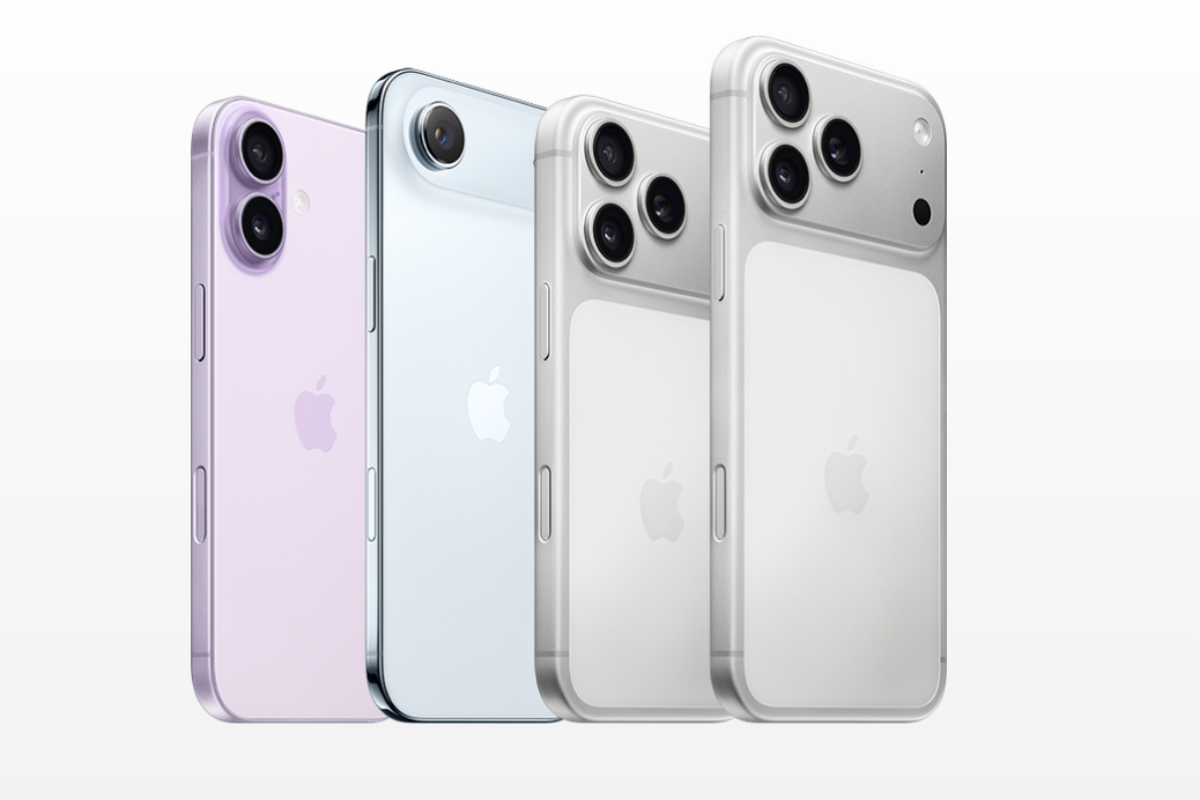
Apple is preparing at least five new iPhone models between the second half of 2026 and the first half of 2027, and has lifted the production target for its first foldable phone to about 10M units.
The plan ranks among the company's busiest hardware stretches in years, and word of it helped drive one of the stock's strongest sessions of 2026.

The foldable order has grown to around 10M units for this year, up from an earlier forecast of 7M to 8M, the outlet said, citing people familiar with the matter. It would be Apple's first entry into a category Samsung and Huawei have led for years.
iPhones still generate more than half of Apple's revenue, so the shape of a fresh lineup carries weight for a company due to report fiscal third-quarter results on 30 July, with management guiding to revenue growth of 14% to 17%.
Apple Splits Its iPhone Launch Calendar
The rollout breaks with Apple's long habit of unveiling its main range each September. For the autumn 2026 window, the company is leading with premium hardware: the iPhone 18 Pro, the iPhone 18 Pro Max, and the foldable, per Nikkei Asia. Suppliers have been told to prepare components for about 80M smartphones over the period.
Apple and its manufacturing partners have largely resolved the hinge engineering that troubled early foldable prototypes, supply-chain accounts suggest, clearing the way for limited shipments after the autumn debut and a fuller ramp toward year-end.
The standard iPhone 18 and a new iPhone Air have slipped to the first half of 2027, with a refresh of the cheaper iPhone range still under review. Staggering the launches lets Apple target different price tiers and spread demand across the year. Total iPhone output for 2026 is expected to top 220M units.
The Memory Shortage Driving Apple's Chip Talks
Behind the crowded roadmap sits a supply squeeze. Surging demand from AI data centres has pulled memory output toward high-bandwidth chips, leaving Micron, Samsung, and SK Hynix with less capacity for the standard memory that phones and laptops rely on. Contract prices for standard DRAM climbed an estimated 55% to 60% in early 2026.
The pressure has already reached shoppers. In late June, Apple raised prices across its Mac, iPad, and Vision Pro lines by as much as $200 (£150), citing higher component costs. Ming-Chi Kuo, an analyst at TF International Securities, has warned that tight low-power memory could cut Apple's planned A20 chip supply by 10% to 20% into early 2027.
To shore up supply, Apple is in talks to buy memory from two Chinese manufacturers, ChangXin Memory Technologies and Yangtze Memory Technologies.
The chips would go into devices sold within China, and no agreement has been reached. Both firms sit on a US Defense Department list of companies alleged to support Beijing's military, and Yangtze Memory carries a stricter Commerce Department designation that requires an export licence before any US company can deal with it.
The move revives a path Washington blocked once before, when an earlier attempt to source Chinese memory, including from Yangtze Memory, was shelved in 2022 after objections from US lawmakers.
Chief executive Tim Cook has taken the case directly to Trump administration officials, including Treasury Secretary Scott Bessent, seeking assurances before Apple commits. ChangXin booked about $8B (£6B) in 2025 sales and holds roughly 11% of global DRAM supply, offering a hedge against further price rises, though Kuo notes it trails the established makers by about three years on advanced chips.
Apple's scale still gives it room its rivals lack. Chinese brands Xiaomi, Oppo, and Vivo have each cut annual production targets below 100M units as the shortage bites. 'Compared with Apple's bargaining power, the Chinese smartphone makers are in a weak spot in terms of getting more supplies of memory chips or increasing the prices,' an executive at a supplier to both Apple and Xiaomi told Nikkei Asia.
Wall Street Weighs Apple's Foldable Payoff
Reports have pinned the foldable's likely price near $2,500 (£1,875). At that level, 10M units would translate to roughly $25B (£18.8B) in yearly sales, analysts estimate, though most of that would land in Apple's 2027 financial year, and the foldable would still make up under 5% of total iPhone volume, a halo product more than a volume driver.
Margins frame the debate. Apple's gross margin reached 49.3% in its latest reported quarter, a cushion against rising memory costs, though a prolonged squeeze could test it.
Bank of America has kept a buy rating with a $380 (£285) price target, while UBS holds a more cautious line at $296 (£222).