
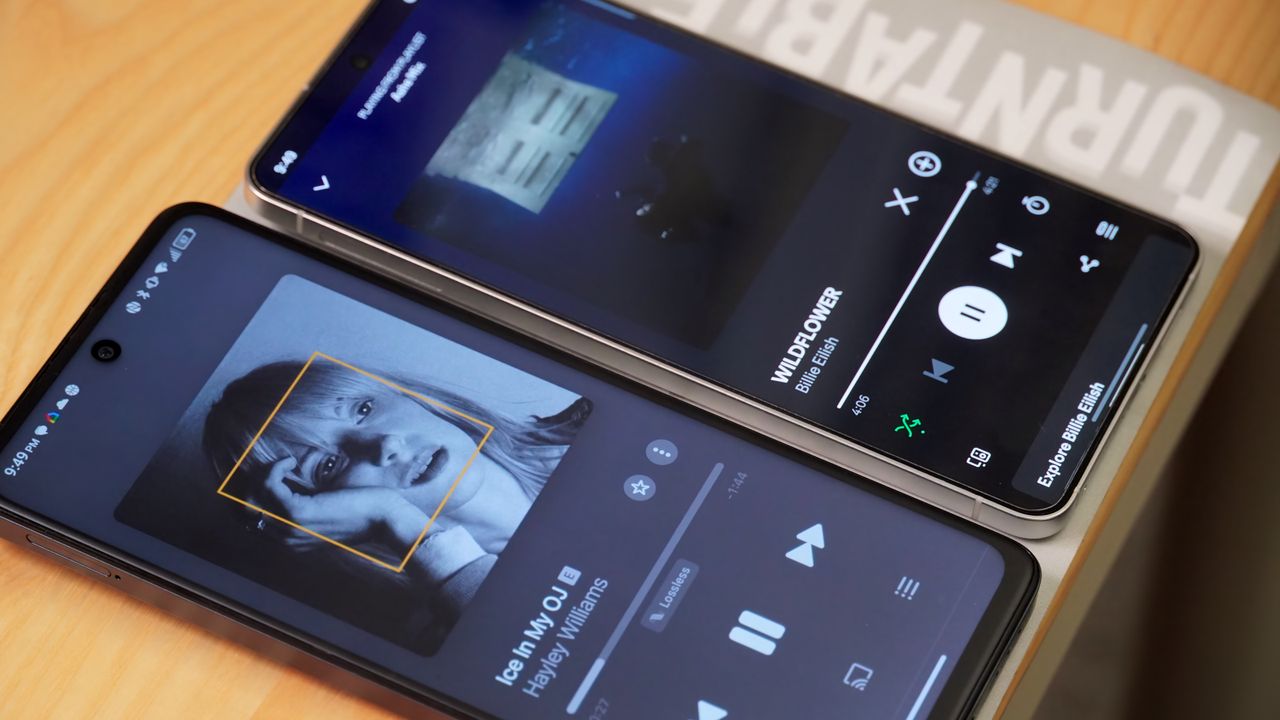
Apple services haven't always remained locked inside the walled garden. In fact, Apple first made a name for itself in the consumer tech space with the iPod and iTunes, which were both compatible with Windows PCs in addition to Macs. Apple Music is following suit, as the music streaming service is now widely available on platforms like Android, Windows, Google TV, and ChromeOS. There's also a web app for Apple Music that can be accessed on virtually any device.
I've been a fan of Apple Music since it was called Beats Music before the Apple acquisition. Since then, the music streaming service continued to win me over, adding features like Dolby Atmos and lossless audio support while keeping prices low. I've acknowledged that Spotify and YouTube Music were better options for Android users in the past, but it's getting harder and harder to make that argument.

Specifically, Spotify's consistent price hikes and YouTube Music's missing support for high-fidelity audio make them tougher to recommend, even for Android users. If those two streamers aren't the best option for Android users, their next pick might be Tidal or Amazon Music Unlimited. Both are quality options that remain competitive with Apple Music. But I'd bet that if Apple Music were made by any other company, it'd be an instant Android hit.
Where Spotify is falling short

Spotify is the largest music streaming service, with over 700 million monthly active users and roughly 281 million subscribers as of 2025. It's a music streaming giant in every sense, with over 100 million songs available for listening and downloading. Spotify is also incredibly expensive, with the company's most recent price hike raising prices by a dollar or more across all of its subscription tiers.
Spotify was already one of the more expensive streaming services. The platform's individual plan now costs two dollars more per month than the likes of YouTube Music, Apple Music, and Tidal. Amazon Music Unlimited is $1 cheaper monthly for everyone and $2 cheaper for Prime members. It's a relatively small premium to pay, but over time, the extra costs add up.
People typically flock to Spotify for its excellent algorithms and recommendations. The platform's social features, including the famous Spotify Wrapped experience, are another appealing aspect of the service for fans. I tend to view these extras as both a blessing and a curse. While they're sometimes neat, others are unnecessary — like Spotify DMs — and add bloat to an already-overloaded music app.
I could ignore them, but the larger issue here is that Spotify is paying someone to develop and maintain these features. If my music streaming bill is $2 higher each month so that my music app is cluttered with another messaging inbox, I won't be happy.
What about YouTube Music?

If Spotify is out, YouTube Music sounds like the next sensible option for Android users. YouTube Music is a streaming service that's hard to judge, mainly because it is bundled with YouTube Premium for $13.99 per month. While you can subscribe to YouTube Music Premium individually for $10.99 monthly, the YouTube Premium bundle is certainly the better value. With that being said, YouTube Music Premium is an outstanding perk of subscribing to YouTube Premium, but it struggles to stand on its own.
Those who thought Spotify was bloated might be even more disappointed with YouTube Music. It now serves as Google's primary distribution channel for podcasts, cluttering the app. You can also find audiobooks on YouTube Music, since the platform taps into the YouTube database. This comes with benefits and drawbacks — you can find niche content that isn't available anywhere else, but you might also be distracted by it.
YouTube Music's willingness to cram artificial intelligence into the app isn't inspiring for music purists, either. Most recently, it began testing AI-generated backgrounds for lyric cards. Many of YouTube Music's AI tools, including this experiment, come off as unnecessary.

The big reason YouTube Music's status as a serious music streamer is in doubt is its low song quality. I'll be the first to admit that lossless quality is unnecessary without the right gear. However, YouTube Music's mere support for up to 256kbps AAC or Opus is lacking even by lossy standards. It just isn't good enough, especially when it's missing Dolby Atmos too.
If you already planned to subscribe to YouTube Premium and are content with what YouTube Music Premium offers for free, by all means, keep using it. It's an excellent add-on to YouTube Premium. But until the streamer's sound quality and music features improve, it's impossible for me to recommend it as a standalone subscription.
Apple Music shines, even on Android

Then there's Apple Music, a fully featured, noncontroversial music streaming app for Android. The service costs just $10.99 per month while offering hi-res, lossless audio up to 24-bit/192 kbps (yes, that's higher quality than Spotify). There is also Dolby Atmos support, so you can take your pick of a lossless or immersive audio format.
Crucially, the app supports every feature Android users care about, including Google Cast.

I like that the Apple Music app isn't littered with unnecessary AI features or other media, like podcasts or audiobooks. It's all about music. There is a surprising amount of customization available, as the app allows users to manage animations, lyrics, listening history, volume normalization, crossfade, and audio quality.
Best of all, Apple Music supports importing libraries from YouTube Music, Spotify, Amazon Music, Deezer, and Tidal. If you're sticking with Spotify despite the price hike over fears of losing your library, fear not.
I've been a loyal Apple Music user for a decade and probably won't ever switch. I can't say it's the best music streaming service for everyone. However, it does offer the best music quality and feature set for the price point ($10.99/mo). If you've avoided the streaming service because it's hosted by Apple, you might be missing out.
A steal
Apple Music offers hi-res lossless audio, Dolby Atmos support, and more for the same price as YouTube Music and two dollars cheaper than Spotify per month. It's fully supported on Android, Windows, and the web, making it a capable option — even for those outside the Apple ecosystem.






