
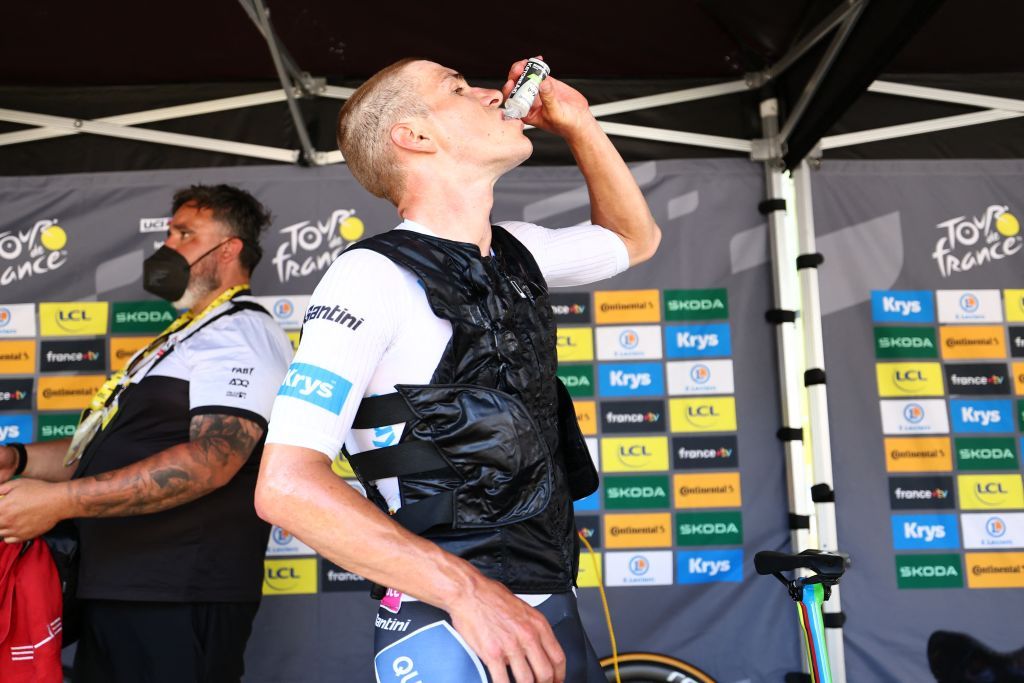
Cycling's independent anti-doping advocacy group, the Mouvement pour un Cyclisme Crédible (MPCC), has released a statement calling on the UCI to 'stop the escalating medicalisation of the sport' and establish firmer rules around products cyclists can use.
The statement cites products like ketones, which the MPCC outlaws but the UCI recently recommended against without formally banning, and the opioid painkiller Tapendatol, which the group describes as "up to ten times stronger than Tramadol [a banned substance]".

The MPCC was set up in 2007 and operates as an independent body looking to end the 'grey area' around doping and medicine in cycling to improve the sports credibility. They set stricter rules which teams can voluntarily adhere to – currently seven WorldTour teams and four Women's WorldTour teams are members.
The group recently welcomed a new president, with Picnic PostNL's Head of Communications Emily Brammeier taking over from long-standing president Roger Legeay.
Currently, the UCI follows the anti-doping regulations set by the World Anti-Doping Association (WADA), meaning they do not set their own rules on banned drugs like they do with equipment and other areas. However, the MPCC is pushing for the governing body to set firmer boundaries.
"The MPCC is becoming increasingly concerned about an excessive use of medicine in the sport and calls upon its governing body to take action against the expansion of the so-called grey area," the organisation said in a statement released on Monday.
"This grey area includes substances and medical treatments not yet banned by WADA, but which raise serious ethical questions when used by healthy athletes, rather than the sick patients they were developed to treat. Cycling needs the UCI to act quickly and decisively to protect both the sport’s credibility and the health of the peloton – so that no athlete feels forced to take questionable products merely to keep up."
According to the MPCC, the speed of action from the UCI is a problem, saying that "lengthy timelines of anti-doping processes without quick and concrete action leave space for various substances to be debated each year, allowing athletes to continue using them despite the unanswered questions surrounding their health or performance-enhancing effects." The organisation also asked whether it may be safer to ban products under investigation, and then reinstate them if they are found not to be dangerous.
The MPCC is also critical about the UCI's recent "non-recommendation" of the use of ketones. The UCI made the recommendation based on research that found the product to not be effective in enhancing performance, but the MPCC reaffirms that it is strictly against ketone use as a product that undermines cycling's credibility.
On the topic of the painkiller Tapendatol, the MPCC again questioned the UCI's sense of urgency in reviewing regulations around new products.
"The UCI now has this specific substance under monitoring, but must we wait for the result of another lengthy analysis while riders’ health is at risk and crashes are becoming even more prominent?" they asked.
The MPCC called on the UCI to move more quickly in their decision-making, citng the example of carbon monoxide use and its subsequent ban as proof that the body can act swiftly, and to take decisive action that closes debate around contested products.
"What is clear is that, as long as the grey area remains, the credibility of cycling will continue to suffer and riders' health is at risk," they said.
"The MPCC’s position has not changed: the endless medicalisation of riders is a major problem and requires action. The MPCC urges the UCI to establish a clear and regulated position on a range of (medical) products in the grey area or other specific products (such as ketones). The MPCC stands ready to work closely with the UCI and support progress in this crucial area for the future of our sport."