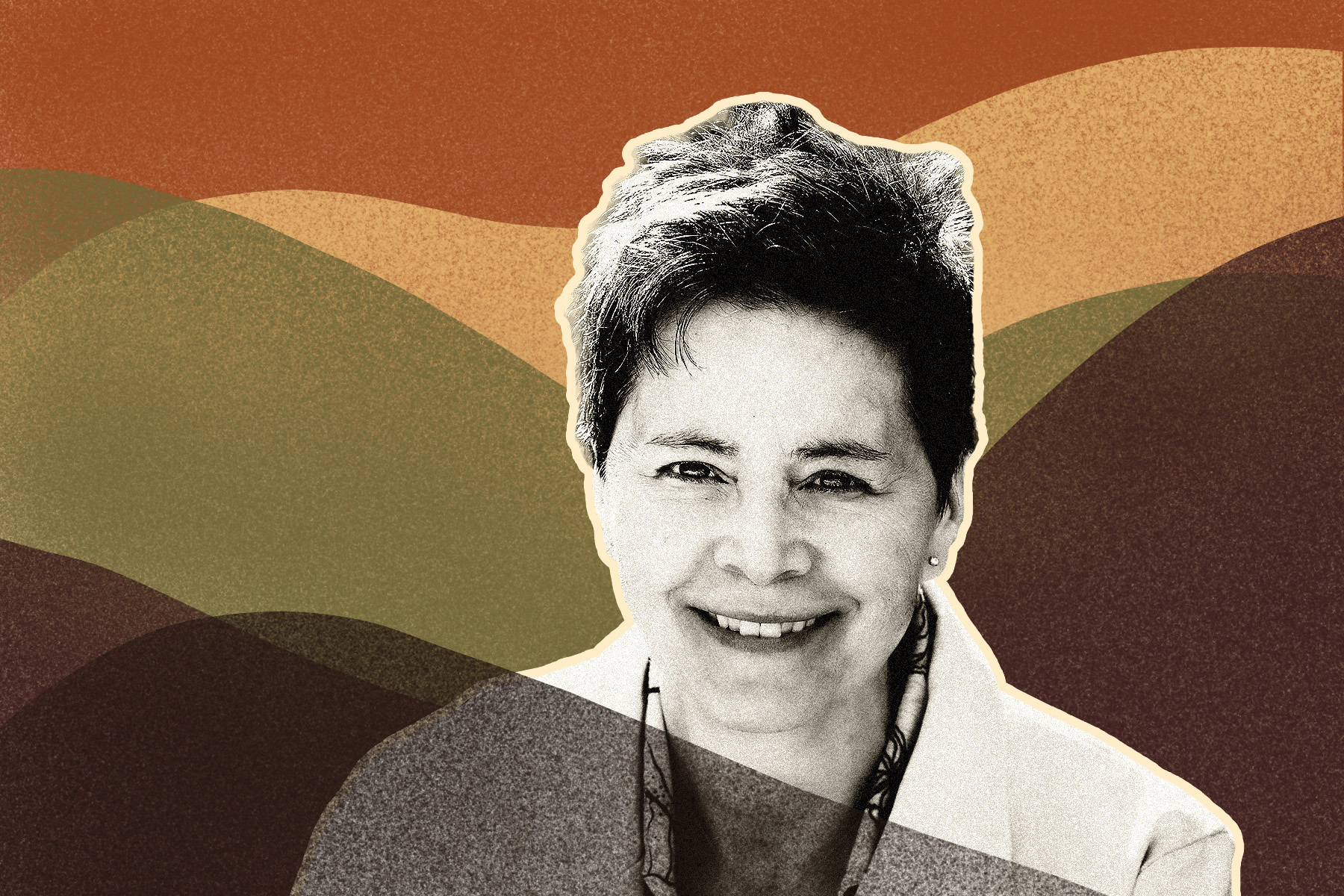
As a grade three misfit, Ann-Marie MacDonald had a choice. Her teacher had asked the students to share with the class a list of their favourite foods. MacDonald knew that her odds of being accepted were higher if she wrote down fried chicken and orange Fanta—which were, in fact, her favourites and the kinds of things that everyone at her large Catholic school in Hamilton, Ontario, were familiar with. But she was aware that the exercise itself was unjust—what she came to see as a way of reinforcing conformity and social hierarchy. “There was one boy, with blonde hair and blue eyes,” she says. “And he was a perfectly nice kid, but I knew he was the favourite, and I somehow knew it wasn’t fair.” And though MacDonald’s last name blended in with those of her white classmates, at home, her Lebanese mother prepared dishes that the classmates had likely never heard of in the 1960s. Rather than hide that invisible side of her family, she felt compelled to stand up for it. “I wrote down all the weirdest-sounding Lebanese things I could think of. And the teacher read my paper out loud and asked, ‘What is kibbeh nayeh?’” MacDonald remembers. “I said, ‘It’s raw meat. And we eat it!’”
More than fifty years later, the sixty-three-year-old MacDonald—a Governor General’s Award–winning playwright and acclaimed novelist living in Montreal—tells this as a funny anecdote, in the sonorous and expressive voice of a trained stage actor. “I thought, ‘I’m just going to drive a stake right into the heart of my academic career,’” she says. “It was an exercise in mortification, but I’m proud I did it.” Better suffer as an outcast than go along passively with an injustice. “Even though I would have given anything to have a white bread sandwich in my childhood,” she adds longingly. But the act of defiance was a formative lesson: tragedy can be a kind of triumph as long as you’re in control of the story.