Get all your news in one place.
100's of premium titles.
One app.
Start reading
The Independent UK
The Independent UK
Lifestyle
Ellie Harrison

Ann Dowd: ‘I haven’t been hired for my looks, so I’ve never depended upon them’

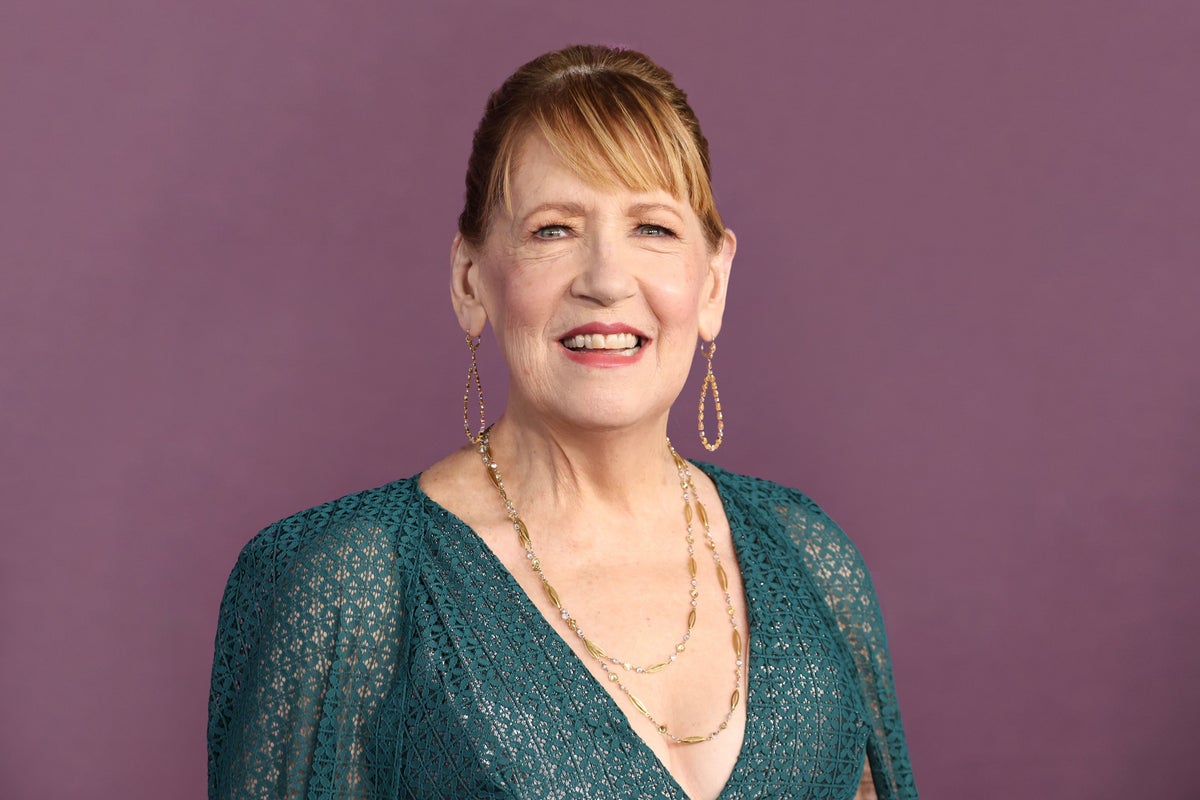
Ann Dowd - (Shutterstock)

A fan once saw Ann Dowd on an escalator and ran away, terrified. That’s how convincing the actor has been as the tyrannical Aunt Lydia across six seasons of The Handmaid’s Tale. In the drama – set in the totalitarian, theocratic Republic of Gilead where women are forced to reproduce – she has tortured those who resist the regime, beaten them with cattle prods and even ordered the removal of one poor girl’s eye.

Many who meet the real Dowd are struck by how warm and kind she is. I can back all this up – Aunt Lydia would never call me “darling” or “sweetie pie”, but Dowd does. And she’s sensitive, tears pooling in her eyes as she talks about emotional roles. But, actually, she is similar to Aunt Lydia in one way. There’s a steeliness, a strength, that the two share. Aunt Lydia can be a sadistic maniac of course, and worlds away from Dowd, but, my god, she has mettle. “We’re very close, the two of us,” Dowd tells me of the character. “She’s a dear friend. I learn from her, she learns from me.”

Aunt Lydia has perplexed fans ever since the first series of the drama, adapted from Margaret Atwood’s seminal 1985 novel, landed on screens in 2017. Underneath her cruelty, if you squint, there is a tenderness; often, her actions actually protect the handmaids from worse fates. All women are victims in Gilead – but Aunt Lydia, as a survival tactic, positions herself as a leader, as much as she can be within that system. In the timely new sequel that arrives this week, The Testaments, audiences will finally get a chance to learn more about Lydia’s life before the regime took hold, and how she was forced to comply or die. “I’m looking forward to understanding her more myself,” says Dowd.

We meet for tea in one of the bars at Raffles Hotel in London. Dowd, 70 and a petite 5ft 3in, is tucked into the corner of a Chesterfield sofa. Usually, as the austere Aunt Lydia, Dowd’s hair is a mousy brown and pulled back from her face, but today it is strawberry blonde with a fringe. Through the window, she peers out at the Royal Horse Guards on Whitehall; she is full of questions about the UK (“who is your prime minister now, and how is that going?”), and compliments (“I love the way you all talk, ‘a little splash of milk’, perfect”).

It’s impossible to talk about The Handmaid’s Tale and The Testaments without getting political. This is the show that led to women’s rights activists donning the handmaids’ infamous red cloaks and white bonnets in protest marches, in retaliation to the reversal of Roe v Wade in the US and anti-abortion laws in Northern Ireland. “I felt so privileged to be a part of something that leaves your living room and goes into the street where it belongs,” Dowd says. “Protesting, standing up for what you believe, staying alert, putting your phone down and putting on that costume – it just felt like such a tribute to the show, to Margaret Atwood.” It was depressing too, I say, that our contemporary reality was reflecting the events of the dystopian show. “So depressing,” she shakes her head. “But no time for depression – stand up and act, do something – and that’s what these brave women did.”

Dowd’s formidable Aunt Lydia in ‘The Testaments’ (Disney)

Dowd doesn’t think playing Aunt Lydia has necessarily galvanised her and made her more invested in women’s rights – it’s just a result of living as a woman in the modern world. “I think being a citizen in the United States, in New York City, and seeing and hearing what’s happened to our democracy, it's just terrible. It’s interesting, with Margaret Atwood, people call her a prophet and say that she sees into the future, but she said no, no, her homework was in the past, in history, everything that she wrote has happened somewhere.”

There’s a poignant bit of voiceover in The Testaments, where Daisy (Lucy Halliday), a young woman who’s entered Gilead after growing up in free Canada, talks about how the regime didn’t just arrive overnight. “There were signs of what was coming,” she says. “Candidates running for office had said things openly, about women, about gays, but they still were elected. People thought they were speaking in hyperbole. Now, women can’t have jobs or watch films or read books, and gay people, well, we know what happened to them.” It feels like a direct call-out of Trump’s misogynistic rhetoric.

“I’m so sorry. I’m sorry for every other country everywhere on this earth. He’s so messed up,” says Dowd. “And he has so many followers, which is extraordinary. How does this happen when a man is as childish and awful as he is, and who believes what he believes? And it’s the second time around for him.” She holds her hands up. “Somehow this country brought it to its own place.”

Dowd: ‘I’m looking forward to understanding Aunt Lydia more myself’ (Disney)

Conversation turns to the “manosphere”, and the rising prevalence of misogyny in young men. “The Handmaid's Tale was exceptional because it gave us a voice,” she says, “it gave us a way, every day, to put our frustration and fear and anger into the performance. But I mean, what's more terrifying than that, than young men following Andrew Tate? How can you be so lost as to think that’s the way, and that women are inferior? It’s baffling to me. And based on what, you know? Based on fear, of being less-than.”

She asks lots of questions about how the manosphere is impacting boys in the UK, and is appalled to hear of reports that male pupils have been abusing their female teachers. Then something extraordinary happens: Dowd seems to transform into Aunt Lydia. Her voice takes on a tremor and she points across the table as if addressing a young boy. “You may leave the classroom if you’re not interested in participating.” A pause. Eyes wide. “I just went to Aunt Lydia. Honestly, I didn’t even think of it.” She laughs. “She’s just within reach when you need her, and that just shocked me a little bit. I haven’t spoken to her since yesterday. Good way to wake up in the morning!”

On most mornings for the past four decades, Dowd has been waking up in the same housing development in Chelsea, New York. She’s lived there with her actor husband Lawrence Arancio since 1989 – at first without kids, when she would fearlessly cycle around Manhattan, and later with their daughter and two sons. Since Trump took office, has Dowd ever thought about leaving her carefully crafted habitat? “I have thought about it, but the United States of America is my country. It’s where I was born. It’s a place where I will stay and fight if need be. I don't know what's going to happen in the United States, we’re in dreadful shape, but I don’t see it as a time to leave.”

Beyond Aunt Lydia, Dowd has made a name for herself in playing harrowed, profoundly flawed characters. She brings an aching authenticity to everyone she inhabits, whether it’s a fast food restaurant manager caught up in a disturbing scam in 2012’s Sundance hit Compliance, a cult leader in HBO drama The Leftovers or the manipulative Joan in 2018 horror Hereditary. But, as a mother, one of the roles that cut closest to the bone was that of a grieving parent in 2021’s Mass, which is being adapted for the UK stage at the Donmar Warehouse next month. Shot in eight intense days, with almost the entire story unfolding around a single table in a church function room, the film followed two couples who meet several years after a school shooting to discuss the tragedy. Dowd played the mother of the boy who killed his classmates. “It was about the loss of a son who has lost himself,” she says, shaking her head. “I can’t even imagine.”

Dowd as a grieving mother in ‘Mass’ (Bleecker Street)

She clearly finds the film hard to talk about, and becomes tearful. She hopes parents watch films like Mass and shows like The Testaments with their children, and that they will spark difficult conversations. “Parents, when you see something that moves you, let it move you in front of your child,” she says. “Lead by example, use your words to explain, but don’t try to hide.”

After making the film, the cast – Dowd, Jason Isaacs, Martha Plimpton and Reed Birney – met with a mother whose daughter had been killed in a real mass shooting. “It was a profound privilege,” Dowd says. “When we went into the room and sat down, the only thing I could do was weep.” Now, she takes off her sand-coloured glasses to wipe away tears. “I couldn’t speak a word to her because it was so profound. I’ll never forget it. She didn’t give up on life." Dowd recalls how the mother opened a zoo in her child’s memory. "You could tell she had been through it. Such a powerful vessel of strength.”

Dowd turned 70 in January, and it’s not lost on her that the older she gets, the meatier her roles become. After all, she was 56 when her breakthrough role came in Compliance. “Women who are older, to me, they’ve been through so much, and what they bring to a story is extraordinary, and I think that’s becoming more obvious to writers. Don’t leave them out because they’re in their sixties.” She says that the interesting, juicy stuff is “just beginning in a certain way” – “I look back now, in these last years, to decisions I made or experiences I had and that is the nature of turning older: learning from the past, moving forward, expanding one’s vision. It’s a time when women should be hired to play beautiful, complex roles.”

While Hollywood sometimes seems to be allergic to ageing stars, especially women, Dowd has swerved pressures to look younger. “I haven’t been hired for my looks, so I’ve never depended upon them and how I look in the mirror,” she says, matter-of-factly. “I feel for these women who believe they’ve got to get into a younger place instead of allowing their face to make the changes and tell part of the story. I’ve thankfully never been tempted, even, to do so. My heart goes out to them – darlings, don’t do it.” She once had dark marks from the sun removed, but when they came back a month later she gave herself a pep talk. “OK, you learned a little lesson there, Missy,” she recalls thinking. “Get a hold of yourself.”

Tweakments have become so common now in Hollywood that casting directors, such as Hamnet’s Nina Gold, are looking to Britain to cast actors with more “ramshackle” faces. “Oh my god,” says Dowd, “how about some of the most wonderful stars, they were such terrific actors and they made a huge couple of hits, and the next thing you know, you don’t recognise them.”

All that said, she has found turning 70 “a little bit scary”. “It’s hard to prepare yourself because there’s something about 70 that seems terribly old, and getting older is difficult in certain ways. Your health struggles, you’re faced with certain changes and you have to decide, how am I going to age? Am I going to complain and just sit in the corner and say, ‘I don’t like what’s happening’, or are you going to stand up and get healthy and find solutions to problems and keep going and keep keeping the world open to you?”

A new adventure Dowd would like to embark on in this decade is leaning into the world of comedy. She had a hilarious cameo in the final season of Girls, as a university department head who offers Lena Dunham’s Hannah a job and calls her breasts “gorgeous fruit”; she says she had a “blast” doing it. She wants more roles like this (and has one coming up, as a sci-fi character, painted entirely blue, at a fan convention in Hacks). “I have a sense of humour – it would be wonderful to use it in my career,” she says with a chuckle. There you have it. Ann Dowd: warm, steely and funny. You’d have to be mad to run away.

‘The Testaments’ is now available to stream on Disney+

Sign up to read this article
Read news from 100's of titles, curated specifically for you.
Already a member? Sign in here
Related Stories
Top stories on inkl right now
One subscription that gives you access to news from hundreds of sites
Already a member? Sign in here
Our Picks
Fourteen days free
Download the app
One app. One membership.
100+ trusted global sources.