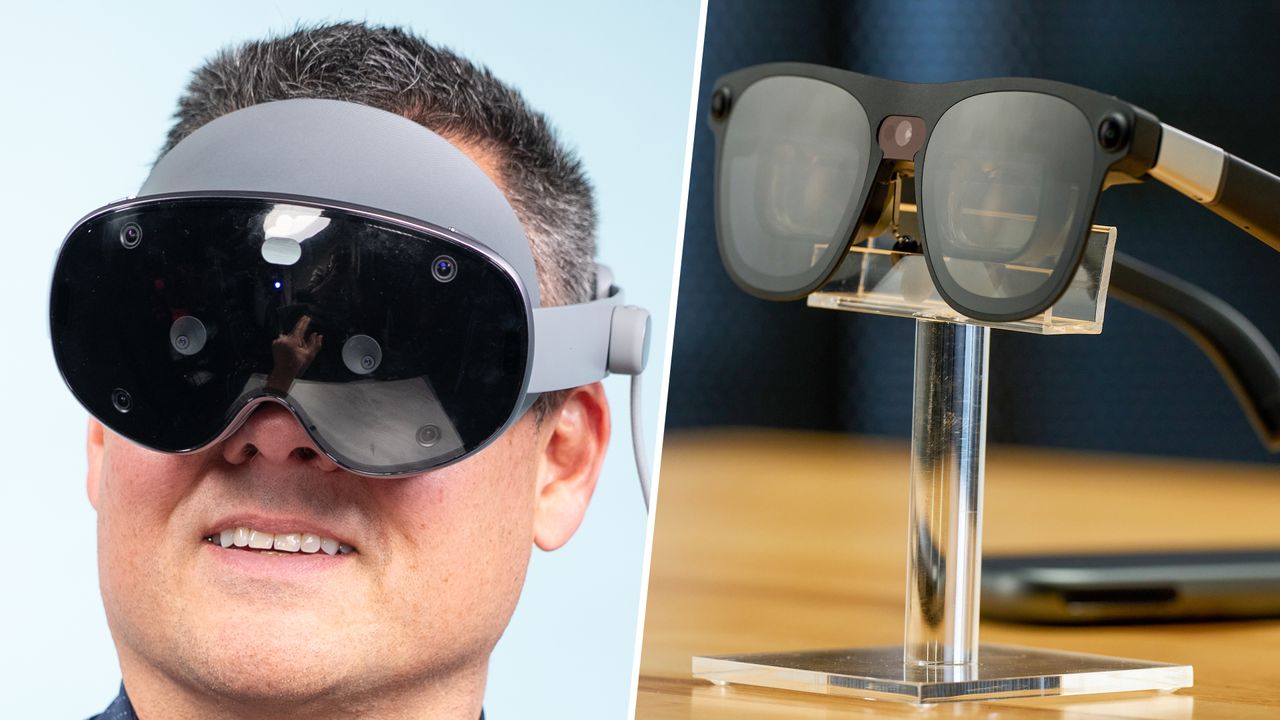
Android XR is Google's new AI-powered platform for powering a new wave of headsets like the Samsung Galaxy XR, and smart glasses like the upcoming Project Aura. The mixed reality platform has been rolling out slowly over the course of this year, but we just got a huge update and confirmation that glasses are coming next year.
Namely, three new features have been added to the Galaxy XR headset, which ensures the Apple Vision Pro and visionOS is now facing even stiffer competition. And we just went hands-on with Android XR smart glasses ahead of their launch in 2026.

Fully integrated with Gemini, its homegrown artificial intelligence, Google is onto something here about the future of mixed reality. So let's answer the key questions: what is Android XR? And how is it set to change the next generation of AI-powered augmented reality?
Latest news
- I just saw the future of Android XR smart glasses — and Meta and Apple are in trouble
- 3 new upgrades are coming to Samsung Galaxy XR — including one of the Vision Pro's best features
- Android XR — here’s how it’s different than VR headsets
What is Android XR?
- A VR/AR-focused version of Android that runs on mixed reality headsets and smart glasses.
- Infused with Gemini to make interactions feel more intuitive.
Android XR is Google's operating system for extended reality devices. It's intended for use with virtual reality (VR) and mixed reality (XR) headsets, as well as smart glasses.
Android XR is part of the Android platform, which extends beyond smartphones to tablets, wearables, car dashboards and TVs. This OS enables developers and device makers to utilize tools such as ARCode, Android Studio, Jetpack Compose, Unity and OpenXR to create specialized apps, games and other experiences within a development environment similar to the rest of the ecosystem.
Google is collaborating on the framework with key manufacturing players Samsung and Qualcomm, alongside AR glasses company Xreal. This has led to the full launch of Samsung Galaxy XR, alongside an two types of smart glasses:
- AI glasses: Screen-free glasses that use built-in speakers, microphones and cameras to chat with Gemini.
- XR glasses: Led by Xreal's Project Aura (and with display-based standalone prototypes from Google directly), these are smart glasses with displays, which can overlay visuals on the world.
Google has developed versions of its suite of apps for use on the XR platform. They include favorites like Google Photos, Google Maps, Chrome, and YouTube. That's just the start of the Google-led experiences that will be available at launch.
Extended reality is an umbrella term encompassing an immersive experience combining physical and digital components. The physical component is something you wear on your head or face, while the digital part refers to something like the heads-up display on a pair of smart glasses.

Android XR is not Google Glass, despite Glass being the predecessor. While it is an evolution of the initial platform launched in 2013, Android XR is an extension of the broader Android platform. Its existence should help expand Android's reach beyond phones, tablets, cars and TVs.
Android XR shares many similarities with Apple's visionOS on the Vision Pro, as well as Meta's extended reality offerings. Meta calls its software Horizon OS, which powers the Quest 3 and Quest 3S headsets.
Android XR headsets
- Currently only one — Samsung Galaxy XR ($1,799).
- No word yet on any other brands making Android XR headsets.

Android XR offers two main experiences out of the gate. The first is in the form of a visor-like headset that goes over the head.
The Samsung Galaxy XR is an example of that. The device uses outward-facing cameras and sensors to map the environment and projects it inward, allowing you to walk around.
The headset then projects a desktop-like environment that spans the length of the headset. Place your hand in view, and Android XR will recognize it as input.
Pinch and grab the various translucent windows or layer them on top of one another. You can even click out of them like on the desktop. Or, use Gemini to summon a fully immersive video experience using spatial audio.
Android XR smart glasses
- Standalone glasses with and without displays in the works with partners Samsung, Gentle Monster and Warby Parker.
- Xreal Project Aura — a wired pair of AR glasses connected to a compute puck.

Android XR on a pair of smart glasses is a different experience. In our hands-on time, we got to try two different versions: Xreal's Project Aura and a standalone prototype from Google.
Starting with Project Aura, which we first heard about at Augmented World Expo. This is your traditional AR glasses, but wired to a computing puck (packed with Snapdragon XR2+ Gen 2). However, when you dig down into the specs, they are far more than "traditional."
The glasses themselves come with Xreal's next-gen silicon from the X1 chip found in Xreal One — named X1S — to deliver improved spatial tracking. That's especially important given the fact these have the widest field of view of any AR glasses at 70 degrees through those prisms behind the lenses.
In the demo we got to try, this felt a lot more like the fully-fledged merging between a VR headset and AR glasses that we envision the future of smart glasses to be. Immersive entertainment meets augmented reality assistance with Gemini.

Second was a less powerful standalone prototype. This is more of a glimpse of what we could be seeing in partnership with the fashionable likes of Warby Parker and Gentle Monster. These use waveguide displays (light shot through ridges imprinted into the lenses of the glasses) to show information.
While not as immersive as Project Aura, they do still have that augmented reality helpfulness of Google Maps, Gemini and more — while also being more subtly designed than the larger, cabled Xreal specs.
When to expect Android XR Glasses
- Augmented reality Android with Gemini on-the-go.
- Visuals appear like a HUD over your everyday life.
- Multi-modal AI allows you to get answers to questions based on what you point at.

The first Android XR devices should be available in the second half of 2025. Based on what Samsung and Xreal have mentioned in earnings calls and press releases, they should be among the first to roll out Android XR-based products.
The overall cost of Android XR headsets and smart glasses has yet to be determined. Samsung and Xreal will be the companies to set the standard pricing for the headset and glasses, respectively.
Any Android XR smart glasses would have to be priced on par with the Ray-Ban Metas, which start at $300.
Android XR’s competition
- Meta Quest 3 and Ray-Ban Meta glasses are its most direct competition.
- Snap Specs will compete when they launch in 2026.
- Apple is focused on launching a pair of its own smart glasses.

So there's a lot of competition to Android XR, which is already available to buy or launching in 2026. Most prominent amongst them in the mixed reality headset space is the Meta Quest 3 and Quest 3S. But Meta's also fighting Android XR in the glasses space too with the screen-free Ray-Ban Meta specs, and the Meta Ray-Ban display glasses.
Up next is Snap, the company behind Snapchat, who have Snap Specs launching in 2026. These have been in developers hands for years, and now, the company is preparing a full public launch next year. I got to interview the VP behind the project and test out the more public-facing version of SnapOS that you will be using.

And finally, the unknown. Apple is reportedly "hellbent" on making smart glasses, and you can see why! Smart glasses are exploding in popularity right now, and visionOS 26 just feels like it would be perfect on a pair of specs.
I have no doubt many more will come to the front over the course of next year, including the Rokid Glasses, the RayNeo X3 Pro and more. On top of that, more and more features will be added to Android XR between now and the launch of glasses. So keep it locked to Tom's Guide for more.

Follow Tom's Guide on Google News and add us as a preferred source to get our up-to-date news, analysis, and reviews in your feeds.