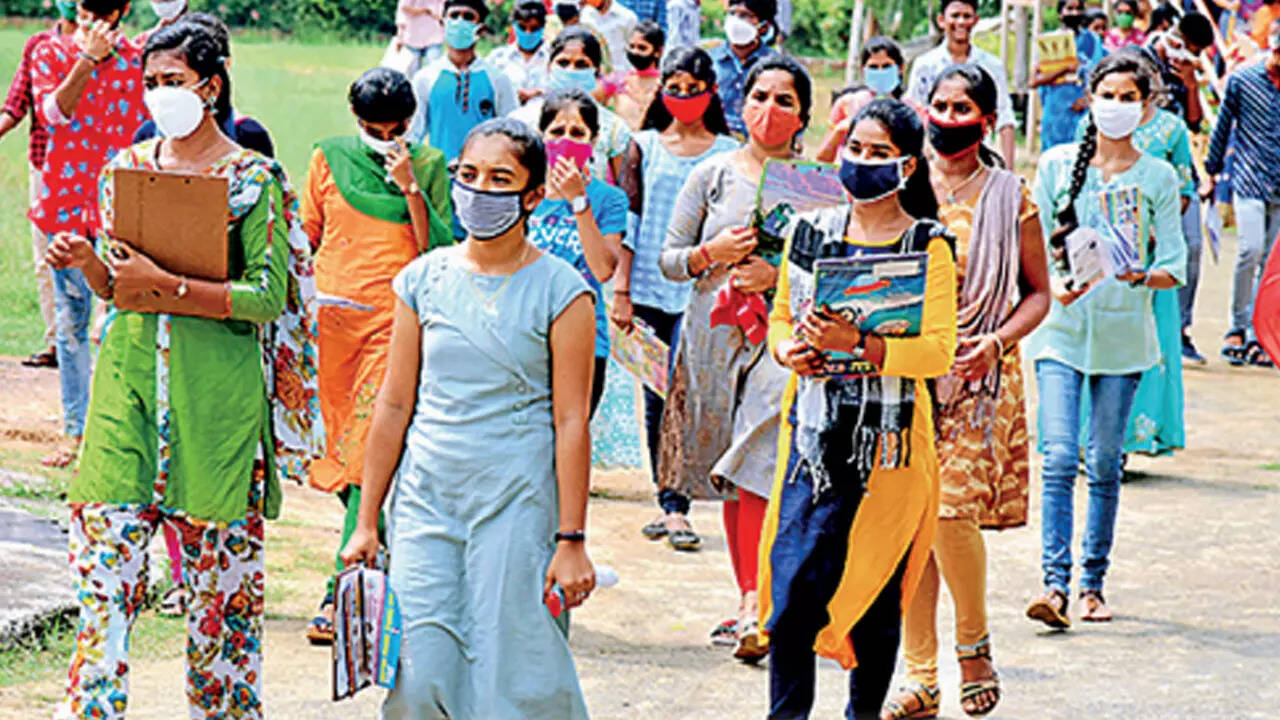
VISAKHAPATNAM: The Andhra Pradesh State Council of Higher Education had recently withdrawn nearly 350 academic programmes in about 200 affiliated degree colleges of various universities in the state.
Several combinations (of subjects) in these degree programmes failed to attract students in the last three years, leading to their discontinuation.
As technology is playing a pivotal role in this digital era, computer sciences and other IT specialisations have emerged as a preferred choice for the students – be it in the engineering or the regular degree programmes.
A cursory look into the degree courses withdrawn by the APSCHE shows that even several science subjects, apart from the conventional arts courses have become obsolete- if the admission numbers are anything to go by. The list consists of subjects/courses ranging from biotechnology, chemistry, electronics, and BBA to sociology, history, political sciences, etc.
Similar is the case with engineering courses. Once limited to elective courses, artificial intelligence, cyber security, machine learning, data science, internet of things, etc. have been now viewed as major engineering disciplines. There are about 17,000 seats in these disciplines alone of the total 1.39 lakh seats in Andhra Pradesh.
Even though the admission numbers vary from institute to institute and depend on factors such as college facilities, quality of faculty, industry connection, employability support, etc., several underlying factors are driving the demand for various courses.
The changing employment dynamics, technological trends, opportunities across industries, perception towards certain courses in the society, opportunity for higher studies or research, etc. might have been contributing to this change.
Speaking to ToI, Vice-Chancellor, Adikavi Nannaya University, Prof. M Jagannadha Rao, said that employability of a course has emerged as a key factor in deciding the preference of students and their parents. “Information technology has become a buzz word in every industry. For instance, new-age courses like geoinformatics, bioinformatics, data sciences, nanotechnology, medical informatics have become imperative. The institutes may have to reorient their courses in this direction to catch up with the emerging trend,” said Prof Jagannadha Rao.
The Vice-Chancellor added that the IT industry has become one of the largest employers. “Joining a new-age course does not itself guarantee a career. The student himself/herself has to acquire the required skill set as the organisations have started looking at the merit of the candidate rather than the mere degrees,” said Prof Jagannadha Rao.