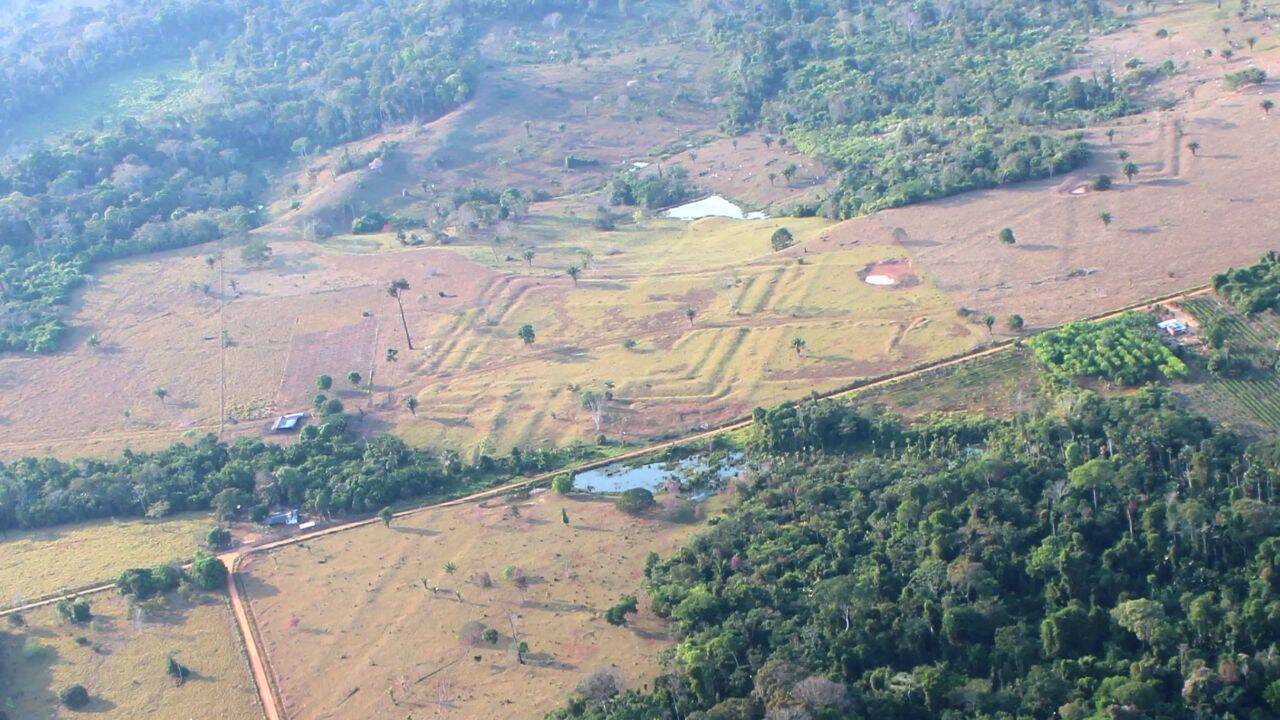
The southwest of the Amazon rain forest has long been regarded as a pristine wilderness, undisturbed by large scale human disturbance until recently. But that story has been turned on its head by a recent paper in the journal Nature that has found evidence of a large, advanced civilisation that once thrived in the dense ecosystem. This complex network of communities is known as the ‘Aquiry civilisation,’ that occupied an area of roughly 183,000 sq kms for almost 1,500 years.
Get breaking news anytime, anywhere. Download the TOI app now!

Through the use of advanced aerial laser scanning, researchers have identified hundreds of monumental earthworks, including ceremonial centres and complex road systems, hidden beneath the trees. These findings suggest that between 600 BCE and 850 CE, this region was a major hub of activity and home to millions of people. This discovery now demands a complete and necessary reassessment of the Amazon’s precolonial history and its ecological heritage.
What kind of laser was used to find the ancient Acquiry civilisation within the Amazon
According to the Nature study, this historical breakthrough was made possible by a technology called LiDAR (light detection and ranging). Unlike traditional satellite photography, which is often blocked by the thick, green layer of leaves and branches in the rainforest, LiDAR uses lasers to map the ground surface. By firing laser pulses from an aircraft and measuring how they bounce back, scientists can create a detailed 3D-map of the land hidden beneath the rainforest.
In this specific project, the research team flew over an area of about 4,500 sq kms in southwestern Amazonia, including parts of Brazil near the cities of Rio Branco and Boca do Acre. This survey yielded a massive ‘432 earthworks,’ of which 396 were previously unknown to modern science. The researchers noted that finding these sites in deforested areas is relatively straightforward, but the laser technology allowed them to reach below the dense, standing trees, revealing landforms that have been hiding for over a thousand years. By looking at the patterns found in this sample, the study suggests that the entire Aquiry region may contain between 24,000 and 30,000 of these ancient structures.
Significance of massive earthworks called ‘geoglyphs’
The earthworks, also known as ‘geoglyphs,’ are not simple mounds but large, geometric enclosures made of deep ditches and embankments. The Nature study reports that these structures typically range from less than half a hectare to as much as 14 hectares. The largest known example covers nearly 50 hectares (an area roughly equal to dozens of international football pitches). As per the University of Helsinki , these centres were not merely for show, they were the core of public life.
Native oral traditions and archaeological evidence suggest that these sites were built to promote relationships between different communities. They served as venues for political decision-making, large gatherings, and displays of generosity by local leaders. They were also places for spiritual ceremonies, where people could connect through music and ritual dance. Some sites also hosted athletic contests and ball games. The variety in their shapes and construction methods suggests that different groups had their own unique cultural and geographical identities.
How many people lived in this ancient network of Amazon rainforest
As highlighted by the University of Helsinki, the Aquiry territory represents less than 3% of the total Amazon basin, but it was home to between 1.25 and 3 million people at the start of the first millennium. This estimate is based on the systematic mapping of ceremonial centres and also suggests that earlier historical theories about the Amazon were too conservative.
Previous estimates for the population of the entire Amazon region had reached around 10 million, but the Nature study argues that if such high concentrations of people lived in other areas as well, the total population of the ancient Amazon could have reached into the tens of millions. This Aquiry was not a single unified empire under one ruler, but instead a vast, interconnected network of many different communities that shared a similar culture and way of life. The name ‘Aquiry’ comes from the Acre River that indigenous people traditionally used.
In what ways did the Aquiry change the forest environment
The impact of this civilisation was so deep that it is still visible in the plants growing in the forest today. The University of Helsinki explains that the Aquiry people actively managed the rainforest to suit their needs. They used controlled fire to clear bamboo-dominated forests to make room for fields where they grew staples like maize, squash, and manioc.
They also adapted a form of ancient horticulture, which involved selecting and promoting the growth of specific tree species that provided food and materials. This includes the ‘Brazil nut tree’ and the ‘peach palm,’ which are still common in this region. The Aquiry formed the biodiversity of the region, promoting culturally significant trees at the expense of others. This finding has modern implications, because these ancient land-use practices affected the carbon balance of the Amazon.
What is the legacy left behind by the ancient Aquiry civilisation
The discoveries by the research team represent a major shift in understanding the human history of South America. Once thought to be a wild, empty forest, but actually it is a vibrant landscape of millions, practising advanced agriculture and a complex social network.
By combining modern technology with archaeology, the University of Helsinki has unfolded the layers of the Amazon to find a hidden world rooted into the soil. This research suggests that we are just beginning to understand the true scale of human history in the rainforest.