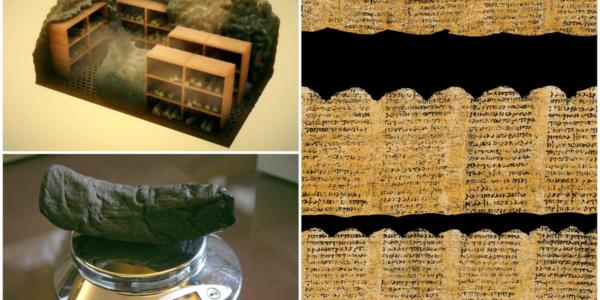
Recently, an extraordinary breakthrough has occurred in the world of archaeology and artificial intelligence. After centuries of obscured mystery, a collection of over 800 ancient scrolls from the buried city of Herculaneum in Italy has finally been deciphered with the help of AI technology. These fragile parchments, found amidst the ruins of the city devastated by the eruption of Mount Vesuvius in 79 AD, were rendered illegible due to the intense heat of the volcanic eruption. However, thanks to the efforts of a team of scientists who launched The Vesuvius Challenge, a competition aimed at decoding these ancient texts, a remarkable milestone has been achieved.
The Vesuvius Challenge, co-launched by computer scientist Brent Seales along with entrepreneurs Nat Friedman and Daniel Gross, offered a total prize money of $1 million to participants who could find innovative ways to unravel the indecipherable scrolls without causing any damage. To assist in this colossal task, a selection of the scrolls was imaged at the Diamond Light Source particle accelerator near Oxford, and high-resolution CT scans of these images were made available to the contestants.
Finally, after nine months of intense competition, the milestone was reached in December 2023. The winners of the $700,000 grand prize were Youssef Nader, Luke Farritor, and Julian Schilliger. These remarkable individuals not only fulfilled the initial goal of digitally unraveling four passages of 140 characters each, with at least 85% of characters recoverable, but they surpassed it. They managed to reveal an additional 11 columns of text, amounting to over 2,000 characters in total.
While this achievement is undoubtedly groundbreaking, there is still much work to be done in fully understanding and translating the contents of these ancient scrolls. As of now, only about 5% of the first scroll has been unrolled and read. A team of papyrologists has been diligently working on a preliminary transcription of the revealed columns and has discovered that the overall subject of the philosophical text is pleasure. The author ponders how the availability of goods, such as food, can impact the pleasure they provide. This enigmatic writing raises intriguing questions about our human experiences and the pursuit of happiness.
The experts involved have also identified names on the parchments, including Philodemus, a philosopher, and Xenophantos, likely a musician. Richard Janko, a classics professor who has read the text, speculates that the author might be Philodemus, a follower of the philosopher Epicurus and possibly the teacher of the renowned poet Vergil. Janko also wonders if the text pertains to the effects of music on the listener and compares it to other pleasures like food and drink. With further analysis and identification of the ink, many of these questions will hopefully find their answers.
The implications of this breakthrough go beyond just these scrolls from Herculaneum. The success of the Vesuvius Challenge opens up the potential for deciphering many more works from Philodemus and uncovering other hidden treasures buried within these charred remnants of history. Ancient works from philosophers like Aristotle, lost histories, epic poems, or even the words of the beloved poet Sappho could be waiting to be rediscovered.
The unlocking of these ancient texts is not only a triumph in the field of archaeology and AI technology, but it also offers us a unique glimpse into the past and allows us to reconnect with the thoughts and ideas of our ancestors. The long-lost voices from two millennia ago are gradually resurfacing, shedding light on the way of life, philosophy, and art of ancient civilizations. As the papyrologists continue their dedicated work, we eagerly anticipate the comprehensive study that will follow, eagerly uncovering the secrets hidden within these fragile remnants of history.