
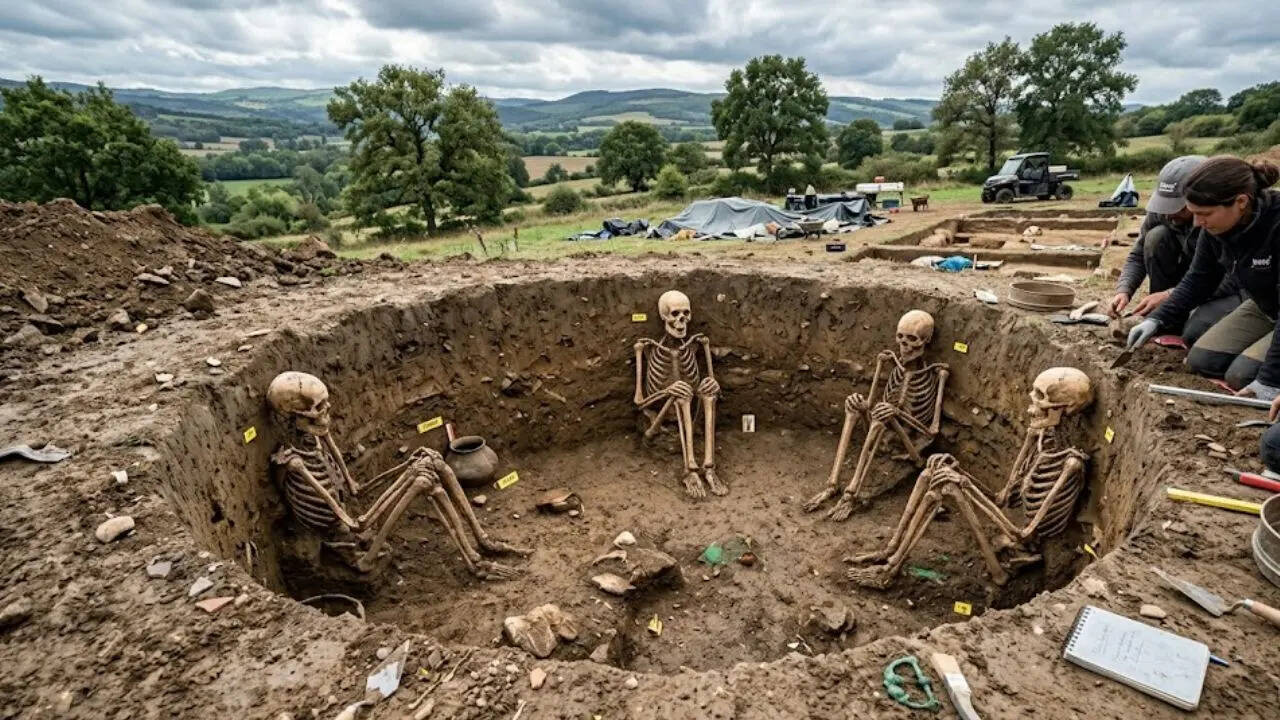
The discovery of Iron Age burial sites in France has had a dramatic impact on the archaeological community, as evidence indicates that a funerary tradition exists that is challenging established funerary paradigms. The French National Institute for Preventive Archaeological Research (INRAP) uncovered several Celtic males who were interred in a seated or vertical deposition in very large circular pits. The decision not to bury these individuals in a recumbent or flat position indicates an elaborate, previously undocumented, social hierarchy or religious ritual associated with this part of ancient Gaul.
With continuing osteological studies and radiocarbon dating of these remains, the transition from local finding to a subject of global archaeological inquiry about Celtic spiritual beliefs and the superstitious nature of Celtic funerals during the first millennium BCE can be initiated.













