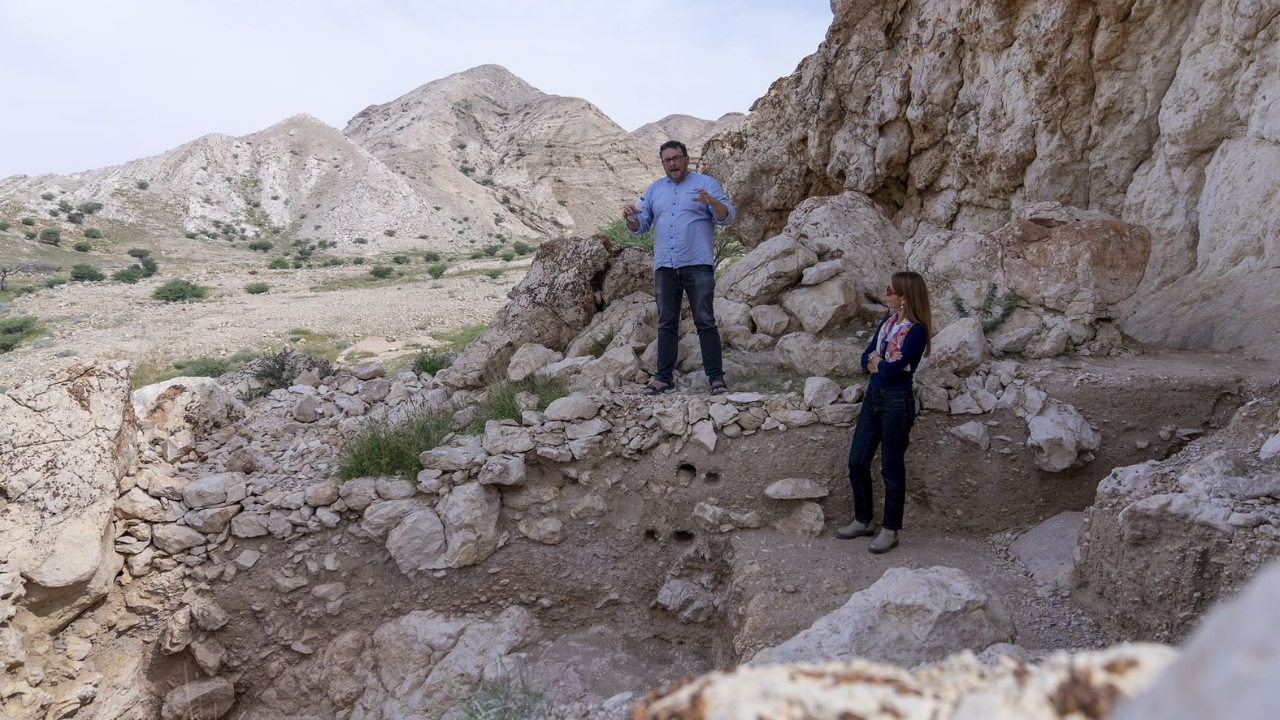
For years, a site believed to have remained largely uninhabited between 60,000 and 12,000 years ago has been re-evaluated, as new research uncovers evidence of repeated human occupation at Buhais Rockshelter, an archaeological site in Sharjah, UAE. The findings challenge long-held assumptions about human settlement in southeastern Arabia and offer a clearer picture of how early populations adapted to changing environments.
The study, published on Monday, March 23 in Nature Communications, was led by Eisa Yousif, Director-General of the Sharjah Archaeology Authority (SAA), and Dr Sabah Jasim, Advisor to the Authority. It was conducted in collaboration with Dr Knut Bretzke of Friedrich Schiller University Jena and Professor Adrian Parker of Oxford Brookes University, alongside researchers from the universities of Tübingen and Freiburg in Germany. Titled Evidence from Buhais Rockshelter for human settlement in Arabia between 60,000 and 16,000 years ago, the research identifies multiple phases of human presence at the site, dating to approximately 125,000, 59,000, 35,000, and 16,000 years ago.