
Get all your news in one place.
100's of premium titles.
One app.
Start reading
LiveScience
LiveScience
Margherita Bassi

Ancient Egyptian stone monument depicting a Roman emperor as a pharaoh discovered in Luxor

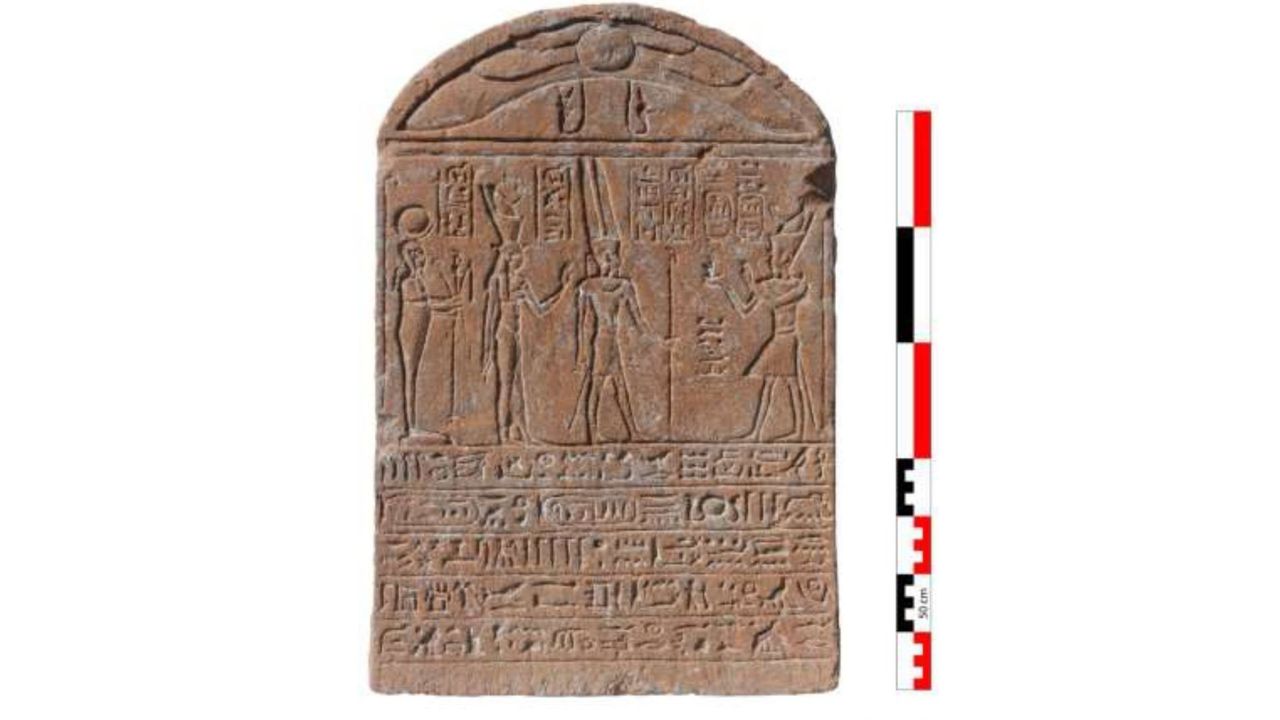
Photos from an archaeological dig, showing a brown stone tablet with hieroglyphics written on it, a group of people standing around the tablet, and a shot of the ruins of an ancient city.

Archaeologists in Egypt have discovered a 2,000-year-old sandstone monument depicting a Roman emperor as a pharaoh.

The small rectangular monument, called a stela or stele, was found during restoration work at Karnak temple complex in Luxor (ancient Thebes). The slab, measuring about 23.6 by 15.7 inches (60 by 40 centimeters), dates to Tiberius' rule (A.D. 14 to 37), indicating that it features the powerful emperor, according to a translated statement by Egypt's Ministry of Tourism and Antiquities.

Sign up to read this article
Read news from 100's of titles, curated specifically for you.
Already a member? Sign in here
Related Stories
Top stories on inkl right now
One subscription that gives you access to news from hundreds of sites
Already a member? Sign in here
Our Picks
Fourteen days free
Download the app
One app. One membership.
100+ trusted global sources.