
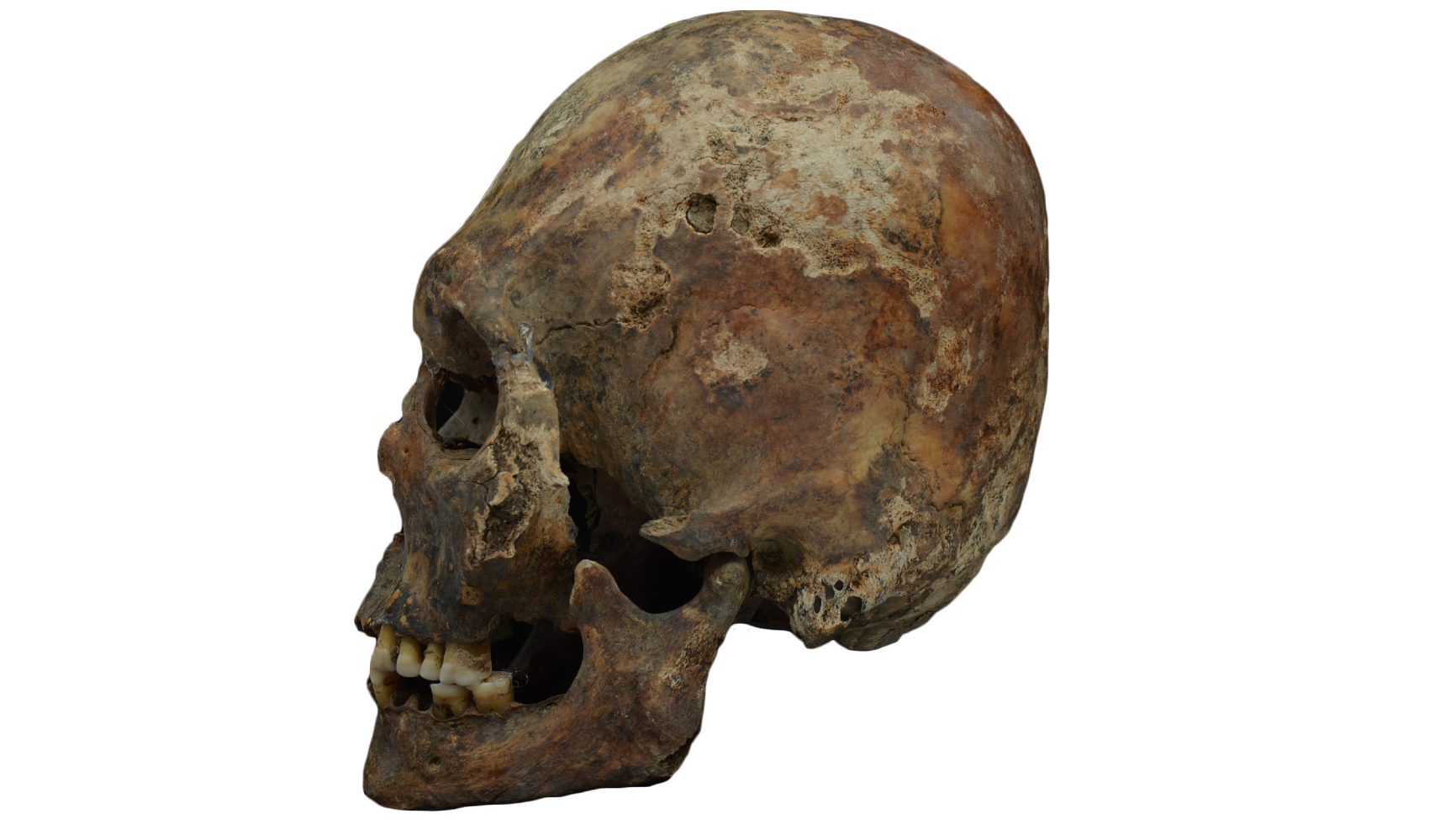
The origin of the European Huns, a nomadic group that helped topple the Roman Empire, has been shrouded in mystery — until now. A new study of ancient DNA from fifth- to sixth-century Hun skeletons suggests they were a motley crew of mixed origin with a few connections to the Xiongnu Empire in Mongolia.
In a study published Monday (Feb. 24) in the journal PNAS, researchers looked at the genomes of 370 skeletons to investigate links between European Huns of the fourth and fifth centuries and Central Asian nomadic groups such as the Xiongnu, whose empire was at its peak from about 200 B.C. to A.D. 100. But they found that the Huns were extremely genetically diverse.