Get all your news in one place.
100's of premium titles.
One app.
Start reading
The Conversation
The Conversation
Science
Shai Carmi, Associate Professor of Population and Statistical Genetics, Hebrew University of Jerusalem

Ancient DNA from the teeth of 14th-century Ashkenazi Jews in Germany already included genetic variations common in modern Jews

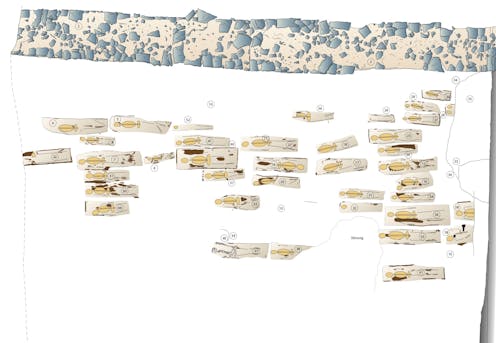
Partial layout of the graves discovered during the excavation at the medieval Jewish cemetery of Erfurt. Thuringian State Office for Heritage Management and Archaeology/Karin Sczech + Katharina Bielefeld

About two-thirds of Jews today – or about 10 million people – are Ashkenazi, referring to a recent origin from Eastern and Central Europe. They reside mostly in the United States and Israel. Ashkenazi Jews carry a particularly high burden of disease-causing genetic mutations, such as those in the BRCA1 gene associated with an increased risk of breast and ovarian cancer.

This genetic burden suggests that the population was shaped by what geneticists call a founder event or a bottleneck. In other words, a small number of foremothers and forefathers contributed much of the modern gene pool. As the population grew and the descendants of these founders had many children, disease mutations that were carried by the few founders became widespread.
Sign up to read this article
Read news from 100's of titles, curated specifically for you.
Already a member? Sign in here
Related Stories
Top stories on inkl right now
One subscription that gives you access to news from hundreds of sites
Already a member? Sign in here
Our Picks
Fourteen days free
Download the app
One app. One membership.
100+ trusted global sources.