
Get all your news in one place.
100's of premium titles.
One app.
Start reading
PC Gamer
PC Gamer
James Bentley

An SSD company has just agreed to an almost $2 billion multi-year NAND deal, which is a sign it expects the memory crisis to stick around for a while

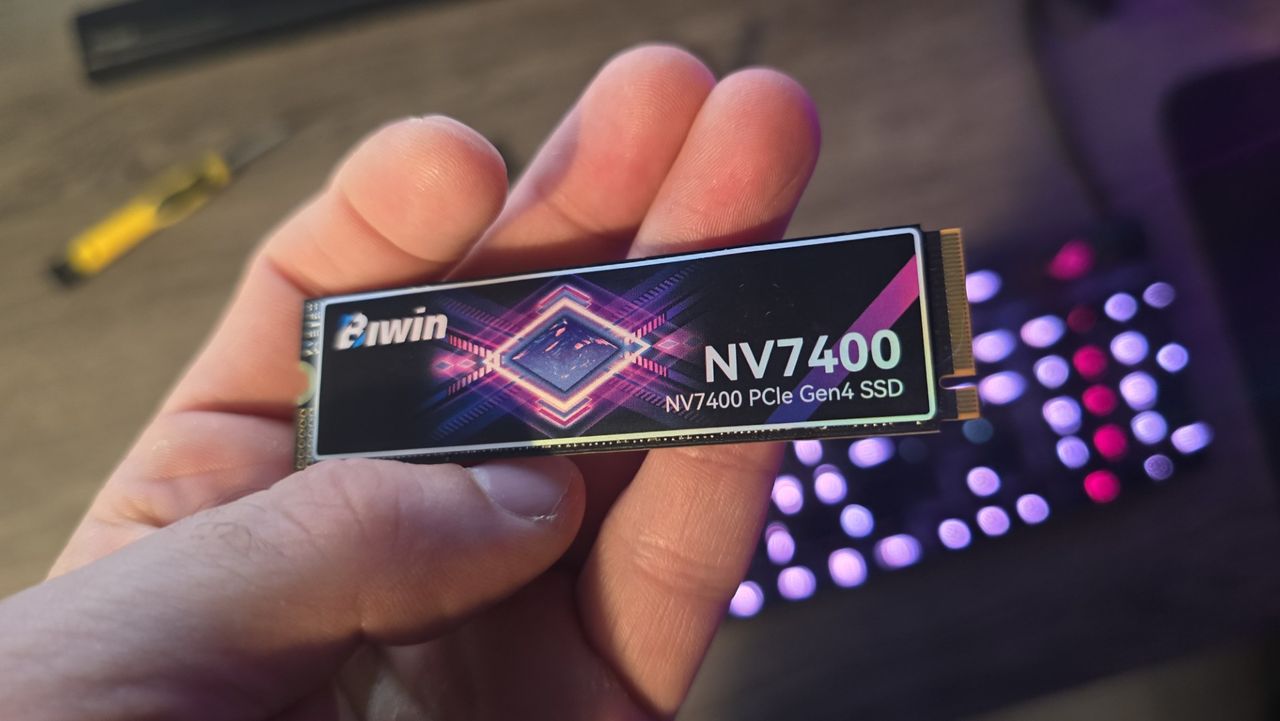
The Biwin Black Opal NV7400 SSD out of its packaging and installed in a PC.

The memory crisis has fundamentally changed how we approach memory and storage. It has made consumers adjust expectations about how much capacity they can get, and for what cost, and for companies like Biwin, it has meant having to purchase billions worth of NAND flash memory years in advance just to make sure it has a good supply.

Biwin is in a funny place, being a DRAM kit and SSD manufacturer. Even though the increased demand means it can almost guarantee selling all of its stock, it too will be hit by the supply crisis when it comes to securing precious memory chips. Biwin does not produce its own NAND flash memory, but it does need it for its products.

As reported by Tom's Hardware, it has signed a two-year deal to give $1.86 billion to an unnamed NAND supplier in exchange for an agreed volume of chips.

That supply will start flowing as of June 30, 2026. Both the pricing and quantity are fixed, which means if the price goes up over time, it's not paying a variable spot price. It's potentially a smart move from Biwin, but if the price happens to go down, then it would be overpaying for that stock.

As noted by Tom's Hardware, that $1.86 billion figure is more than half of Biwin's annual revenue. That is both a testament to how big its revenue now is, due to the memory crisis, and a sign of how big that commitment is.

(Image credit: Future)

Chances are, this long-term deal will be beneficial for Biwin as there's no sign of the memory crisis stopping soon. AMD's global vice president and general manager of the client channel business, David McAfee, recently told us that he hopes it ends in the next few years. He noted that the big three memory manufacturers— Micron, Samsung, and SK hynix—are all working on increasing production.

We were told, "I think we'll start to see by the end of next year and into 2028 that that ramp really starts to take hold, and then it's just a factor of the forces of supply and demand, and how that affects memory prices."

However, SK hynix and Samsung are both trying to minimise risk by not ramping up production too hard, just in case demand drops suddenly (*cough* AI bubble popping *cough*). Still, the commitment to at least two years of NAND at such a high figure is a sign that Biwin likely thinks the memory crisis isn't ending in at least the next two years, and that seems to be a common thought among manufacturers right now.

Sign up to read this article
Read news from 100's of titles, curated specifically for you.
Already a member? Sign in here
Related Stories
Top stories on inkl right now
One subscription that gives you access to news from hundreds of sites
Already a member? Sign in here
Our Picks
Fourteen days free
Download the app
One app. One membership.
100+ trusted global sources.