Get all your news in one place.
100's of premium titles.
One app.
Start reading
The Independent UK
The Independent UK
National
Qassim Abdul-Zahra

Oil tanker captain braves volatile Middle East waters as US-Iran tensions rise

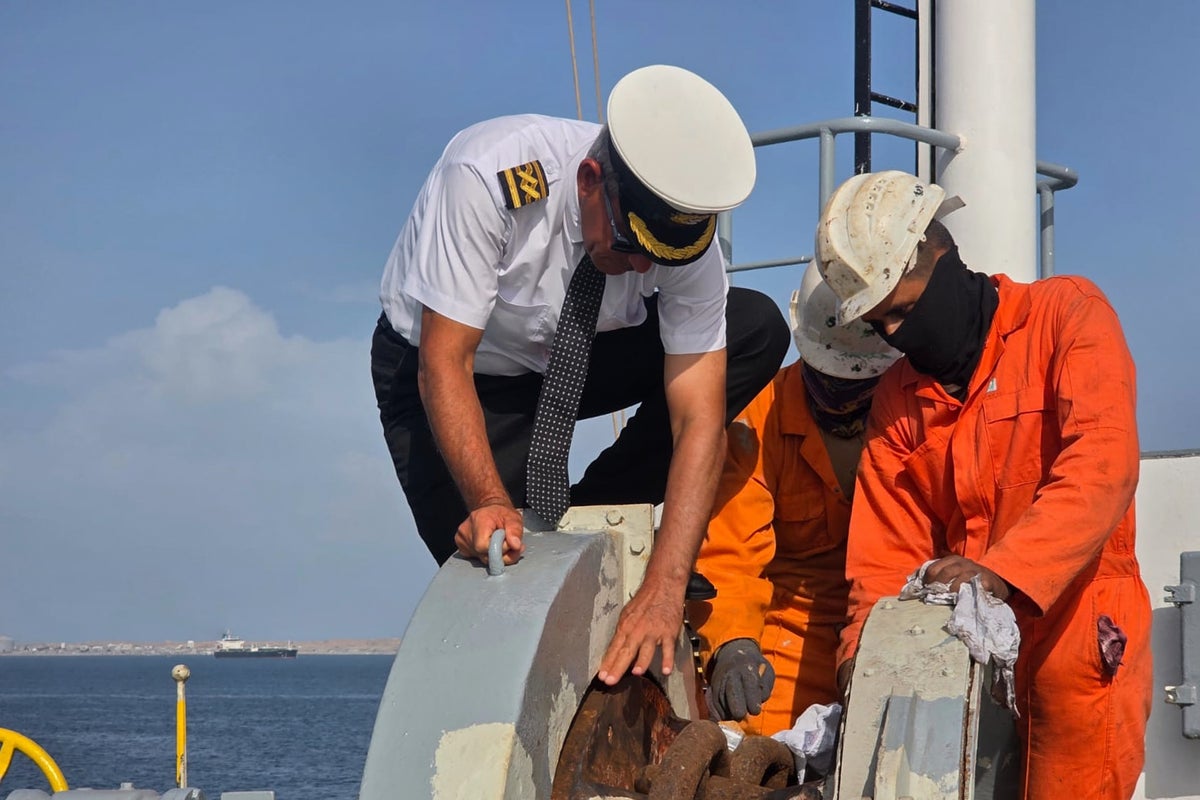
Iraqi Captain Rahman Al-Jubouri continues to work in one of the world’s most volatile maritime corridors - (Local Library)

Iraqi Captain Rahman Al-Jubouri navigates some of the world's most perilous waters, aboard an oil tanker plying the route between the Gulf of Oman and the Strait of Hormuz.

This critical maritime corridor has become a flashpoint in the US-Israel conflict with Iran, disrupting global trade and leaving crews vulnerable to attack.

For Al-Jubouri, a veteran mariner since 1984, these hostilities are not new; he has endured decades of regional upheaval, including the Iran-Iraq War and the 1991 Gulf War.

Once again, he operates in high-risk zones, where sporadic military strikes threaten vessels in vital chokepoints like Bab el-Mandeb and the Persian Gulf.

He stated: "Work has become a real risk; we don’t know when we might be bombed. We’re sailing over a ball of fire."

Captain Al-Jubouri, aboard the Palau-flagged Sea Moon for four months, is currently sailing from the Gulf of Aden towards the Gulf of Oman to unload oil at Yemen's Ras Isa port, he told The Associated Press by phone.

Commercial vessels are increasingly caught in the crossfire of this regional conflict, intensified by the Washington-Tehran standoff over the Strait of Hormuz.

Iraqi Captain Rahman Al-Jubouri continues to work in one of the world’s most volatile maritime corridors, where the US-Israel war with Iran has disrupted global trade and left some crews stranded and exposed to attacks. (Capt. Rahman Al-Jubouri via AP)

Several tankers have been targeted in attacks by Iranian forces and their allied groups. Intermittent disruptions and threats to close this critical global oil chokepoint have resulted in vessels being delayed, rerouted, or stranded across the Gulf.

On Sunday, American military forces forcibly seized an Iranian-flagged cargo ship that tried to get around a naval blockade near the strait, the first such interception since the blockade of Iranian ports began last week.

The dangers of his work mean his crew undergoes regular safety drills to prepare for potential attacks. “We’ve trained them on how to respond if the ship comes under fire, God forbid,” he said.

Last year, while docked at a Yemeni port, his vessel came under bombardment. “I immediately cut the ropes, prepared the engines, and left the port at my own risk to protect the crew and the ship,” he said.

Shrapnel struck the tanker as it pulled away, causing minor damage, but the crew escaped unharmed. Despite the ongoing threat, the vessel later returned to port operations and resumed its planned route.

Al-Jubouri has been on board his tanker, the Palau-flagged Sea Moon, for four months (Capt. Rahman Al-Jubouri via AP)

Not all of al-Jubouri’s crew can bear the dangers of the job, however. His team has thinned from 27 sailors to 17, he said. Fear drove them away.

The psychological toll is compounded by long stretches at sea. For four months, al-Jubouri has not seen his family. Like many sailors, he struggles with homesickness.

“We suffer from being away from our families and our homelands,” he said. While internet access on board allows crew members to stay in touch, the distance feels especially stark amid the strain of an ongoing war.

Basic supplies, at least, remain steady. Food and bottled water are regularly replenished at port, with no major shortages reported.

Al-Jubouri’s four decades at sea allow him to adapt under pressure, he said.

Sign up to read this article
Read news from 100's of titles, curated specifically for you.
Already a member? Sign in here
Related Stories
Top stories on inkl right now
One subscription that gives you access to news from hundreds of sites
Already a member? Sign in here
Our Picks
Fourteen days free
Download the app
One app. One membership.
100+ trusted global sources.