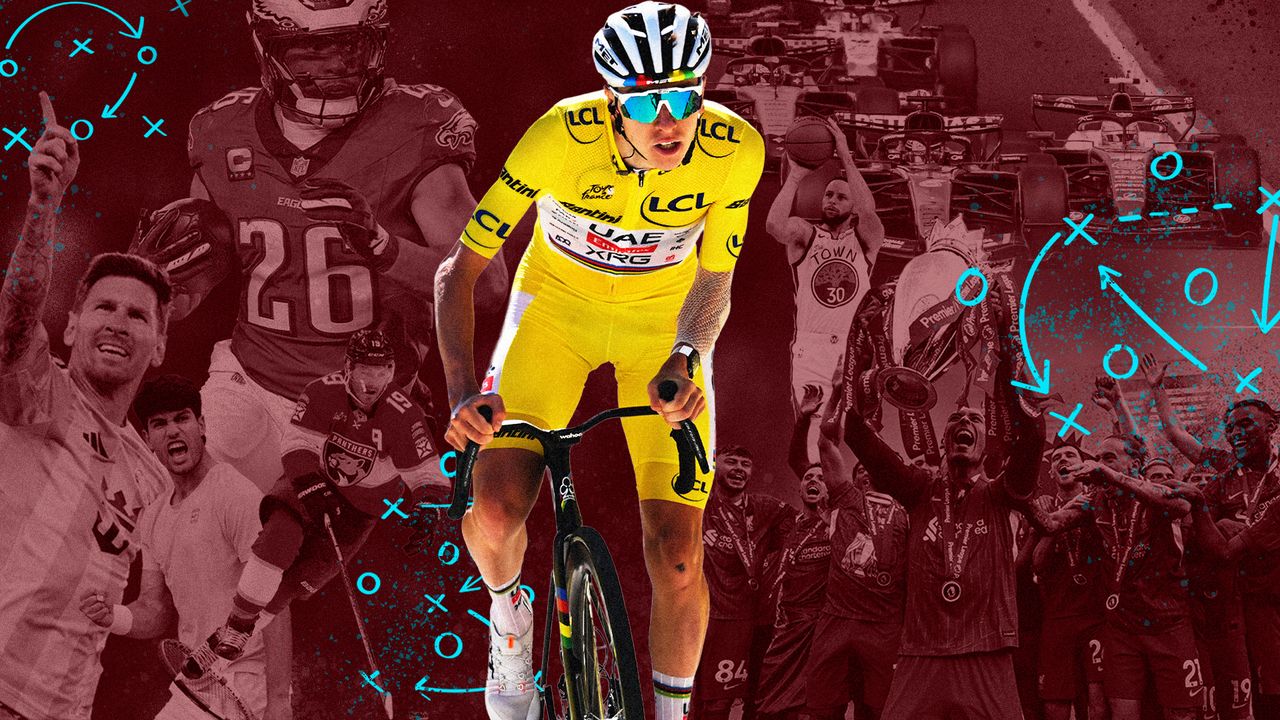
How do you grow the sport of cycling and improve its overall appeal? That's the question that cycling's governing body, the UCI, is currently trying to answer.
In a bid to take cycling to the next level and achieve "greater stability, more growth and improved overall appeal," according to UCI president David Lappartient, a consultation process was recently launched, inviting contributions and proposals from stakeholders across the sport by April 30.
Anticipating the UCI's reform process, Cyclingnews has taken it upon itself to kick off the debate on some of cycling's most pressing issues and offer suggestions on how to revolutionise pro cycling, with inspiration from other professional sports and speaking to some of the most progressive voices within cycling.
Be sure to read part one of this deep dive feature here.
The sport's overall governance, potential benefits of budget caps, and the power of the Tour de France were all discussed, with input from EF Pro Cycling boss Jonathan Vaughters and insight from F1 and soccer on developments that cycling could strive towards.
For the second part of our in-depth analysis, the spotlight is on racing schedules, rider safety and fan engagement, and how changes to all three could drastically benefit cycling.
Improving the race calendar, improving the narrative for new fans
The 2026 UCI WorldTour men's calendar comprises 36 races across 13 countries and four continents, spanning 168 days of racing from January in Australia to late October in China. It includes three-week Grand Tours, stage races and 21 one-day races of varying importance and prestige. The Women's WorldTour includes many of the same races, totalling 77 days of racing, with the three Grand Tours lasting between seven and nine days.
Underneath that are lower-level races around the globe, with teams constantly chasing success, sponsor visibility, and UCI ranking points to survive, despite the risk of rider burnout and an often illogical narrative to follow.
"I think the calendar definitely has to be refined," former rider turned gravel privateer and respected blogger Michael Woods told Cyclingnews.
"From a narrative perspective, you want the best racers to be at the best races as much as possible. I want to watch Tadej Pogačar race against Mathieu van der Poel, and Demi Vollering against Kasia Niewiadoma. I want to see them battling regularly and on different terrain, as opposed to them doing separate races programmes and only clashing perhaps at the Tour de France or a few Classics."
Cyclingnews understands that the One Cycling project included a calendar strategy where teams would send their best riders to specific races, so that the sport's big stars competed in 70% of the biggest races.
Other sports have far better seasonal narratives due to far simpler formats and calendars.
Professional tennis also has far too many tournaments and different playing surfaces for most fans to keep up with, but it has a logical structure and flow. Centred around the four Grand Slams, the calendar takes in the Australian summer and the sunshine states of the USA in the spring, before European clay and grass tournaments in the summer, including the French Open and Wimbledon. Then onto the US Open, before tournaments in East Asia and the end-of-season ATP and WTA Finals. Importantly, the biggest players frequently go head-to-head in the final rounds of the most prestigious tournaments.

The professional cycling calendar was built on similar traditions, but is now bloated and out of touch. It needs to change to reflect the demands of modern-day cycling and the fans.
Woods sees several reasons for major change and benefits for the sporting narrative. First of all, he would get rid of the battle for UCI ranking points and, in turn, the risk of relegation from the WorldTour.
"We should focus on the race winners, not the losers chasing points," Woods said.
"Riders are sprinting for 10th place, and that's creating a lot more stress and a lot more crashing. There's a never-ending pressure because of the need to score points.
"WorldTour races should be reserved for WorldTour riders. So there would be a reduced calendar, without the problems of lower-level one-day races offering more points than a Tour de France stage win," added Woods, keen to create a sport that is easier to follow and for new fans to understand.
'Sport is entertainment' and why fan engagement matters
Bas Tietema raced as a pro before building a cycling YouTube channel, which spiralled into the ProTeam Unibet Rose Rockets. Alongside his two co-owners, they have done more in three years to boost the appeal of pro cycling to a new, younger generation than some teams have in three decades.
Their team employs almost as many video and social media staff as it does riders. Their success, engagement with their fans, and visibility for their sponsors is not just about winning races. It takes fans behind the scenes and inside the team, offering a constant flow of content about the races, riders, and both their successes and failures.
When the US company Liberty Media bought Formula 1 in 2017, it began a similar but highly strategic revolution in F1, rejuvenating a sport focused on an older demographic and pay-per-view TV rights into a social media-driven, digital-first fan-engagement sport. Love it or hate it, the strategy is working, just look at how many other sports have launched documentary series, off the back of Netflix's 'Drive to Survive'. Cycling's 'Tour de France: Unchained' failed to reach similar heights.
In 2026, Apple TV opted to end its streaming of Major League Soccer (MLS) in the USA and instead became the US home of Formula 1 under a five-year deal worth approximately $750 million.
Pro Cycling arguably needs a similar reset or transformation if it is to attract a new generation of fans to replace those who fell in love with the sport in the 1960s in Europe, and, thanks to Lance Armstrong and Bradley Wiggins, in the USA and the UK.
"The fans in any sport are super important because, in my opinion, sport is entertainment, and you are doing it for the fans," Bas Tietema told Cyclingnews, his opinions as bright as the blue, purple and pink Unibet Rose Rockets jersey.
"Three of us own the team, and we're all between 30 and 35, so we've grown up with social media content and, of course, our YouTube channel. We try to project what we love about the sport to people like us."
Tietema has a clear business strategy and logic regarding what his team is doing. They took a risk by signing Dylan Groenwegen, but then secured sponsorship and created the visibility needed to make it economically viable.
They already have over 110,000 YouTube subscribers, a sign of the interest in the team and a measure of their value. Unibet Rose Rockets have more YouTube subscribers than the biggest WorldTour teams.

Similarly, the official Formula 1 YouTube channel has 14.5 million subscribers, while the Tour de France has just 626,000. Pro cycling can clearly do better and is missing out on social media, digital visibility and its value.
"We generate both external media value because a lot of people are interested in our team, and so the media report about us. Then we have the benefit of having our 'owned media' that we create and can control ourselves," Tietema said.
"I love how Tadej Pogačar, Mathieu van der Poel and Remco Evenepoel interact on social media. I think everyone, including a lot of potential new cycling fans, would love to see more of that," he continued.
Unibet Rose Rockets were surprisingly snubbed for a wild card invitation to this year's Tour de France, but are now scoring enough points to secure an automatic wildcard for 2027. However, they will make their Grand Tour debut at the Giro d'Italia in May, with Rose bikes becoming an RCS Sport race sponsor as part of a deal that will benefit both sides.
'We're boiling the frog, people are getting injured without it being a major scandal'
Rider and race safety has become a major topic in recent years as the number of crashes and the apparent severity of rider injuries increase.
Professional cycling is held on open roads, in almost any weather, with riders taking risks to win, while dressed only in Lycra. Helmets were made obligatory after the tragic death of Andrei Kivilev at Paris-Nice in 2003, but two decades on, so much more can and should be done to protect the riders, who are arguably the stars of the show.
Cycling now has the SafeR project, but terrible crashes are still occurring, as we saw in the latest edition of the Milan-San Remo Women's race. Other dangerous sports have long put athlete safety first.
There were several Formula 1 driver deaths in the early days of the sport, but it has learned from the past to improve the designs of circuits and the cars to protect the drivers. Head and neck support (HANS) devices have become obligatory with structural Halo designs protecting the drivers if the cars flip over in a collision.
The Grand Prix Drivers' Association (GPDA) is very active in defending the rights and safety of the Formula 1 drivers, with Carlos Sainz elected as their new director. The GPDA has threatened to go on strike in the past regarding safety and often speaks out, such as on the crash risk posed by slow-moving drivers as they recharge the batteries of the new 2026 power unit.
The Cyclistes Professionnels Associés (CPA) represents pro riders, with their mission to "defend their interests, see their rights respected, and demand improved working conditions."
Australia's Adam Hansen was elected President in 2023 and has worked hard to try to improve rider contracts and safety, but some riders are still sceptical about the CPA and the idea of rider unity, and often come under pressure from their teams.
Jules Bianchi is the last Formula 1 driver to die from injuries sustained in a Grand Prix in 2015. Sadly, several cyclists have died in the last decade, including Muriel Fürrer at the 2024 Road World Championships and Gino Mäder at the 2023 Tour de Suisse. Each time the sport promises to do more, but the intrinsic risks remain high.
Last year, Woods was critical of the Tour de France using crashes in video content to 'sell the drama' of pro cycling. He is supportive of Hansen's work and the SafeR projects, but believes cycling can improve safety as other sports have done.
"The tacit acceptance of injury in the sport is insane," Woods pointed out.
"In every race I raced or now watch, somebody has a cataclysmic crash, with at least one person going to the hospital. In pro cycling, if you just suffer road rash in a crash, you're expected to continue the race. In what other work environment does that happen in modern-day life? It's insane.
"We're boiling the frog; people are getting injured without it being a major scandal. It's actually crazy.
"Rider contracts are so precarious that they fight for every result and so every inch of the road," he added.
"That creates less stability and so less respect in the peloton. There is also less unity, and so riders are less willing to protest together to make the UCI and race organisers improve safety."

Woods believes reducing the size of the peloton is a way to improve race safety. The current UCI rules allow a 176-rider peloton, with 184 riders (23 teams of 8 riders) permitted to race in Grand Tours.
"I think we should reduce field sizes by reducing team sizes. Why not have 20 teams of six riders in WorldTour races? A 120-rider peloton would, in theory, be safer," said Woods.
"Of course, safety is a tough issue. A lot of things also snuck up on race organisers and the sport. No one could have anticipated how much road infrastructure and road furniture would change in the last 20 years and how much that would impact cycling. Global warming is moving incredibly fast, and it's hard for the sport to adapt to that too."
Woods hopes the riders will soon stand up more for their own safety, as we have seen in Formula 1.
"I was really excited when I heard that airbags could soon be implemented. A lot needs to be done to make the sports safer, but it does take time to make these adjustments," he said.
The UCI reforms and a wider consideration of the dangers and values of the sport could lead to far better rider safety, so the sport protects its biggest assets: the riders who race out on the roads.
"I think everybody's got to work together, right?" Woods said. "Instead of competing against each other, everyone in the sport has got to come together and create some kind of new model or project, which benefits everybody, that makes the sport better for everyone.
"That way, pro cycling can compete with other sports for sponsorship and revenue and also attract new fans. It's a complex task to work out, but it is in everybody's benefit."