Get all your news in one place.
100's of premium titles.
One app.
Start reading
The Independent UK
The Independent UK
Josh Marcus

‘An economic 9/11’: A proposed one-time tax on California billionaires is driving Big Tech nuts

A proposed tax on California billionaires has dropped like a bomb on state politics, splitting the Democratic party and galvanizing the state’s Big Tech executives in opposition.

The initiative hasn’t formally qualified for the ballot yet, but backers have gotten more than 1.5 million signatures in support of it, nearly double the required 875,000.
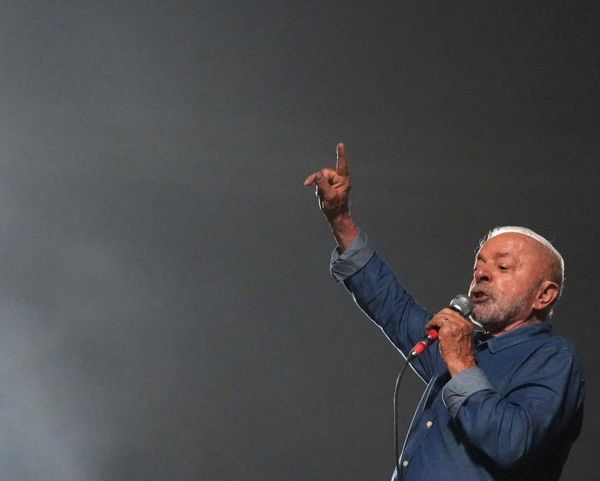
The threat of the tax has been enough to inspire backroom arguments, group chat strategy sessions, sudden interstate moves, a pro-billionaire march through San Francisco, millions of dollars in political spending, and apocalyptic warnings from California’s tech exec class, who make up some of the tax’s main targets.

One AI entrepreneur declared the tax would be an “economic 9/11” on the state and its tech industry.

The debate, more than just a tax policy fight, is a referendum on the present state of opinion around wealth, taxes, and tech in California. These issues will help define a series of generational elections in 2026 and 2028, in which Nancy Pelosi’s congressional seat, the California governor’s mansion, and the White House will all be up for grabs.

‘Billionaires are not going to miss the money’

The California Billionaire Tax Act, if it qualifies this summer for the 2026 ballot, would ask voters to approve a one-time, five percent tax on California residents worth more than $1.1 billion. There are roughly 200 billionaires overall in the state, according to estimates.

The funds raised would largely be spent on healthcare. The SEIU-UHW healthcare union, which is leading the campaign for the measure, describes the tax as a vital, last-ditch effort to make up the roughly $100 billion in health and social spending cuts the union estimates will hit California in the next five years as a result of the One Big Beautiful Bill, the Trump administration’s signature spending package, which passed in 2025.

Kris Cuaresma-Primm, head of partnerships for the pro-tax coalition, compared the funding hit to a Covid-level crisis for the state, one that could cost about 200,000 jobs across multiple sectors and put more than 80 hospitals at risk of closure or service cuts.

“When you rip $100 billion out of a state’s healthcare system, key parts of it will collapse,” he told The Independent.

Backers of the tax say it is a necessary emergency measure to make up for the roughly $100 billion in health and welfare spending in California that will be cut under Trump’s One Big Beautiful Bill (California Billionaire Tax Act coalition)

The designers of the measure say taxing the state’s billionaires comes out of a sense of fairness. Billionaires tend to have lower tax rates compared to their overall economic income than the average American, and top tech executives hold much of their fortunes in stocks, which aren’t taxed at all until they are sold or pay dividends.

“Our view was that billionaires are not going to miss the money,” according to Professor Brian Galle of U.C. Berkeley law school.

He noted that many of the state’s billionaires — including the tech executives who donated to Trump and got “really good seats at the inauguration” — have done fabulously well under this administration. Billionaire wealth in the state has increased by more than 150 percent since 2023, Galle and his colleagues have estimated.

California-based tech billionaires like Meta’s Mark Zuckerberg have further benefitted from a buoyant stock market and Trump’s OBBB tax cuts, which disproportionately favor the ultra-wealthy.

“They could pay the five percent wealth tax and still be richer than they were in January,” Galle said of this year’s resilient stock market.

California billionaires like Meta’s Mark Zuckerberg tend to hold much of their wealth in stocks, which generally aren’t taxed until they are sold (AFP/Getty)

The Trump administration pushed back on suggestions its signature tax bill was hurting Californians.

“Everyday Californians already shoulder one of the worst state tax burdens in the country because Democrats in Sacramento have been spending like drunken sailors for decades on one idiotic taxpayer-funded boondoggle after another,” White House spokesman Kush Desai said in a statement. “Millions of businesses and families have fled California over the past decade not because of President Trump’s Working Families Tax Cuts or commonsense reforms to slash the waste, fraud, and abuse in Medicaid, but because of California Democrats’ incompetence.”

‘Proposing things that make the party look financially illiterate’

Far from a modest proposal, the tax is seen by the state’s tech leaders as an existential threat.

Garry Tan, head of the influential startup incubator Y Combinator, has warned the state is preparing to “loot Silicon Valley.” David Sacks, the investor and former White House AI czar, has compared the measure to creeping socialism.

Many entrepreneurs have taken special offense to the fact that potential tax bills would account for the value of unsold assets like stocks and could factor in special, higher-impact voting shares many founders hold over their companies that exceed the size of their actual financial stakes. Executives warn of scenarios where highly valued companies would leave founders with tax bills dwarfing their liquid wealth.

“I'm disappointed by all the death threats I'm getting for highlighting a tax idea (taxing unrealized gains) that is objectively broken,” Reddit co-founder Alexis Ohanian wrote on X in December. “I didn't/don't oppose taxation — I'm warning Dems that proposing things that make the party look financially illiterate is a bad idea.”

Backers of the tax measure say this is a misreading of the proposal and an obfuscation of how billionaire wealth actually works. Regardless of the structure of their stakes, billionaires will all face the same tax rate — five percent, or one percent over five years — with multiple methods available to calculate their final bill, including submitting their own appraisal on private holdings.

Stocks in public companies, where many tech billionaires hold most of their wealth, will simply be taxed at their fair market value, the proponents say. And even if these stock valuations fluctuate, billionaires probably won’t ever really be in the lurch, according to the tax’s backers. Silicon Valley execs can access vast amounts of capital in ways most others can’t by borrowing tax-free from banks, using the value of their assets as collateral.

Reddit co-founder Alexis Ohanian is one of the many tech leaders who have criticized the proposal, arguing that taxing founders on the unrealized gains in their stock portfolios is ‘financially illiterate’ (Getty)

“If you have a company that is worth a billion dollars and you want to borrow $50 million dollars, banks are going to line up to lend you that money,” Galle, the Berkeley professor, said.

California’s billionaires see it otherwise. After the tax was proposed, they reportedly began to strategize about countermeasures in secret group chats, and high-profile figures like Google co-founder Sergey Brin and investor Peter Thiel left the state in late 2025, ahead of a January 1, 2026, residency deadline.

More could follow; a group of 20 billionaires told the tech news site Pirate Wires they are all developing “exit plans” to ditch California if the tax passes.

‘A speed run alienating every moderate I know’

At the same time as some execs are fleeing, Silicon Valley has put its money to work inside California to shape tax policy in a different direction.

Tech executives including Brin have poured millions into Building a Better California, a coalition founded in early 2026. The group hasn’t formally taken a position on the tax, but it is backing a suite of alternative financial proposals focused on boosting long-term social welfare and affordability.

Brin, as well as wealthy executives such as Coinbase CEO Brian Armstrong and venture capitalists Vinod Khosla and John Doerr, have put millions towards supporting the gubernatorial campaign of Matt Mahan, the pro-business mayor of San Jose, who opposes the tax.

The famous Google exec and his Trump-supporting, health-influencer girlfriend also reportedly confronted Gov. Gavin Newsom at a Bay Area holiday party about the tax.

“I fled socialism with my family in 1979 and know the devastating, oppressive society it created in the Soviet Union,” he recently told The New York Times. “I don’t want California to end up in the same place.”

Silicon Valley congressman Ro Khanna backs the billionaire tax, a stance that has earned him a primary challenge supported by top tech investors (Getty)

Meanwhile, Y Combinator’s Garry Tan, along with DoorDash co-founder Stanley Tang, is backing a Democratic primary challenge against Rep. Ro Khanna, a rising, pro-tech, Silicon Valley progressive who infuriated the area’s entrepreneurs with his support for the billionaire tax and sarcastic dismissal of “economic royalists” like Thiel.

“Ro has done a speed run alienating every moderate I know who has supported him. Including myself,” Martin Casado, a partner at the influential venture capital firm Andreessen Horowitz, wrote on X in December. “At least that makes voting him the f*** out all the more gratifying.”

Ro has defended his stance, arguing California tech’s ample economic advantages, including a cluster of seasoned investors and top-notch research universities, outweigh the impact of a one-time tax hit on existing billionaires.

“We cannot have a nation with extreme concentration of wealth in a few places but where 70 percent of Americans believe the American dream is dead and healthcare, childcare, housing, education is unaffordable,” he wrote on X amid the uproar, adding, “A billionaire tax is good for American innovation which depends on a strong and thriving American democracy.”

I’m not going to say that all billionaires are good — not all people are good, and billionaires are no exception.

AI start up founder Derik Kauffman

A march for billionaires hits the streets

The action has moved offline, too. The tax was the subject of a confidential debate at the Bay Area’s clubby, tech-heavy Hamilton Society in March, where Trae Stephens, a billionaire and co-founder of the defense tech company Anduril, squared off against Galle and his colleague UC Davis law professor Darien Shanske.

Start-up founder Derik Kauffman organized the March for Billionaires through San Francisco in February in an effort to call attention to the good the region’s top earners have done for the state (Jeremy Linden)

The crowd ultimately resolved to oppose the tax. The exact confines of the debate are secret, but Shanske said his opponents in the room “didn’t really focus on the details but seemed to be mostly objecting to the very asking” that billionaires pay more taxes.

The Independent has contacted Stephens for comment.

In February, in a neat inversion of the previous generation’s Occupy Wall Street protests, AI start-up co-founder Derik Kauffman led a “March for Billionaires” through San Francisco.

Kauffman is neither a billionaire himself nor an industry plant representing one. His support for Big Tech’s billionaires is genuine, even though some in San Francisco initially wondered whether the march was some kind of elaborate joke.

He told The Independent that he sees the wealth tax as a blunt, misguided policy that could push existing billionaires and their crucial tax dollars out of the state, while lessening the incentive for the next generation of entrepreneurs to chase a ten-figure exit in Silicon Valley. He said he’d rather see the state dedicate its energy towards tackling poverty and the cost of living crisis than taxing billionaires.

Opponents of the tax say the measure will push current billionaires from the state, draining revenue, and prevent the next generation of tech entrepreneurs from wanting to build a global company in California (Getty)

“The real enemy is poverty. If you can’t pay your electric bills, it doesn’t really matter if your neighbor is poor or a millionaire or a billionaire,” Kauffman said. “Certainly we need to address poverty, but founders and wealth-creators in general are mostly the reason why we’re able to have a generous welfare state like we do in California.”

“I’m not going to say that all billionaires are good — not all people are good, and billionaires are no exception,” he added. “Especially here in California, most billionaires got rich by creating enormous amounts of wealth and capturing only a fraction of that. They started companies that made things that were useful that people want.”

‘It has become a litmus test’

The political battle lines around the tax have now been drawn, and they will likely play a major role as candidates seek endorsements and hit the campaign trail. The tax’s union backers say they’ve gathered enough signatures to get the measure on the ballot.

“You are expected to take a position,” Sam Lauter, a longtime Bay Area lobbyist, told The Independent. “Are you with us or are you against us? It has become a litmus test for a lot of folks who ware engaged in the process.”

The wealth tax could factor into the 2026 election to replace Gov. Gavin Newsom, and the 2028 race for president, where Newsom is a potential top contender (Getty)

The candidates running to occupy former House Speaker Nancy Pelosi’s deep-blue San Francisco district are either neutral or support taxing the billionaires.

The scrum of hopefuls going after the California governor’s mansion, meanwhile, are largely neutral or against it. One of the tax’s rare supporters in this race has been, ironically, a billionaire himself, Tom Steyer. He has said he’d vote for taxing billionaires “all day long,” even though he has some concerns about the specific structure of the Billionaire Tax Act.

Gavin Newsom, a likely 2028 presidential hopeful, is against the tax, and San Francisco Mayor Daniel Lurie, a pro-business moderate, is against a somewhat similar city tax proposal aimed at high-paid CEOs, framing it as counterproductive as San Francisco looks to recover from years of Covid-era dysfunction and vacant office towers.

What happens in the Bay Area tends to preview national political dynamics — just ask our Thiel-mentored, venture capitalist vice president, JD Vance — and Lauter said the outlines of this fight look no different.

Khanna has joined fellow progressive Sen. Bernie Sanders to propose an even more ambitious federal tax on billionaires, and Lauter expects the conversation over Big Tech, wealth, and economics to last well into the 2028 election cycle and beyond, as AI grows more influential with each passing day.

“There’s no question that any viable, legitimate candidate combination is going to have to be well-versed on how you encourage the economy of Big Tech while protecting the consumer,” he said. “It’s going to be crucial on both sides, frankly.”

Sign up to read this article
Read news from 100's of titles, curated specifically for you.
Already a member? Sign in here
Related Stories
Top stories on inkl right now
One subscription that gives you access to news from hundreds of sites
Already a member? Sign in here
Our Picks
Fourteen days free
Download the app
One app. One membership.
100+ trusted global sources.