
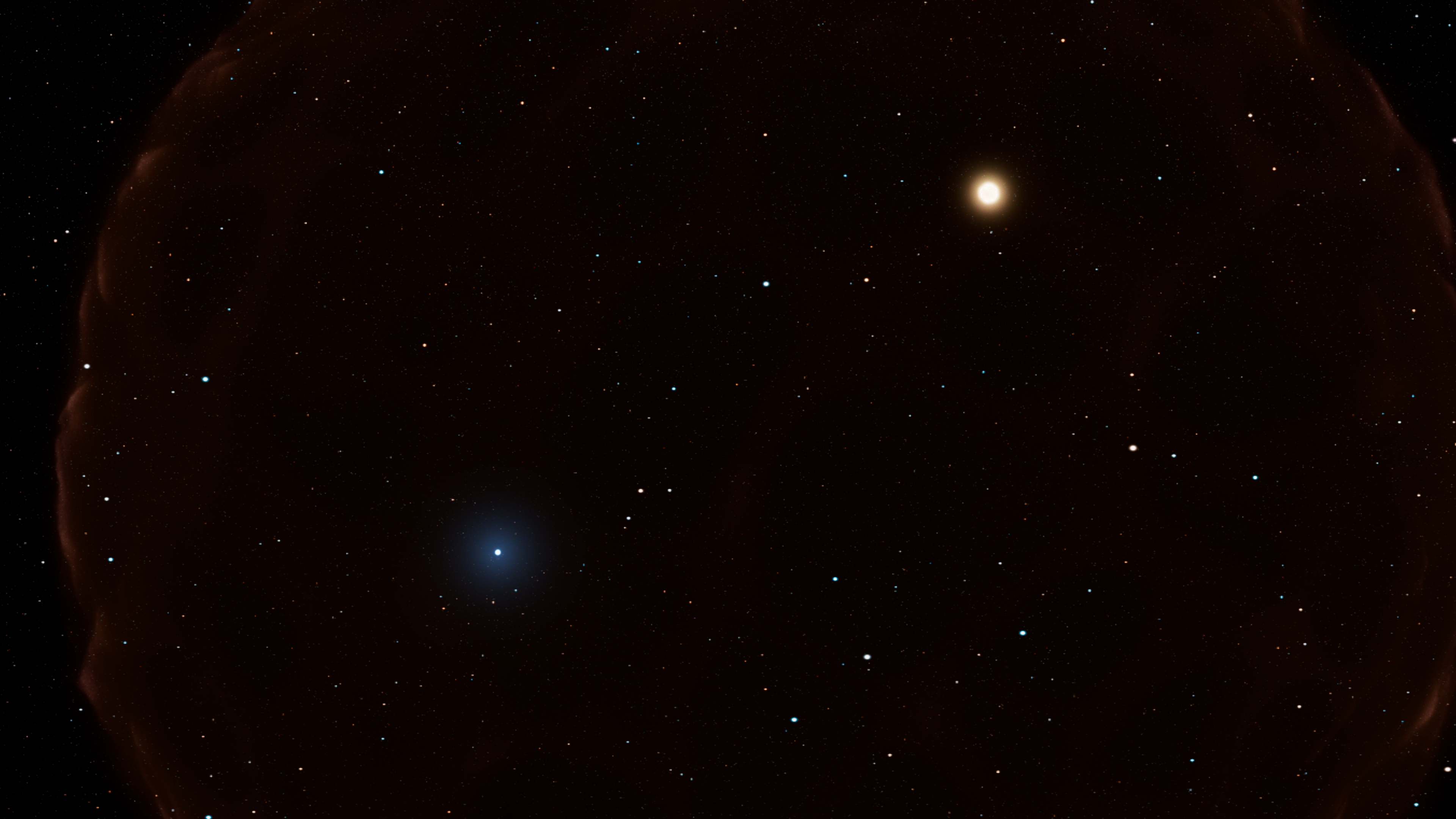
If you gaze at the night sky on a clear night, especially from a remote corner of Earth, you'll see a vast sea of stars strewn across an endless black canvas that shimmer like exquisite sequins but offer few clues to their pasts. Yet, each one carries its own unique history spanning billions of years, all written in its light, chemical makeup and behavior measurable by telescopes.
In deciphering sagas of eons past, astronomers find few examples more intriguing than Messier 67, or M67, which is a large, loosely bound group of sun-like stars dwelling in the outskirts of the Milky Way, our home galaxy. Previous observations led by astronomer Emily Leiner using NASA's retired Kepler space telescope had revealed that all of M67's 500 stellar residents are about four billion years old, save for a bright smattering of so-called "blue lurkers." This term, coined by Leiner and her team, describes 11 puzzlingly young stars in M67, which were also found to spin at perplexingly high speeds — at least 10 times faster than expected for their ages.













