Forty years ago, the New England Patriots played in their first Super Bowl. It ended disastrously for New England, who lost 46-10 to the Chicago Bears. The Bears’ mammoth defensive tackle, William “The Refrigerator” Perry, even got involved in the scoring with a touchdown.
That moment looked like it would cause serious problems for Art Manteris, who at the time ran the sportsbook at Caesars Palace in Las Vegas. Under Manteris, Caesars had offered odds on whether Perry would score during the game – and, as fans scrambled to back the popular player, the house stood to lose a significant sum if he did. When Perry ran into the end zone, gamblers collected handsomely, to the tune of $250,000. The next day, Manteris was summoned to meet the boss of Caesars, Henry Gluck.

“I feared the worst,” Manteris says. “To my shock and amazement, he congratulated me for putting up that prop.” When Manteris pointed out the financial losses, his boss replied, “No casino or sportsbook in Vegas has ever gotten this kind of worldwide, positive publicity over a single wager. Never! We couldn’t buy the enormous national and international attention we received.”
This is a learning moment from Manteris’s new book, The Bookie: How I Bet It All on Sports Gambling and Watched an Industry Explode. Written with investigative journalist Matthew Birkbeck, the book is a front-row view of the decades-long changes in the US sports gambling landscape, from the days of Mob-connected casinos on the Strip to today’s more corporate world. It’s also become a world beyond Vegas: legalized sports gambling has spread across the US since a supreme court ruling in 2018.
“The expansion has been too fast,” Manteris says. “Some mistakes are being made by certain states. I’ve been a very big advocate over the years of a very clear separation between gambling on sports, and participating in sports.”
Manteris grew up in a Greek American family in the Pittsburgh area, where some of his family – his brother Jimmy and their Uncle Jack – introduced him to the possibility of making a living through gambling. The narrative soon shifts to Las Vegas, where Manteris worked for 43 years in senior roles for Caesars, Hilton Hotels and Station Casinos.
“The book is historical,” Birkbeck says. “Art is actually a living legend. I did not realize how historical the project was going to be.”
Manteris’s sportsbooks took bets from high rollers, gangsters and celebrities. During the author’s days at the Hilton, Kirk Kerkorian, the billionaire MGM Resorts founder, downplayed his wealth by driving up to collect his winnings in a Ford Taurus station wagon, according to the book.
Athletes gambled too. Manteris writes of Charles Barkley betting six-figure sums, and of Jaromir Jagr losing six-figure sums.
According to the book, Phil Mickelson got so involved in betting that he first put together his own syndicate, then became one of several associates in a scheme run by noted gambler Billy Walters.
“[Mickelson] clearly did get in over his head on gambling,” Manteris says. “He got involved with people he should not have.”
Manteris says Mickelson turned things around though. “When [Mickelson] was implicated in an insider stock trading case, he did the right thing … He paid restitution and quit gambling,” he says, referring to a 2016 federal case against Walters (Mickelson was not charged in the case.)
Asked about the portrayal of Mickelson in a 2023 book by Walters – which claimed that Mickelson sought to bet on the Ryder Cup and had wagered more than $1bn over a span of three decades – Manteris says he has “no knowledge of that, I have no idea.”
As for Jagr’s gambling, Manteris says, “It was excessive … done very unsophisticated.”
Manteris writes that he ultimately felt compelled to cut off Jagr from gambling, one of many moments of ethical reckoning in the book.
He had to keep one eye out for employees who stole, and another eye out for beards or runners – individuals who gambled on behalf of others. Manteris himself was investigated by the Nevada Gaming Control Board, for anonymous allegations of illegal bookmaking and underworld connections; he was cleared after over a year of scrutiny that included probes of his ties to his brother Jimmy and his uncle Jack.
Manteris established a solid record in Vegas and beyond. In addition to that publicity-raising prop bet on the Fridge while at Caesars, he went on to create the largest sportsbook in the world for the Las Vegas Hilton. At the Hilton, he also was involved in sometimes uneasy dealings with pro boxing, including promoters Don King and Bob Arum. (Later, at the Station Casinos, he advised his then-bosses Frank and Lorenzo Fertitta against backing a newer combat sport venture – the Ultimate Fighting Championship. The Fertittas chose to ignore him and went on to make millions from UFC.)
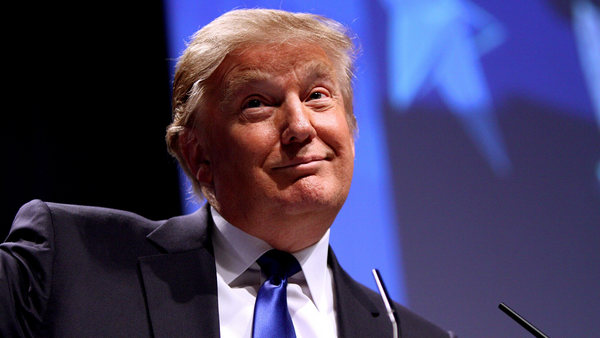
Donald Trump makes a few cameos as an Atlantic City boxing booster, years before his time as US president. Manteris remembers Trump’s claim of substantial winnings over Mike Tyson’s upset loss to Evander Holyfield in 1996; after doing some research, Manteris doubted Trump’s claim to have won $20m off the bout.
Since then, professional sports leagues have shifted their stances on gambling. “I’ve been surprised by a lot of things the last few years,” Manteris says. “Not the least is the leagues’ 180 degree turnaround in their position on gambling … I was in the business 43 years. The first 40, gambling was viewed as an adversary by the leagues. Today, that has reversed completely.”
Throughout the book, Manteris reflects on personal losses he’s endured over the years. His brother Jimmy underwent financial difficulties before his death. Manteris lost his grandson Michael to leukemia; he writes that several sports figures came to comfort the sick child, including Tyson and Pau Gasol.
Having retired, and with a secure place in the Sports Gambling Hall of Fame, Manteris is spending time with the next generation of his family. He’s also thinking about his old profession and its new environment – in which gambling is no longer done only in a Vegas casino, but now on your phone, anytime, anywhere.
“The question is youth gambling, easier access of gambling,” he says. “Of course that’s going to happen. But when every game you watch, you’re inundated with gambling ads, and you go to a stadium or arena, you’re inundated with gambling ads …
“I’m not an adversary toward gambling, or sports gambling. I’m a fan of sports, and sports gambling. But they have to coexist peacefully. Right now, it’s not happening.”