

AMD has been accused of 'bait-and-switch' tactics following changes to the licensing of Vivado on Linux. As reported by It's Foss, AMD has decided that Linux users of the Vivado chip design environment need to pay up or stick with an older version that will become unsupported soon.
For the uninitiated, Vivado is AMD's proprietary design suite used to program Field Programmable Gate Arrays (FPGAs). These special chips can be rewired via software to mimic nearly any kind of computer hardware. This makes them invaluable for simulations and design testing. If you are designing, simulating, or testing custom circuits for AI, aerospace, or advanced electronics, Vivado is the gateway to making that hardware actually work.
The core of the outrage stems from a change in Vivado's upcoming 2026.1 update. Previously, the free "Standard" tier supported both Windows and Linux. Under the new tiered model, the free "Basic" tier is restricted entirely to Windows. If you want to use Vivado natively on Linux, you'll be forced to step up to the "Core" tier, which demands an eye-watering $1,200 to $1,800 annual subscription.
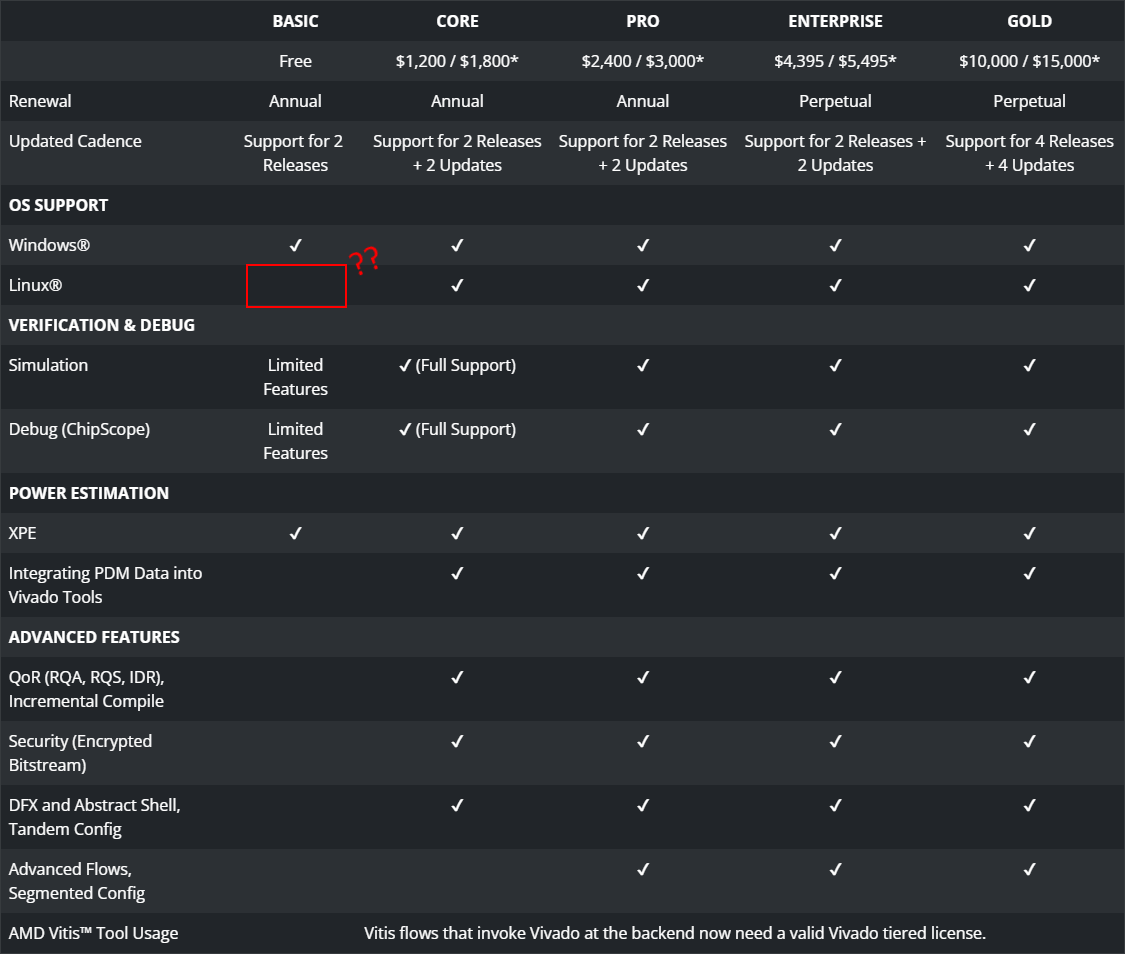
AMD's defense on its community forums has also not landed well. The company claimed that 70% of Vivado users are on Windows anyway, alienating the academic researchers, engineering students, and open-source hobbyists who heavily favor Linux-native environments and rely on free tools to learn the trade.
A forum representative for the company stated, "No one is stopping users (students, etc.) to continue using the current versions of Vivado (any Vivado version prior 2026.1)," and developing using the free Vivado ML Standard Edition, arguing that it was only if users decided to update that they'd need the license.
"I guess no one involved in this decision thought about the millions of hobbyists and amateurs like myself using Vivado for their hobby projects," one disgruntled user replied. Another noted that many users are already discussing moving to alternate platforms like Lattice and Altera due to these changes.
AMD's forum representative confirmed they were "collecting all the feedback received and passing on to the relevant team/marketing" at AMD, leaving the door ajar for a possible change to this policy down the line.