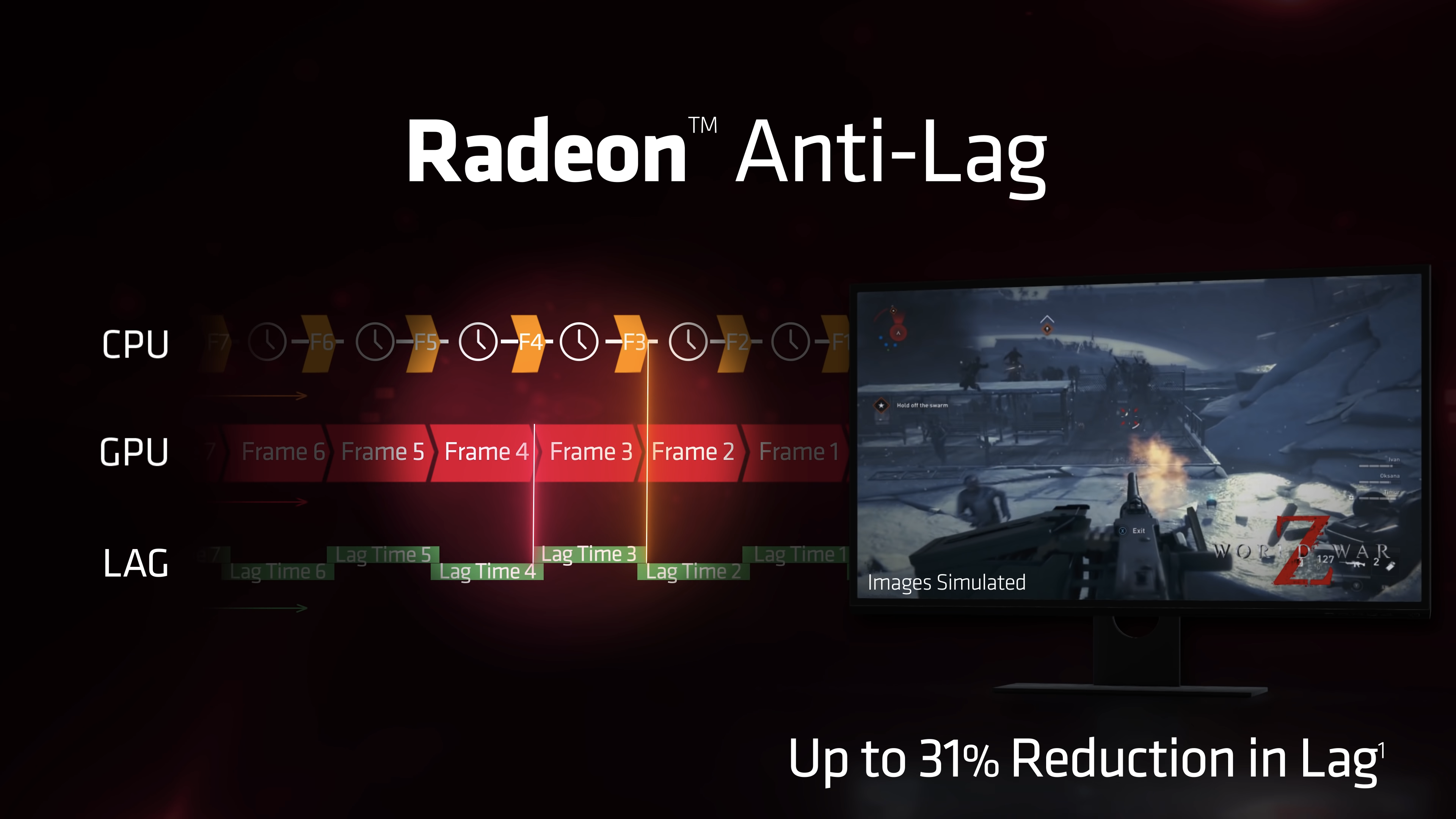
As of earlier today, a recent Vulkan spec update— version 1.3.291, to be specific— went live on GitHub, and besides miscellaneous fixes and the such, a new "VK_AMD_anti_lag" extension has been added to Vulkan, bringing full AMD Anti-Lag support outside the boundaries of the recent DirectX graphics APIs. Nvidia Reflex is also already supported with Vulkan in select titles, though some users have reported issues with that functionality under Vulkan. This update for adding Anti-Lag to Vulkan also addresses an existing "VK_NV_low_latency2" extension, as well.
For those unfamiliar with AMD Anti-Lag or Nvidia Reflex, the best way to think of these options when they are available in your game is "automated FPS capping." Traditionally, users may set FPS caps in games with unlocked FPS to stabilize visuals, performance, or GPU usage at a certain level without buffering frames (increasing latency) using V-Sync. In-engine FPS caps are almost always the best way to reduce input lag in a game, so long as that capped FPS target can be consistently met.