
Get all your news in one place.
100's of premium titles.
One app.
Start reading
MarketBeat
MarketBeat
Jeffrey Neal Johnson

Amazon’s Satellite Push Raises the Stakes for SpaceX and AST SpaceMobile

Investors searching for the next substantial expansion in total addressable market are turning their eyes upward. The direct-to-device satellite communication sector is moving rapidly from the realm of speculative venture capital into a full-scale commercial battleground.

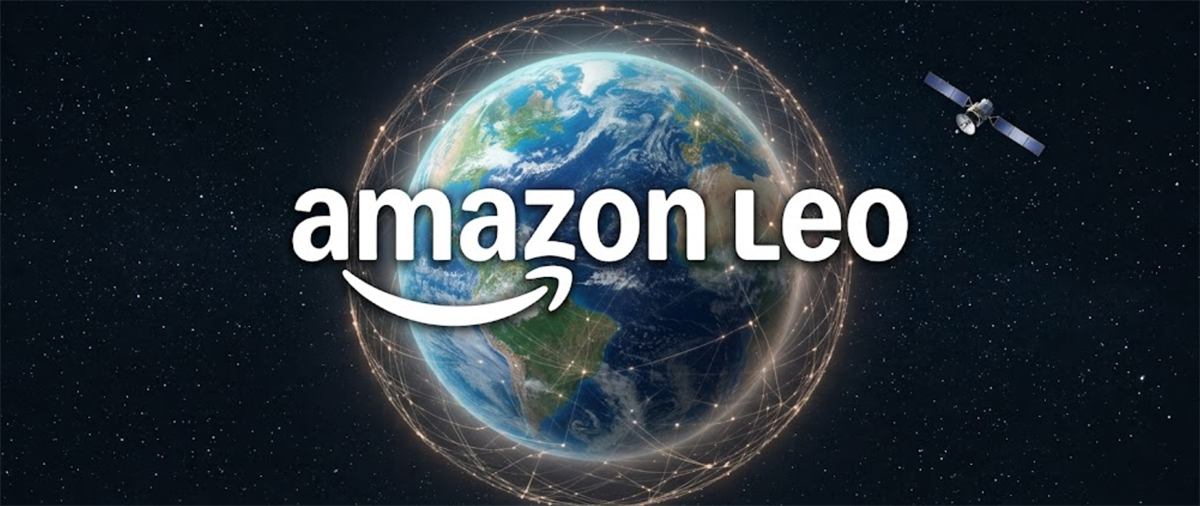
On July 27, 2026, Amazon (NASDAQ: AMZN) filed an application with the Federal Communications Commission to deploy a 5,105-satellite constellation through its Amazon Leo subsidiary. This action weaponizes a solid balance sheet against existing space communications firms and directly challenges SpaceX’s (NASDAQ: SPCX) dominant market share through Starlink.

Radar Lock: Identifying the True Aerospace Moats

The direct-to-cell space race is no longer an abstract concept, and treating it as a distant sci-fi narrative will leave portfolios exposed. Investors are witnessing an infrastructure war backed by some of the most liquid balance sheets on the market.

By looking closely at the capital expenditures, regulatory filings, and deployment logistics of the top contenders, market participants can identify structural shifts before they are fully priced into the equities. Understanding how these tech conglomerates are subsidizing their orbital ambitions reveals exactly where the sector's long-term profitability lies.

Terrestrial Cash Meets Orbital Ambitions

Amazon is pulling immense capital levers to establish its orbital network, transitioning connectivity into a foundational layer of its broader ecosystem. In April 2026, the retail sector giant acquired Globalstar for $11.6 billion.

The Globalstar buyout absorbed vital mobile satellite service spectrum licenses and secured a highly lucrative strategic alignment with Apple (NASDAQ: AAPL). The Apple alignment allows Amazon.com to rapidly deploy native satellite features to iPhones, instantly bridging the consumer distribution gap with Starlink Mobile.

Amazon.com is facing heavy capital expenditure expectations, with projections reaching $200 billion in 2026 to fund artificial intelligence infrastructure and orbital network expansions. Trading at a trailing price-to-earnings ratio of 29.8, the market is pricing in Amazon.com's ability to leverage its Amazon Web Services cloud infrastructure and terrestrial retail cash flows to subsidize terminal space deployments. Institutional accumulation remains robust, highlighted by Vienna Insurance Group nearly doubling its position to 93,000 shares specifically to capture this direct-to-device expansion.

SpaceX faces an aggressive new challenger but retains an overwhelming logistical moat. Valued at $1.54 trillion, SpaceX commands a reusable launch monopoly. By manufacturing and executing its deployments internally, the launch provider maintains structural pricing power that no external competitor can currently match.

Escaping Gravity: The Approaching Lock-Up Expiration

The structural dynamics of the space sector are about to undergo a severe liquidity stress test. SpaceX transitioned to the public markets in June 2026. Its inaugural earnings call is scheduled for Aug. 4, providing the first transparent look into the cash flow generation of its global Starlink operations.

Two days later, on Aug. 6, the initial post-IPO lock-up restrictions expire. Lock-up periods prevent insiders and early investors from selling shares immediately after an initial public offering, ensuring market stability. When these restrictions lift, up to 911.5 million shares, valued at nearly $123 billion, will become eligible for public trading. This event will radically dilute the current narrow public float, introducing intense short-term supply pressure. Short interest is roughly 30% of the currently tradable shares as market participants brace for this catalyst.

Despite shares trading in the $117 range, approximately 48% below the post-IPO peak of $225.64, institutional conviction remains visible. Six members of Congress executed aggregate block purchases in late July. This anomaly signals potent regulatory and institutional confidence ahead of the critical earnings data. The upcoming lock-up expiration introduces immediate supply risk but will ultimately normalize the float for long-term institutional accumulation, heavily supported by the 7% institutional stake held by Alphabet (NASDAQ: GOOGL).

Oxygen Deprivation: Margin Compression for Pure-Plays

The entry of mega-cap technology conglomerates poses severe margin-compression risks for smaller competitors. Margin compression occurs when input costs remain steady or rise while the end price of a service is forced down by competitors willing to operate at a loss to gain market share. Pure-play valuations reliant entirely on forward revenue projections, rather than fundamental cash flow, are highly vulnerable to pricing wars subsidized by diverse mega-cap revenues.

AST SpaceMobile (NASDAQ: ASTS) illustrates this precarious position. The stock is currently navigating extreme historical volatility, with a 52-week range spanning from $36.08 to $133.86. Commanding a $21.71 billion market capitalization and a negative price-to-earnings ratio of 32.77, AST SpaceMobile's valuation hinges on achieving commercial scale before capital reserves deplete. Insider sentiment reflects distinct caution, with zero insider buying occurring over the last quarter, juxtaposed against $9.7 million in insider sales. Institutional flows indicate a risk-off positioning as the reality of Amazon deploying its capital forces a reassessment of terminal valuations across the sector.

Hitching a Ride: The Vendor-Competitor Paradox

The structural disadvantage of pure-play satellite companies is particularly evident in launch logistics. AST SpaceMobile relies entirely on external providers to reach orbit. AST is scheduled to launch its Block 2 BlueBird satellites, designated 11, 12, and 13, on Aug. 5 aboard a Falcon 9 rocket.

This dynamic creates a severe operational vulnerability. Smaller providers depend completely on their primary mega-cap competitor for deployment logistics. While AST SpaceMobile aims to deploy expansive 2,400-square-foot phased arrays targeting peak speeds of 200 Mbps to capture mobile market share, it must pay its biggest rival to establish that foothold. When the external launch provider is also the primary direct-to-device broadband competitor, terminal risk models must be aggressively recalibrated to account for this inherent conflict of interest.

Mission Control: Positioning for the Broadband Boom

The space economy is rapidly transitioning from speculative research and development toward monopolistic consolidation. The total addressable market for space-based cellular broadband is expanding well beyond traditional maritime and aviation use cases. Bridging the digital divide and eliminating cellular dead zones places this technology squarely into the global consumer smartphone market.

Investors analyzing this sector might consider the high barriers to entry that disproportionately favor well-capitalized incumbents. The escalating infrastructure warfare between dominant tech entities validates a highly bullish outlook on sector advancement, but it will subject undercapitalized pure-plays to extreme operational pressure.

Maintaining neutrality regarding the ultimate victor between Amazon and SpaceX could be a prudent strategy, as both entities possess the logistical and financial resources necessary to capture durable market share. Watching how institutional money flows following the upcoming lock-up expiration will provide critical clarity for adjusting long-term portfolio allocations.

The article "Amazon’s Satellite Push Raises the Stakes for SpaceX and AST SpaceMobile" first appeared on MarketBeat.

Sign up to read this article
Read news from 100's of titles, curated specifically for you.
Already a member? Sign in here
Related Stories
Top stories on inkl right now
One subscription that gives you access to news from hundreds of sites
Already a member? Sign in here
Our Picks
Fourteen days free
Download the app
One app. One membership.
100+ trusted global sources.