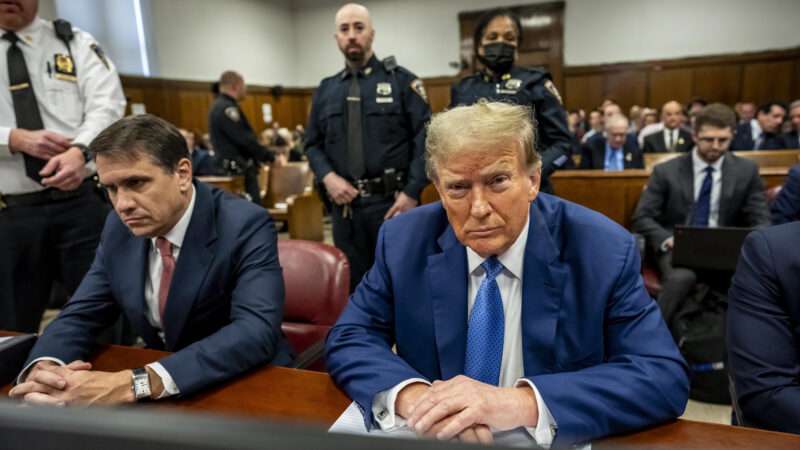
During four days of testimony in Donald Trump's trial, his estranged lawyer and fixer, Michael Cohen, supplied crucial evidence linking the former and possibly future president to the crimes alleged by New York County District Attorney Alvin Bragg. Cohen said "the boss" instructed him to pay porn star Stormy Daniels $130,000 shortly before the 2016 presidential election to keep her from talking about her alleged 2006 sexual encounter with Trump. Cohen said Trump also approved a plan to reimburse Cohen in 2017 through a series of payments disguised as compensation for legal services. Cohen was the only witness who gave direct support to the latter claim, which underlies the allegation that Trump falsified business records—the heart of the case.
One question for the jurors is whether to believe Cohen, a convicted felon and admitted liar with a powerful grudge against Trump and a financial interest in agitating for his imprisonment via books and podcasts. Another question is exactly what sort of intent is required to convict Trump not only of falsifying business records but of doing so to conceal "another crime," which elevates what would otherwise be 34 misdemeanors into 34 felonies. Here things get confusing because of the interacting statutes on which the prosecution is relying.